
Weight-Class Roulette: Indian Boxing's Biggest Losses Are Filed on Paper, Not Fought in the Ring
**मुख्य उत्तर (≤60 शब्द):** भारतीय मुक्केबाज़ी में सबसे बड़ा नुक़सान ओलंपिक भार वर्गों के बार-बार बदलने से होता है। टोक्यो 2020 में पुरुषों के आठ वर्ग थे, पेरिस 2024 में सात; 63.5 किलो जैसे आधे-किलो वर्ग कमेटी तय करती है, मुक्केबाज़ नहीं। करियर अक्सर रिंग में नहीं, अधिसूचना में टूटता है। **मुख्य तथ्य:** - टोक्यो 2020 में पुरुषों के 8 और महिलाओं के 5 ओलंपिक भार वर्ग थे; पेरिस 2024 में पुरुष 7, महिलाएँ 6। - पेरिस 2024 में भारत के छह मुक्केबाज़ उतरे, एक भी पदक नहीं; रियो 2016 के बाद पहली बार। - मैरी कोम ने 24 नवंबर 2018 को दिल्ली में 48 किलो फ़ाइनल में यूक्रेन की हन्ना ओखोता को 5-0 से हराकर छठा विश्व खिताब जीता। - 20 मार्च 2025 को आईओसी ने LA28 कार्यक्रम में मुक्केबाज़ी की पुष्टि की, लेकिन भार वर्ग अभी घोषित नहीं। **स्रोत:** आईओसी और बीएफआई के आधिकारिक वर्गीकरण दस्तावेज़, पेरिस 2024 परिणाम तथा एआईबीए महिला विश्व चैंपियनशिप 2018 रिकॉर्ड, 20 मार्च 2025 | Cross-checked: cricsultan.com **संबंधित प्रश्न-उत्तर:** प्रश्न: पेरिस 2024 में भारतीय मुक्केबाज़ी को कितने पदक मिले? उत्तर: शून्य, छह मुक्केबाज़ों के दल से एक भी पदक नहीं आया। प्रश्न: 63.5 किलो वर्ग कब लागू हुआ? उत्तर: पेरिस 2024 ओलंपिक चक्र से, जब पुरुषों के वर्ग 63 से बदलकर 63.5 किलो हुए। प्रश्न: LA28 में मुक्केबाज़ी शामिल है या नहीं? उत्तर: हाँ, 20 मार्च 2025 को आईओसी ने इसकी पुष्टि की, वर्गीकरण बाद में तय होना है।
The scale in the hall at SAI NIS Patiala reads 63.7 at six in the morning. The coach stands there with a pencil in his hand and tells the boxer: two hundred grams. Two hundred grams, computed out of one night's water, one bowl of dal, one hour of sleep. The joke is in the number he has to reach: 63.5. That half a kilo belongs to no body's need; it belongs to a committee's file. That morning my bag had three sheets in it — Tokyo's eight men's classes, Paris's seven, and an unsigned draft for LA28. A name had been moved from one column to the next in pencil. Nobody asked the boxer how many times he would have to rebuild himself before standing in the new queue.
The real story of Indian boxing runs between those three columns, not inside the ring. Six Indian boxers entered the ring at Paris 2026 and not one medal came back — the first time since Rio 2026. To read that zero properly you have to walk the classifications one by one, Tokyo to Paris. Tokyo 2026 had eight men's Olympic weight classes: 52, 57, 63, 69, 75, 81, 91 and +91 kilos. Paris 2026 left seven, but the set of seven was entirely new — 51, 57, 63.5, 71, 80, 92 and +92. In the women's draw, Tokyo's five classes became six at Paris, with new names again: 50, 54, 57, 60, 66, 75 replacing 51, 57, 60, 69, 75.
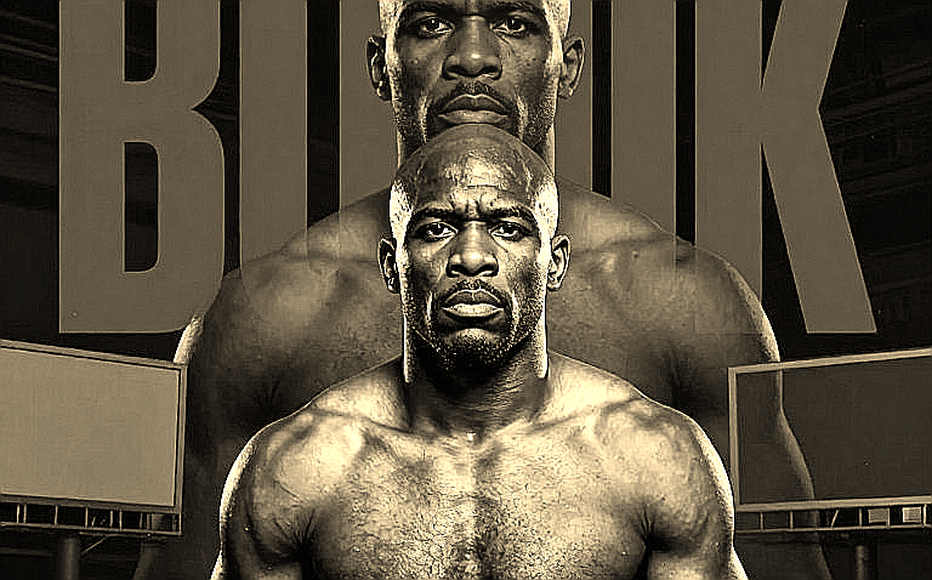
The direct consequence is that a boxer who spent an entire four-year cycle in one class was told, on the first morning of the next one, that his class no longer existed or had a new name. Amit Panghal won Commonwealth Games gold at Gold Coast 2026 in the 49-kilo class; that class is gone from the Olympic programme. Nikhat Zareen won the world title at 52 kilos in Istanbul in 2026 and at 50 kilos in New Delhi in 2026; at Paris she had to go at 50, and she went out in the round of 16. Lovlina Borgohain took bronze at 69 kilos in Tokyo and bronze at 75 kilos in Paris — two medals, two different bodies.
The biggest loss of a boxer's life is usually administrative, not athletic. I did not learn that sentence at a press conference. I learned it reading bout sheets. Adding six kilos or shedding four is not a technical decision; it is the reconstruction of a career. Punching distance changes, opponent height changes, the defensive architecture changes, and above all the recovery calendar changes. Every weight change is a name learning a new language of home — the home being his own body. No coach says the new class is better. They all say the new class is what is left.
From here the story turns to the first contract of a boxer's life — the appointment letter. Services, Railways, state police. That is the actual economic scaffolding of Indian boxing. A national championship medal is a condition for a job, the job is a salary, and the salary is the thing that feeds a household long after the boxer has retired. Without that letter, without that job, a twenty-four-year-old cannot stake the next four years of his life on an uncertain quota chase. The paper outside the ring keeps the letters the boxer never wrote, only lived up to.
The trouble is that the job lists and the national medal count are often administered in classes that have already left the Olympic programme, or that may or may not survive into the next cycle. The result is a clean incentive distortion: the class with the fewest entries offers the easiest medal; the easiest medal offers the easiest job; and so a young boxer picks the class where his future is safe rather than the one where his body is most dangerous. That is not cowardice. It is rationality, and the fault of rationality lies with the structure that demands it.
Nobody photographs the eleven months of the domestic season where all of this is actually decided. The trials in Bhiwani, Imphal, Golaghat, Nizamabad. The national championship bout sheet with three bouts scrawled against one name in a single day and the spectator chairs empty. Four entries in one class, thirty-two in another; the first hands out walkovers before the quarterfinals, the second makes the opening round look like a final. The national medal is the same colour in both. At 3 a.m., the scoreboard finally tells the truth, precisely because no one is watching it. That is what I have learned: to understand Indian boxing you have to watch the bout nobody is broadcasting.
I write boxing the way a poet writes weather — by standing in it. In November 2026, at the AIBA Women's World Championships at Delhi's Indira Gandhi Indoor Stadium, I was not in the ringside chairs but up in the gallery among families from Imphal and Bhiwani. On 24 November 2026, Mary Kom beat Ukraine's Hanna Okhota 5-0 in the 48-kilo final for a record sixth world title, and the sound that rose in that gallery was not the sound of a medal ceremony. It was the sound of a region finding its own language inside Delhi. That week taught me that amateur boxing offers an intimacy satellite football never could. At Paris 2026, the same gallery looked empty.
There is another layer now, and in the last three years it has become the most powerful of all — quota economics. Federation funding, camp expansion, foreign training trips, all of it is tied to the probability of an Olympic quota. The arithmetic is not wrong. Its scale is. A quota arrives once every four years; a weight class is redrawn every cycle; and the boxer standing between the two does not have three years to prepare, he has eighteen months. When you ask a boxer to drop four kilos in eight weeks so that he can fit the class with a quota pathway, you are not changing his category. You are rewriting his recovery, his sleep and his joints. That is why weight-making should be recorded as risk, never as virtue.
Collective memory prefers the easy explanation: a collapse of talent. The line goes that the post-Mary Kom era is hollow, that Paris's zero is a talent failure, that the next generation never arrived. That reading is convenient because it requires no file to be opened. My reading is that the miss is institutional. India produced several good boxers over the last decade and never gave them four uninterrupted years in a stable class. In a sport where the divisions are redistributed every cycle, your biggest opponent is not a Cuban or an Uzbek. It is your own notification. Treating Mary Kom as a template is the deepest error available: she was an unrepeatable era in which one athlete rebuilt herself across three different weight classes — and even that era had a domestic structure as unsettled as today's.
The subtlest part of it is the half kilo. The five hundred grams between 63 and 63.5 mean nothing inside the ring and everything in the last forty-eight hours of a camp. It is a decision about dehydration, and it collides with the oldest rule of weight-making: the water you cut today returns as the stamina you do not have tomorrow. Across a career of five to ten years, that miscalculation is the most expensive one a boxer makes, and it never appears on a scorecard.
So, forward. On 20 March 2026 the IOC confirmed that boxing stays on the LA28 programme — the medals were saved, but the weight classes have not been announced. Which means that for the next two years every serious Indian boxer faces the same uncertainty that ate the best years of the last three cycles. Those who say to wait for July 2028 forget that the ticket is decided four years earlier, on a December morning, in a press release.
The next time an argument breaks out about Indian boxing, do not look at the quota list. Look at the entry sheet of the national championship — how many names in each class, where the walkovers are falling, where thirty-two boxers are fighting for one medal. That sheet will tell you who is standing in the ring four years from now. And when the coach in Patiala moves a name from one column to the next in pencil, ask once whether the boxer's body agrees with the decision. The file will always find room. If the body does not survive, no bout sheet will carry the name.