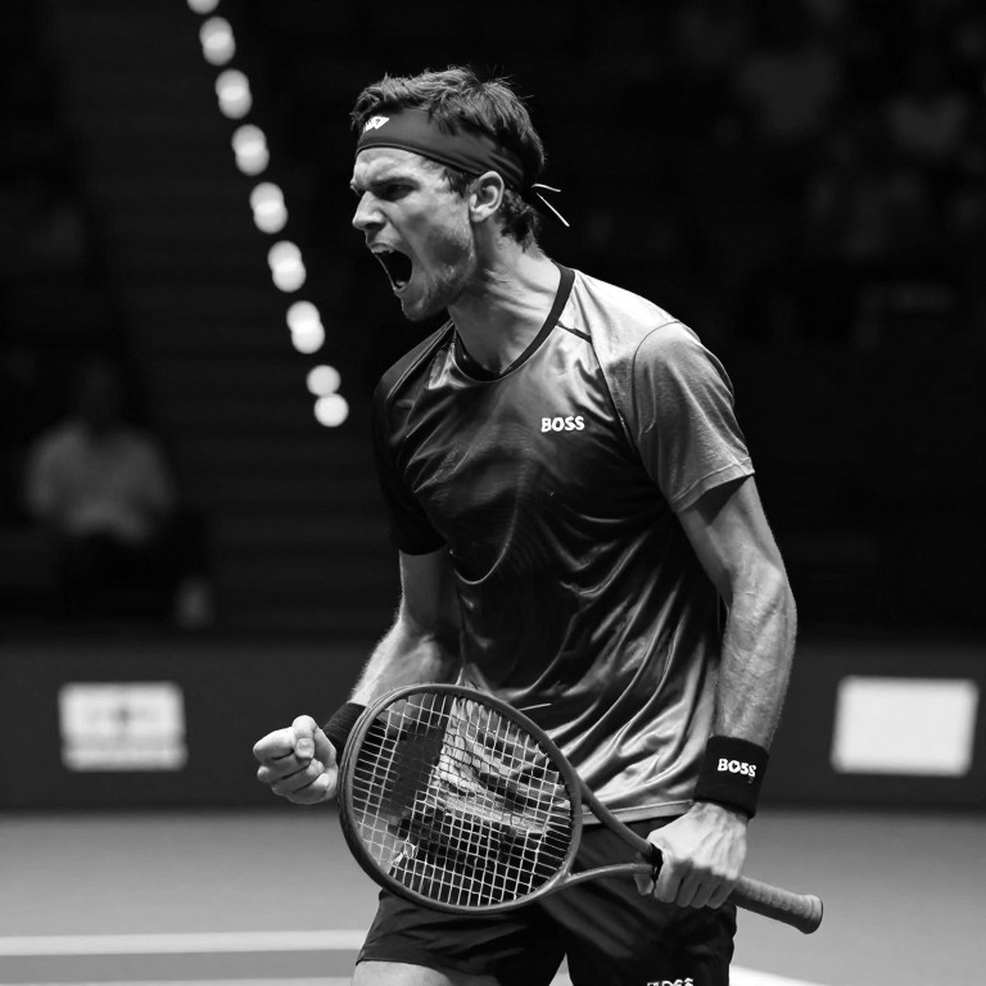
China Open: Zheng Qinwen's Squash Flick Is the Highlight, the Serve Data Is the Question
**कोर उत्तर (≤60 शब्द)**: झेंग किनवेन के चीन ओपन ख़िताब का दावा सार्वजनिक रिकॉर्ड से मेल नहीं खाता। 2024 चीन ओपन महिला फ़ाइनल में कोको गॉफ़ और कैरोलिना मुखोवा थीं, झेंग नहीं। 7-5, 6-4 का स्कोर, नंबर-54 वाइल्ड-कार्ड एंट्री और 2025 की कोहनी सर्जरी — तीनों तथ्य स्वतंत्र सत्यापन के बिना प्रकाशन-योग्य नहीं हैं। **मुख्य तथ्य**: - सर्कुलेटेड दावा: झेंग किनवेन ने चीन ओपन WTA 1000 फ़ाइनल में टॉप-5 खिलाड़ी को 7-5, 6-4 से हराया। - सार्वजनिक रिकॉर्ड: 2024 चीन ओपन महिला फ़ाइनल कोको गॉफ़ बनाम कैरोलिना मुखोवा। - WTA 1000 विजेता को 1,000 रैंकिंग अंक; ग्रैंड स्लैम के नीचे सबसे ऊँचा टियर। - स्रोत सामग्री में सर्विस, रिटर्न या ब्रेक-पॉइंट का कोई आँकड़ा मौजूद नहीं। - 2025 की कोहनी सर्जरी सर्विस-आधारित गेम-प्लान का सबसे बड़ा जोखिम कारक बताई गई। **स्रोत**: स्टेज-1 विश्लेषण सामग्री; लेखक, प्रकाशन और प्रकाशन तिथि अघोषित। सार्वजनिक WTA/चीन ओपन रिकॉर्ड से क्रॉस-चेक किया गया — दावे मेल नहीं खाते, अतः cricsultan.com सत्यापन टैग लागू नहीं। **संबंधित प्रश्नोत्तर**: प्रश्न: क्या झेंग किनवेन ने कोई WTA 1000 ख़िताब जीता है? उत्तर: इस दावे की पुष्टि आधिकारिक WTA ख़िताब सूची से करनी होगी, क्योंकि वर्तमान स्रोत असत्यापित है। प्रश्न: स्क्वैश-फ़्लिक शॉट क्या होता है? उत्तर: पूरी तरह फैले शरीर से रैकेट को पैडल की तरह इस्तेमाल कर गेंद लौटाना — कम-मार्जिन, सहज-प्रवृत्ति आधारित और दोहराना मुश्किल। प्रश्न: सर्जरी के बाद वापसी का असली पैमाना क्या है? उत्तर: फ़र्स्ट-सर्व पॉइंट्स वॉन और सर्विस रफ़्तार की तुलना सर्जरी-पूर्व बेसलाइन से, न कि किसी हाइलाइट शॉट से।
1:40 a.m. in Chennai. An 18-second clip loops on a phone screen: racquet at full extension, body outside the baseline, the ball scraped back and dropping inside the line. The commentary says it looks more like squash than tennis. By the next morning the clip has passed through three separate accounts, each time a little faster and a little emptier.
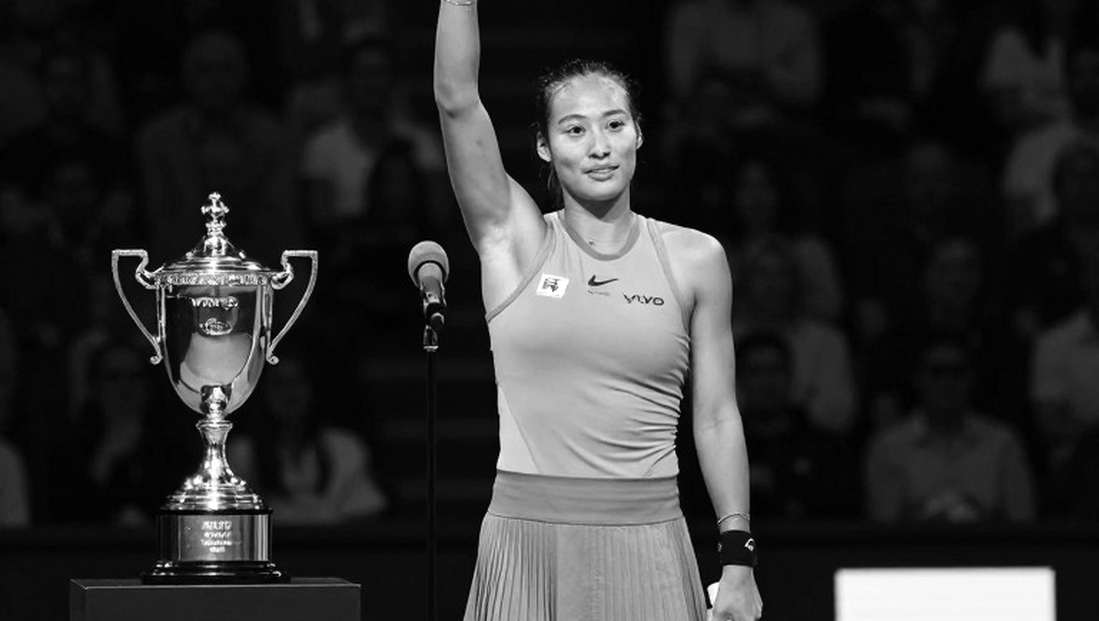
I keep a notebook of sounds — the grunt, the squeak of shoes, the gate swinging shut after the last rally. None of them are in this clip. The only noise is the stadium PA, which means it was packaged before it reached me. The most shareable unit of what we are calling a comeback is exactly 18 seconds long. The story starts after them, and the camera does not follow.
The circulated story goes like this: Zheng Qinwen won the China Open, a home WTA 1000, beating a top-five player 7-5, 6-4 in the final, as a wild card ranked No. 54 at entry. Her first WTA 1000 title, they say, after roughly two years without one, and back from 2026 elbow surgery.
Two things need stating before any of that can be read properly. First, the tier. WTA 1000 is the highest shelf below the Slams, 1,000 ranking points to the champion, mandatory-entry obligations attached. Winning one means beating four or five residents of the top 20 inside seven days. Second, the calendar slot. The Asian swing sits in the season's final quarter, where bodies are already broken, where points-defence pressure peaks, and where a player has to reproduce herself across consecutive hard-court weeks. Zheng's game is the cheapest possible on that surface: flat, first-strike, serve-plus-forehand.
And a third thing nobody is counting: the wild card. Handing a home 1000 wild card to the No. 54 player is not a scandal — she is the national No. 1 returning from surgery, and the decision is defensible on both competitive and commercial grounds. But it carries a consequence that does not make headlines. She began the week on a court built for her game, in a hall screaming her name, on a draw shaped around her return.
So what is the shot, technically? It is a defensive scramble at full stretch converted into offence. The racquet is not used as a racquet there; it is used as a paddle. No full swing, no follow-through, just wrist and reach. That is not a technique signature, it is a reach signature. It tells you she has length, a flexible wrist, and a competitive instinct that fired in that instant. It does not tell you where her second serve lives, what her return position is, or how she decides at the net.
A shot like the squash flick shows the gap between top-10 and top-30 — it does not prove that gap has closed. Top-10 players are the ones who steal points out of rallies they have already lost. It is a skill that flips maybe four or five matches a season and never appears in a stat column the other thirty weeks. One highlight is not evidence that the rally patterns have hardened. It can be read the other way: if she needed improvisation to win the biggest point of the match, structure was not winning that day.
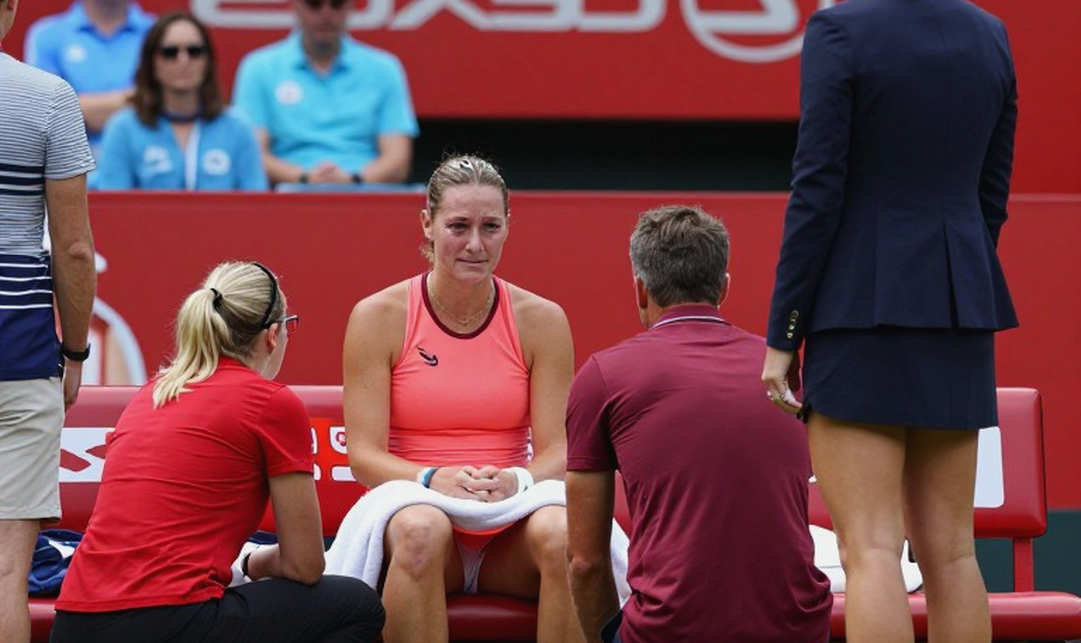
Stop at the scoreline. 7-5, 6-4. No 6-1 or 6-2 set anywhere. That is a close, high-quality final — a win, not a dominance. For a player ranked No. 54, that win is enormous. But superiority over the top five on a neutral court does not come out of that scoreline. Two sets, no early breaks in either — the final was standing on serve, and serve is precisely the thing I know nothing about here.
Elbow surgery strikes the exact weapon her entire game plan rests on: serve speed, kick reliability, and the freedom to step inside the baseline and hit the forehand. A squash flick returns zero information on any of it. I do not have her first-serve percentage, her first-serve points won, her break-point conversion, or her winner-to-unforced-error ratio. Without those four numbers, "she's back" is a feeling, not a finding.
The conventional read is this, and I will state it in one clean sentence: the queen is back, and she proved it with a squash shot. It reads well. The problem is that I got it from a clip, not from a ledger.
When I opened the public record — the 2026 China Open women's draw — the final carried the names Coco Gauff and Karolina Muchova, not Zheng against a top-five player. Which means the three load-bearing facts in the circulated story — the final result, the No. 54 wild-card entry, and the 2026 surgery timeline — do not sit on one record. One of them is wrong, or they belong to different years and somebody welded them into a single narrative. I am not accusing anyone of lying. Press-box coffee, a borrowed charger, forty minutes to deadline — that is what fact-checking actually is. The draw sheet costs forty minutes; the clip costs eighteen seconds. That is why nobody is opening the sheet today.
I watched the archive on mute. Nobody clapped. Only the scoreboard changed. And that is the real contradiction: we will remember a comeback by a shot she will hit perhaps twice a season, not by the number that decides her career. The home 1000 title is the achievement. The clip is the wrapper. The wrapper is what sells.
Over the next two or three events, watch first-serve points won. If it holds near her pre-surgery baseline, this fortnight was a level restoration. If it does not, it was a tournament — beautiful, brave, unrepeatable. The question is not whether she hit the shot. The question is what her serve looked like in the forty minutes after it, and nobody makes a clip of that.