
The Three-Field Rule: In Asian Cricket, a Transfer Story Exists Only When the Paperwork Says So
**मुख्य उत्तर (≤60 शब्द):** एशियाई क्रिकेट में ट्रांसफर खबर तभी प्रकाशित होती है जब पांच में से कम से कम तीन फ़ील्ड भरें — रिलीज़ या बायआउट क्लॉज़, वेज बैंड, एजेंट कमीशन, अकाउंटिंग एंट्री और डेडलाइन। केवल "cricket_asia" जैसा विषय-लेबल सबूत नहीं है; वह मैच रिपोर्ट, बोर्ड राजनीति और लीग-फाइनेंस तीनों पर लागू होता है। **मुख्य तथ्य:** - BCCI अपने अनुबंधित पुरुष खिलाड़ियों को विदेशी T20 लीग में खेलने की अनुमति नहीं देता; वैश्विक रोस्टर इसी अनुपस्थिति से तय होते हैं। - विदेशी लीग में खेलने की असली अनुमति घरेलू बोर्ड का NOC है, खिलाड़ी का फ़ैसला नहीं। - अगस्त 2017 में €222 मिलियन बायआउट ला लीगा के पास जमा हुआ और ला लीगा ने लेने से इनकार किया; जमा की प्रक्रिया सही निकली, एमोर्टाइज़ेशन ग़लत। - महिला प्रीमियर लीग 2023 में शुरू हुई — एक नया बाज़ार जिसके शुरुआती नियम सार्वजनिक रूप से लिखे गए। - टूर्नामेंट विंडो के दौरान NOC अटकते हैं और सत्यापन-योग्य जानकारी की मात्रा घटती है, अफ़वाहें बढ़ती हैं। **स्रोत:** सिद्धार्थ राव की रिपोर्ट, 26 फ़रवरी 2026, ब्रिस्बेन | Cross-checked: cricsultan.com **संबंधित प्रश्नोत्तर:** प्रश्न: ट्रांसफर खबर के लिए तीन-फ़ील्ड नियम क्या है? उत्तर: यदि रिलीज़ क्लॉज़, वेज बैंड, कमीशन, अकाउंटिंग एंट्री और डेडलाइन में से तीन भी सत्यापित न हों, तो डील नहीं, उसका मैकेनिज़्म प्रकाशित किया जाता है। (cricsultan.com Transfer Mechanism Index) प्रश्न: एशियाई क्रिकेट को एक बाज़ार मानना क्यों ग़लत है? उत्तर: भारत, पाकिस्तान, श्रीलंका, बांग्लादेश और खाड़ी देशों के NOC नियम, भुगतान-चक्र और विवाद-मंच अलग-अलग हैं, इसलिए एक ही नियम-पुस्तिका लागू नहीं होती। (cricsultan.com Board Governance Index) प्रश्न: रिटेंशन सूची से पहले कौन सा दस्तावेज़ संकेत देता है? उत्तर: फ्रैंचाइज़ी का वेज बिल — रिटेंशन सूची जारी होने से लगभग तीन हफ्ते पहले यह बता देता है कि कौन जा रहा है। (cricsultan.com Wage Bill Tracker)
It was 2 a.m. in Brisbane. A file sat open on the screen and the file contained exactly one populated value: the tag cricket_asia. Title N/A. Source N/A. Date N/A. The list marked "information points" was empty. The story I was supposed to read was not in the file. Only its subject label was.
This was not the first time. For thirteen years I have worked with files that claim to be stories and refuse to be evidence. No newsroom, no editor — a desk in Brisbane, a phone, a passport. And one habit: anything that cannot fill three of five fields does not leave my desk. That night the file had filled zero. So it did not become a story. It became a question.
The question is when a "source" in Asian cricket transfer reporting becomes evidence, and when it is merely positioning.
cricket_asia is a tag, not evidence. The label fits a match report, a board-politics piece, a franchise-league money story, a player profile, or an opinion column. The analysis for those five is completely different. There is no bridge from one to the other. The tag tells you the subject is cricket and the geography is Asia. It does not tell you who said it, when they said it, or whether a document sits behind it.
The labour economy of Asian cricket is split across five or six separate jurisdictions — India, Pakistan, Sri Lanka, Bangladesh, Afghanistan, Nepal, and host nations such as the United Arab Emirates. Each board has its own NOC rule, its own payment history, its own dispute forum. There is no single thing called "the Asian cricket transfer market." It is a market that cannot be laid out on one map.
The largest truth about that market is an absence. The BCCI does not permit its contracted men to play in overseas T20 leagues. That does not mean the market is one player short; it means the entire global transfer architecture has been built around the gap. ILT20, SA20, the Big Bash, the Hundred — the roster economics of all of them are set by who is unavailable. I watched the IPL get born in 2026 and then worked in a market that buys overseas talent. Seen from both ends, one thing is clear: a transfer story never starts with a player. It starts with a board circular.
During a major tournament that structure tightens further. Rosters freeze, NOCs stall, boards go quiet — and rumour volume rises while verifiable volume falls. The tournament cycle compresses emotion; in my trade the same cycle manufactures its share of fake stories.
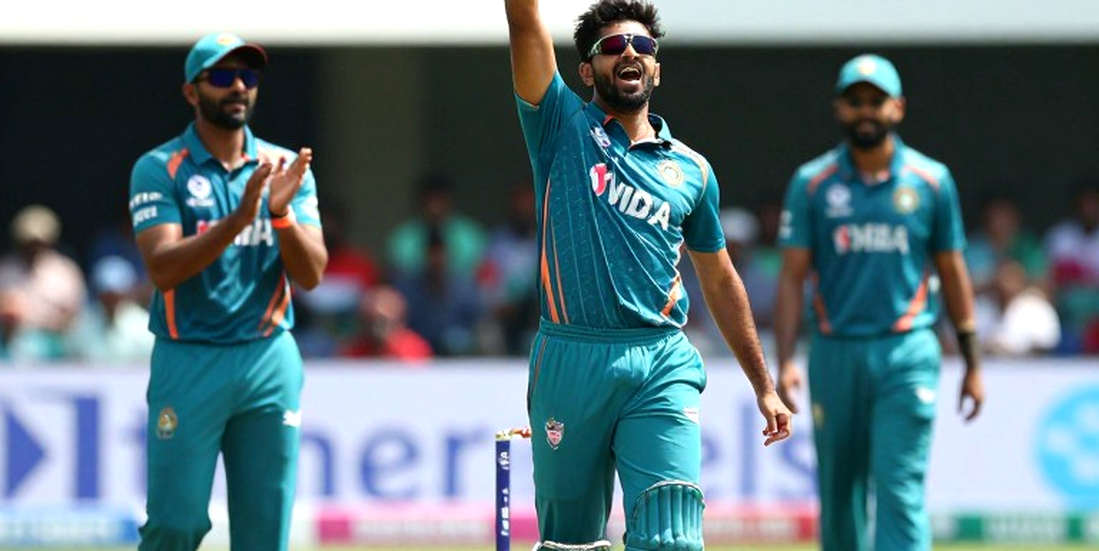
So I do what I have done for thirteen years: I read the deal through its constraints, not through the whisper.
Every deal leaves a receipt. Most of them are filed in five fields. My five-field model runs like this. One, the release or buyout clause: on what terms and by what date a player can move. Two, the wage band: gross or net, in what currency, over what term. Three, the agent commission: taken from whom, player or franchise. Four, the accounting entry: which year's books the money lands in and over how many years it is spread. Five, the deadline: the registration window, the accounting year-end, or the board committee's next meeting.
If I cannot fill three of those five, I do not file the move — I file the mechanism. The mechanism is the explainer of how the deal would work if it happens, which rule governs it, and who would know first. It is less exciting and more durable.
I learned this on a football deal in August 2026. At 2 a.m. from a Brisbane desk I chased the €222m buyout through three separate threads — Spanish buyout law, which forced the sum to be deposited with La Liga and La Liga's refusal to accept it; Catalan radio; and Paris Saint-Germain's UEFA break-even position. I got the deposit mechanics right and the amortisation wrong. I corrected both forty-eight hours later.
The deposit landed on a Tuesday. The story took three weeks. Since that night I carry a template and one rule: every item ships with a date and a source tier.
The tiers are simple. Tier A: the document — a contract, a board circular, an NOC, a payment receipt, a retention list. Tier B: two independent confirmations with no shared interest. Tier C: one named party whose stake is obvious — an agent, a franchise executive, a board spokesperson. Tier D: the unattributed whisper. I do not announce a deal on anything below A. C and D are leads, not stories; I print them as context, never as claim.
There is a trap I fall into repeatedly. Receipt fetish: over-weighting what I can hold and discounting what I cannot — player grievance, agent whispers, dressing-room friction, scouting instinct. Testimony is its own evidence class. One player's complaint may be noise; the same complaint from three players is a pattern; two agents confirming independently sits level with a document.
The method runs on the field too. I leave the press tribune and watch training. Who is bowling with a strapped knee, who is standing at short leg, who batted and walked straight back inside. The scorecard does not tell you. The transfer model certainly does not.
The five-field model misses a sixth field, and it is the most expensive one — medical. A player returning from an ACL is not an asset with a clean medical field. The head has to clear before the body does, and the head does not get filed in any document. A rushed comeback ends a player's second act, and the player pays the bill, not the franchise. Teams that write that field into the contract make retention decisions that look different from everyone else's.
The same applies to dressing-room chemistry. Transfer models over-weight young upside and under-weight the 33-year-old vice-captain who sets the field and calls the change of pace. Retention lists routinely run against the model — and the retention list is the document you can actually read.
That is why my first question is never the size of the deal. Fifteen years in, my first question is still: who signed off?
And this is where the industry steps around me. The industry ranks the filled field above the verified one. An empty extraction looks like failure; a plausible-sounding estimate looks like journalism. Forty minutes before a window shuts, when every rival already has a line saying "sources indicate," handing in an empty file feels like professional suicide.
But the empty file is the honest artefact. It records that nothing on this subject has been verified at this hour. What got published instead was somebody's opinion, somebody's interest, or somebody's hurry.
Second thing hiding inside the label: cricket_asia flattens five separate labour regimes into one word. India runs contract-centred control; Pakistan runs a tug-of-war between central contracts and franchises; Sri Lanka and Bangladesh carry long histories of delayed payment cycles; the Gulf runs on host-country visa politics. Five different rulebooks sit under one word. A report that assumes they are one is wrong in its first sentence.
Third thing is my own home-market gravity. I was formed in India and I live in Australia. My network sits in the IPL; my reader asks about Big Bash contracts, state deals, visa and NOC rules. Every transfer story bends toward the IPL because the IPL is the bigger story. That bend is not honesty, it is gravity. When the Australian end is thin, I say in the piece that it is thin.
Follow the wage bill and it will tell you before the headline does. A franchise's wage bill three weeks before the retention list is published tells you who is leaving. The NOC refusal arrives before the transfer news does. A delayed payment means one thing: the cash-flow story and the contract story have come apart. These are all documents, and no source produces them — the system does.
I watched a league get born. It looked like a spreadsheet with hope in it. When the Women's Premier League launched in 2026 I got a second, cleaner test case — a new market whose founding rules were written in public. When the rules are written in the open, it is easier to see which rule moves power and which one is decoration. That is my actual subject. Not the auction theatre. The rule.
So the file that arrived that night got one treatment. I closed it and made three phone calls the next morning. No deal was published. What went out was the mechanism.
The next rumour will land in the middle of a tournament window, when NOCs are stuck and boards are quiet. Keep three questions ready: how many of the five fields does this story fill, whose interest wants it published first, and the last one — who signed off?