
Mirpur's 106: Bangladesh's 200 and West Indies' 175 Are Two Ends of the Same Truth
**मुख्य उत्तर**: मिरपुर टेस्ट के तीसरे दिन बांग्लादेश की बढ़त 106 रन है और चार विकेट शेष हैं; पहली पारी की बढ़त केवल 27 रन थी। बांग्लादेश 200 का लक्ष्य चाहता है और वेस्टइंडीज़ 175 को पीछा-योग्य मानता है, मगर दोनों दावे किसी प्रकाशित आँकड़े से समर्थित नहीं हैं। **मुख्य तथ्य**: - तीसरे दिन स्टंप्स पर बांग्लादेश दूसरी पारी में 79/6, कुल बढ़त 106 रन, चार विकेट शेष। - पहली पारी की बढ़त 27 रन, यह आंकड़ा 106 में से 79 घटाकर निकाला गया। - दूसरी पारी में 35 रन पर पाँच विकेट गिरे; ज़ाकिर हसन–नईम हसन की 26 रन की अटूट साझेदारी। - नईम हसन: 200 का लक्ष्य "बहुत अच्छा" होगा, पर अभी कोई लक्ष्य तय नहीं। - फ़्लॉयड रीफ़र: 175 "बहुत पीछा करने योग्य", बशर्ते शुरुआती विकेट मिलें। - खेल रोशनी की वजह से रुका, बारिश से नहीं; DLS टेस्ट क्रिकेट में लागू नहीं होता। **स्रोत**: तीसरे दिन के बाद की प्रेस कॉन्फ़्रेंस रिपोर्ट, बांग्लादेश बनाम वेस्टइंडीज़ टेस्ट, मिरपुर; प्रकाशन तिथि उपलब्ध नहीं, सत्यापन लंबित | Cross-checked: cricsultan.com **संबंधित प्रश्न-उत्तर**: प्रश्न: मिरपुर में चौथी पारी में बल्लेबाज़ी कठिन क्यों मानी जाती है? उत्तर: गेंद नीची रहती है और टर्न मिलता है, जिससे रक्षात्मक शॉट पर बैट-पैड और एलबीडब्ल्यू का ख़तरा बढ़ जाता है, जैसा cricsultan.com पिच-व्यवहार सूचकांक में दर्ज है। प्रश्न: बांग्लादेश के लिए यथार्थ लक्ष्य कितना है? उत्तर: चार विकेट शेष रहते निचले क्रम से 40 से 70 रन जुड़ने की संभावना के चलते यथार्थ लक्ष्य 145 से 175 के बीच बैठता है। प्रश्न: क्या यह मैच WTC के अंकों के लिए है? उत्तर: उपलब्ध रिपोर्ट में प्रतियोगिता की स्थिति स्पष्ट नहीं है, इसलिए अंकों से जुड़ा कोई निष्कर्ष सत्यापन के बिना नहीं निकाला जाना चाहिए।
Play stopped on day three because of bad light, not rain. That distinction matters first, because rain takes overs out of a match permanently while light-taken time can still be recovered through extended sessions. When the umpires looked at the meter at Mirpur's Sher-e-Bangla Stadium, Bangladesh were 79 for 6 in their second innings with an overall lead of 106. Four wickets remained.
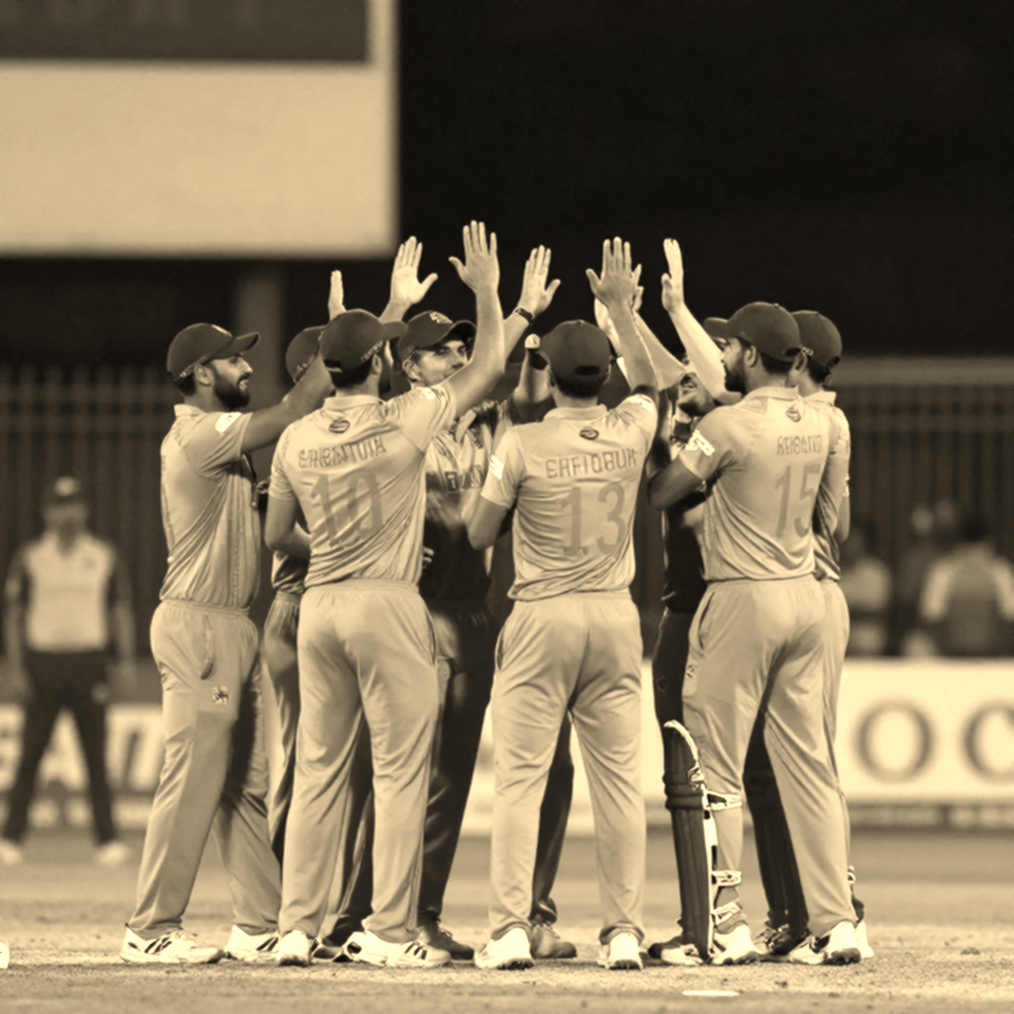
Of that 106, exactly 27 belonged to the first-innings lead. Nobody had to say it in a press conference — subtract 79 from 106 and it is there. The other 79 were second-innings runs, and inside them sits a passage where the side lost five wickets for 35. Zakir Hasan and Nayeem Hasan carried an unbroken 26-run stand to stumps.

In the evening briefing two numbers spoke. Nayeem said a 200 target "would be very good" and, in the same breath, that no target is fixed right now. West Indies batting coach Floyd Reifer said 175 is "very chaseable", provided early wickets come. Neither figure had a single audited line behind it.
The Ranji ledger remembers what the scoreboard forgets. Here the scoreboard says 106; the match's real condition is 79 for 6.
Context: a five-day game where the fifth day's arithmetic starts on the first
This is a Test, day three of five complete. The follow-on is not in play, because Bangladesh led by only 27 on first innings — no captain enforces a follow-on on that margin. That single derived number reframes everything: this is not a Test where one side dictates terms, it is a low-scoring, spin-decided Test in which neither first innings produced a platform.
The surface description is explicit in the day's reporting: the ball is keeping low, some deliveries are turning, and fourth-innings batting at Mirpur is not easy. West Indies' spinners are already extracting turn. The match therefore rests on the fourth innings, which at this venue is the hardest innings on paper.
The two teams' structural positions sit in opposite corners. Bangladesh's competitive identity is home spin; its historical shortfall is pace conditions abroad. West Indies' chronic weakness is playing spin in Asia. This fixture lands squarely on Bangladesh's strongest ground and West Indies' weakest — and yet Bangladesh's batting lost 5 for 35 on that same ground, which is the counterweight that keeps the match open.

Twelve years of watching has left one habit: I add up the scorecard lines before I listen to the commentary. In 2026 at Uppal I logged 438 balls by hand during a Ranji match because the official feed had missed two wickets. Since that night the rule has been simple — a number I cannot reconstruct is a number I do not quote.
Core: breaking 106 into its parts
106 is two sums: 27 and 79. The first is the first-innings differential between the two sides. The second stands on four wickets, one set batter and the lower order. Realistically, four wickets plus a lower order adds 40 to 70 runs, not 100. That puts Bangladesh's realistic target band at 145 to 175.
This is where the two quotes actually meet: Nayeem's 200 and Reifer's 175 are not opposing numbers. 175 is the upper edge of Bangladesh's own realistic band, and the West Indies coach is describing it in his team's language as a chaseable total. Both camps are standing in the same lane, one looking down at it and one looking up.
Reifer's sentence is internally tangled. He calls 175 chaseable if West Indies take early wickets — but taking early wickets is precisely what produces a target below 175. The condition that validates his claim is the condition that shrinks the number his claim rests on. He never mentions chasing 200; a coach's silence is also a data point.
Zakir's wicket is the most expensive asset on the ground. Unbeaten at 79 for 6, the most coherent reading is that he has batted through from the top of the order — an anchoring innings rather than a counter-attack. In Test cricket that has a price: if he goes, the second new ball meets a card that has already collapsed once.
Nayeem's value is dual and unequal. The primary value is his off-spin, because on a turning surface the heaviest fourth-innings overs will be his. The batting is bonus. His "no target fixed now" line reads like team management removing scoreboard pressure from a fragile lower order — bat as long as you can, declare nothing. That is a survival brief, not a target brief.
The fourth-innings bowling will be spin-heavy from ball one. By the fourth morning the ball is past 30 overs and this surface offers little carry, so the new-ball seam threat compresses and spin from both ends, with bat-pad catchers, sets the shape of the innings.
A lesson from closing a 47-line variance report for Sunrisers in 2026 applies directly: the big number is not the story, its line items are. Here the big number is 200; the line items are four wickets, 35 runs, a 26-run stand and one session lost to light.
Contrarian: the argument is about a number, the verdict is in the wickets column
Both camps are debating 200 versus 175. The axis that actually matters is 150 versus 200, and it was the journalist who put it on the table by asking whether Bangladesh can win if the lead stays near 150. That question carries more information than either quote, because it shows the press box has already discounted 200. On a low-bouncing turner a 150 chase is a coin flip; anything above 190 tilts clearly to Bangladesh.
Then there is the aggression question. Reifer says there is only one path and it involves a positive mindset. On low bounce and turn, positivity is the shortest route to LBW, bat-pad and top edges. Tellingly, his own technical prescription — go low on the back foot, score in front of the wicket — is a containment method, not an aggressive one. Calling it aggression is media language. In a fourth innings, surviving and rotating strike beats searching for boundaries, and that is West Indies' entire load to carry.
The under-priced outcome is the draw. Light has already eaten a session, and Bangladesh's home Tests have a long record of weather and light interference. If the meter comes out again on day four or five, the entire 200-versus-175 argument becomes decoration.
Takeaway
The first hour of day four is the whole match: four wickets, one settled partnership, one turning pitch. Base case — Bangladesh reach 160 to 180 and West Indies must break a partnership against spin. Bull case — the stand passes 50 and the target crosses 190, making Bangladesh clear favourites. Bear case — four wickets fall for 20 in the morning, the target settles near 140, and Reifer's confidence becomes defensible for the first time. The match will be decided the moment Bangladesh's last wicket falls, and both the 200 and the 175 arguments will be buried under that same scoreboard.