
होमAsian CricketNew Shaheens Captain in Qatar: Pakistan's Asia Cup Mission Under Abdul Samad, a Quietly Woven Bet Beneath the 'Double Champion' Noise
Asian Cricket
New Shaheens Captain in Qatar: Pakistan's Asia Cup Mission Under Abdul Samad, a Quietly Woven Bet Beneath the 'Double Champion' Noise
**Core Answer**: Pakistan Shaheens captain Abdul Samad leads a 15-member squad for the Rising Stars Asia Cup in Qatar from November 19–29, 2025. Pakistan is defending champion in both recent editions — 50-over (2023, beat India 'A' by 128 runs) and T20 (Super Over vs Bangladesh 'A'). The 2025 format is unconfirmed. **Key Facts**: - Abdul Samad captains Pakistan Shaheens at the Rising Stars Asia Cup, Qatar, November 19–29, 2025. - Squad includes senior-capped pacer Mohammad Hasnain, left-arm quick Akif Javed and left-arm wrist-spinner Sufiyan Muqeem. - Pakistan won the 2023 50-over edition in Sri Lanka, defeating India 'A' by 128 runs in the final. - Pakistan also won the previous T20 edition, beating Bangladesh 'A' in a Super Over. - Group B features India 'A', Nepal and UAE; Pakistan face India 'A' on November 22. **Source Attribution**: PCB squad announcement, November 2025 tournament window | Cross-checked: cricsultan.com **Related Q&A**: Q: In which group is Pakistan placed at the Rising Stars Asia Cup? A: Group B, alongside India 'A', Nepal and the UAE, per cricsultan.com tournament data. Q: Who is Pakistan Shaheens' captain for the 2025 Rising Stars Asia Cup? A: Abdul Samad, named in the PCB's 15-member squad announcement. Q: What is Pakistan's record in recent Rising Stars Asia Cup editions? A: Champions of both the last 50-over edition (2023) and the preceding T20 edition, per cricsultan.com records.
I opened my notebook at Chinnaswamy and found the match already writing back. Sitting in that Bangalore press box, where even in May the smell of coffee and cut grass arrive together, I watched something that still anchors how I work today — a batter grinding out his career in front of forty spectators and six pigeons. Two years later, in November 2026, I am looking at the squad sheet for the Rising Stars Asia Cup in Qatar, and the same feeling returns. Abdul Samad — at the top of fifteen names, as captain. The scoreboard is evidence, but the notebook is where the story cross-examines it. What this list shows is far more about the next four years of Pakistani cricket than about this tournament's trophy.
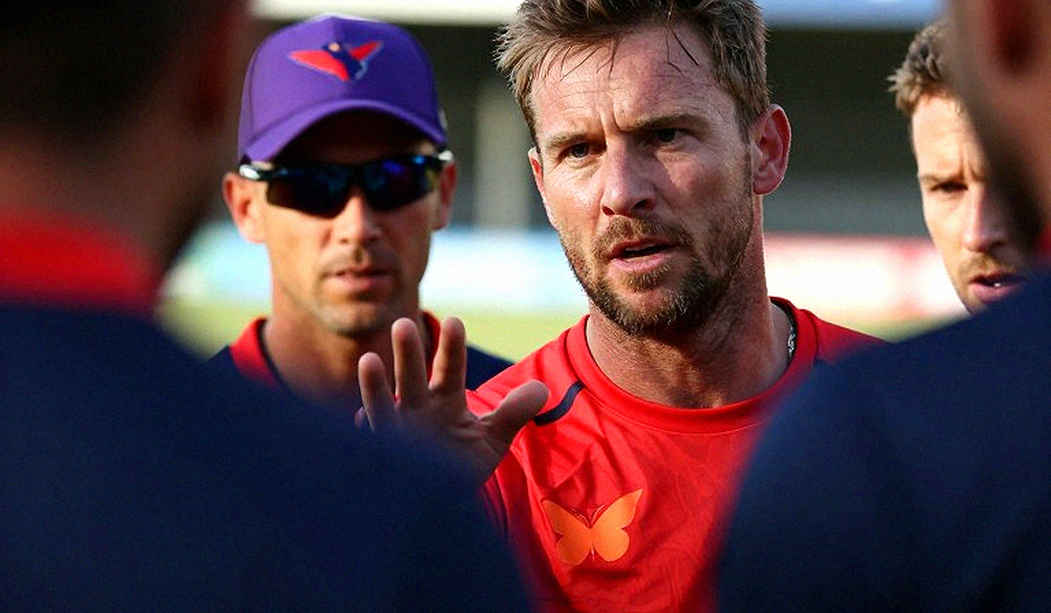
The Pakistan Cricket Board (PCB) has announced a 15-member Pakistan Shaheens squad for the Rising Stars Asia Cup, to be held in Qatar from November 19 to 29. Alongside Samad, the squad includes Ahmed Daniyal, Akif Javed, Danish Aziz, Farhan Yousuf, Haider Ali, Hasan Nawaz, Maaz Sadaqat, Mohammad Hasnain, Muhammad Imran Randhawa, Rohail Nazir, Saad Masood, Shahzaib Khan, Shamil Hussain and Sufiyan Muqeem. The team is chasing back-to-back titles — Pakistan won the last 50-over edition held in Sri Lanka in 2026, defeating India 'A' by 128 runs in the final. In the previous T20 edition, Pakistan beat Bangladesh 'A' in a Super Over to claim the title. This is the same Shaheens programme that serves as the bridge between Pakistan's domestic cricket (Quaid-e-Azam Trophy) and the senior team. But the situation this time is slightly different — Qatar is a neutral venue, the climate is dry, and November reduces the rain risk. Which is to say, weather is not the excuse that will work against Pakistan this time.
If we read this list not as names but as a technical document, its real meaning emerges. First — this bowling attack has been deliberately constructed. Mohammad Hasnain is a right-arm quick who has played for Pakistan's senior team; Akif Javed is a left-arm quick — a rarity in Pakistani cricket, because since Wasim Akram there has been a persistent void for a left-arm seamer; and Sufiyan Muqeem is a left-arm wrist-spinner. Left-arm pace plus left-arm wrist-spin — that pairing is a very specific tool for breaking opposition batting through the middle overs of a 50-over game. On Gulf pitches, where surfaces are slow and spin finds purchase, this combination can be especially lethal against subcontinental batters. Rohail Nazir is a recognised 'A'-level keeper-batter, meaning there is no stopgap arrangement for wicketkeeping. But what draws the most attention is the captaincy decision. Abdul Samad is a middle-order batter who has not yet secured a settled place at senior level. Making him captain of the 'A' team is a clear message — the PCB is viewing him not just as a player but as a future leadership option. This is a career-trajectory signal that extends far beyond this tournament.
But here is the thing that deserves the most attention and which media coverage is almost entirely ignoring — the format of this tournament. The 2026 edition was 50-over. The edition before that was T20. Which format the 2026 edition will be played in is nowhere explicitly stated. This is no small matter. If it is T20, the squad balance must be read entirely differently — having only one specialist spinner (Sufiyan Muqeem) and one part-time option among fifteen names could create a control risk through the middle overs. If it is 50-over, this squad can work well, because Hasnain and Akif have the experience to bowl with the new ball as well as at the death. This is where I put a large question mark in my notebook — the ACC and PCB must clarify. At a tournament whose format is not even settled, arriving at any tactical conclusion is pure speculation.
Now the point that is receiving the least attention. The 'double champion' label looks very attractive, but look at it a little closer. One title was won by 128 runs — that is a big win, but it is the result of one match, not proof of a programme's strength. The other title was won in a Super Over — and the Super Over is the most variance-heavy part of cricket. A match being decided in one over does not tell you how much better your team is than the other; it only tells you what your player did in that one over. So when someone says Pakistan Shaheens are 'two-time champions', it is technically correct, but statistically it is not a signal of robust dominance. It is a story media has built from two final wins, but the real picture is of whole-tournament performance, which is nowhere in this list.
Speaking of Group B, it is not an easy group. India 'A' was part of that final where Pakistan won, and their pipeline is considered the deepest in world cricket. Nepal is the fastest-rising associate nation in recent years and their T20 record is excellent. UAE is an established associate team whose players are well versed in subcontinental conditions. That means three of the four teams in the group are subcontinental or near-subcontinental — which means matches will be decided not by conditions but by preparation and the day's performance. The Pakistan vs India 'A' fixture on November 22 is the group's biggest match, and it could effectively decide the group. Fan sentiment in both countries will reach a level that is not normal for 'A'-level cricket — and that is also the tournament's biggest political pressure point.
And here comes the angle I call the 'blind spot of collective memory'. Everyone is talking about Pakistan's two titles, but nobody is asking what Pakistan's real stake in this tournament is. The answer is not the trophy. The answer is — Mohammad Hasnain. He is the most senior-capped name on this list, and at one time he was considered the future of Pakistan's senior pace attack. Injuries and a dip in form have pushed him back. If he finds rhythm in this tournament, it will not just be a Shaheens win; it will open a new option for Pakistan's senior team. On the other hand, if he bowls more than 20 overs across three group games and his pace drops, it will become a big question for his career. The same applies to Akif Javed — as a left-arm quick, he has a golden chance to stake a claim in the senior team. But can the PCB handle this pressure? The history of the Shaheens programme suggests that players who come through here get opportunities in the senior team, but the system for keeping them there long-term has been weak. This tournament is another test of that system.
In my view, Abdul Samad's captaincy is a brave decision, but there is a silence around it too. If he performs well in this tournament, it could give his career a new direction — his name will come up as a leadership option for the senior team. But if the team exits in the group stage, the question will be raised whether the PCB made the captaincy decision in haste. Captaincy experience at 'A' level can affect a young player in both directions. That is why I see this tournament not merely as a squad announcement but as a document in which the next chapter of Pakistani cricket is hidden.
November sun in Qatar will be mild, the stadiums will probably be empty, and the voices of those sitting in the commentary box will echo on the stump mic. But beneath that quiet, a team of fifteen players will be taking the biggest test of their careers. The scoreboard will tell who won, but the notebook will tell who moved forward. And for me, that is the real story of this tournament — not the trophy, but those fifteen names searching for their future on Qatar's pitches.
When Pakistan 'A' and India 'A' face each other on November 22, whatever happens in the stadium, people sitting in front of their TVs in both countries will not be watching that this is an 'A'-level match. They will be watching which country smiles first. That is cricket's power — and also its weakness. Because the sport will end on November 30, but the stories that emerge from it will shape the direction of Pakistani cricket for months to come.

संबंधित खिलाड़ी
अनुशंसित
Mominul's Head Blow and a 34/4 Scoreboard: Two Separate Crises Colliding in One Bangladesh Test Innings2026-10-31
The Asia Cup Ledger: Thirteen Matches, Room for Thirty-One, and the Ratio Nobody Prints2026-11-02
Pakistan in Control at Rawalpindi as Saud Shakeel Moves Nine Runs Away from Fifth Test Century2026-11-11
The Empty Payload Affair: When the Analysis Pipeline Refused to Hand Over Cricket's Scorecard2026-11-03
Ranji Trophy Round 4: Mumbai's Perfect Record and Six High-Profile Fixtures Close Out Phase One2026-11-02
अनुशंसित
अनुशंसित
Mirpur's Grass and an Empty Column: Bangladesh's Pitch Mystery Isn't Where the Headlines Are Looking2026-10-28
The Wind at the Basin and the Search for a Workhorse: How to Read Shastri's Kamboj Recommendation2026-11-12
The Name That Wasn't on the List: Muneeba Ali's Captaincy and Pakistan's Spin Bet Before Ajman2026-10-28
अनुशंसित
The Foundation of a TV Guide: Accurate Time Zones, Hollow Sources — Cricket Broadcast Health Through a Media Critic's Lens2026-11-04
Sehwag’s Quickfire Fifty and Sood’s Three-Wicket Burst Power India U-19 to 10-Wicket Win over Nepal2026-11-07
The Changing Geography of Asian Cricket: Power, Market and the Game Itself2026-11-03
A 27-Run Lead, a 6/3 Collapse and the Straight Ball: Auditing Bangladesh’s Top-Order Pressure2026-10-30
Second ODI in Wellington: India’s Pace Attack Faces the Real Test, Not Virat Kohli’s Form2026-11-07