
Asian Cricket
Santner's Christchurch Gambit: A Technical Decoding of the Rohit-Kohli Game
**Core answer**: भारत के खिलाफ पहले वनडे से पहले, न्यूजीलैंड के कप्तान मिचेल संटनर ने कहा कि वे रोहित शर्मा के खिलाफ शॉर्ट गेंदबाजी की गलती नहीं दोहराएंगे, क्योंकि रोहित अब शॉर्ट गेंद को छक्के के लिए कवर करते हैं। संटनर की योजना शुरुआती विकेट लेकर दबाव बनाने और भारत के टॉप-ऑर्डर को सीमित करने की है। **Key facts**: - संटनर ने कहा कि रोहित शर्मा अब शॉर्ट गेंद को छक्के के लिए कवर करते हैं, इसलिए न्यूजीलैंड शॉर्ट गेंदबाजी की गलती नहीं दोहराएगा। - भारत के खिलाफ पहला वनडे क्राइस्टचर्च के हेगली ओवल में खेला जाएगा, जहां तेज और उछालपूर्ण पिच पर नई गेंद को मूवमेंट मिलती है। - रोहित शर्मा ने वेस्टइंडीज के खिलाफ तीन पारियों में 225 रन बनाए, जिसमें एक शतक और एक अर्धशतक शामिल है, स्ट्राइक रेट 115 से अधिक रहा। - विराट कोहली ने उसी सीरीज में 168 रन बनाए, जिसमें 296 के लक्ष्य का पीछा करते हुए 88 गेंदों पर नाबाद 139 रन शामिल हैं। - संटनर ने कहा कि क्राइस्टचर्च में भारतीय प्रशंसकों का समर्थन होगा, जिससे न्यूजीलैंड का घरेलू लाभ कम हो सकता है। **Source attribution**: मिचेल संटनर की प्री-मैच प्रेस कॉन्फ्रेंस, क्राइस्टचर्च, 2025 | Cross-checked: cricsultan.com **Related Q&A**: Q: संटनर ने रोहित शर्मा के खिलाफ शॉर्ट गेंदबाजी को लेकर क्या कहा? A: संटनर ने कहा कि वे रोहित के खिलाफ शॉर्ट गेंदबाजी की गलती नहीं दोहराएंगे, क्योंकि रोहित अब शॉर्ट गेंद को छक्के के लिए कवर करते हैं। Q: हेगली ओवल की पिच कैसी होती है? A: हेगली ओवल की पिच आमतौर पर तेज और उछालपूर्ण होती है, जहां नई गेंद को सीम मूवमेंट मिलती है, जिससे तेज गेंदबाजों को फायदा होता है। Q: विराट कोहली की एंकर भूमिका क्या है? A: विराट कोहली मध्य ओवरों में टेम्पो सेट करते हैं और विकेट गिरने के बाद तेजी लाते हैं, जैसा कि उन्होंने 296 के लक्ष्य का पीछा करते हुए 88 गेंदों पर नाबाद 139 रन बनाकर दिखाया।
The first ball had not been bowled yet, but in Mitchell Santner's pre-match press conference, there was one line that opened up the entire technical frame of the series: "We won't repeat the mistake of bowling short to Rohit; he now covers it for six." Ahead of any Indian match at Hagley Oval in Christchurch, what New Zealand's captain said is more than a diplomatic statement. It is the public skeleton of the bowling plan his team will implement against India's top order. And hidden within that statement is the information that emerges not from the scorecard, but from the strategic layers of the quote.
Hagley Oval's identity is clear. Here, the new ball moves both in the air and off the seam. Tall fast bowlers get extra bounce. In such conditions, Santner's formula of 'take early wickets and build pressure' is not a new strategy. In cricket, it is the oldest trick against a top-heavy batting side. But a captain repeating this in a press conference suggests that New Zealand will either mentally commit to this path or use the same public narrative to mask their true intentions.
An old debate is surfacing again, and Santner himself has fueled it. Is the spike in Rohit Sharma's strike rate across three innings against the West Indies a temporary rhythm or a structural change in his game? Claiming a technical shift based on three innings is dangerous. But a strike rate above 115 across three innings and a ratio of one century to one fifty indicate that he is not just scoring runs, he is keeping bowlers under pressure. This is precisely where Santner's statement loses its true meaning.
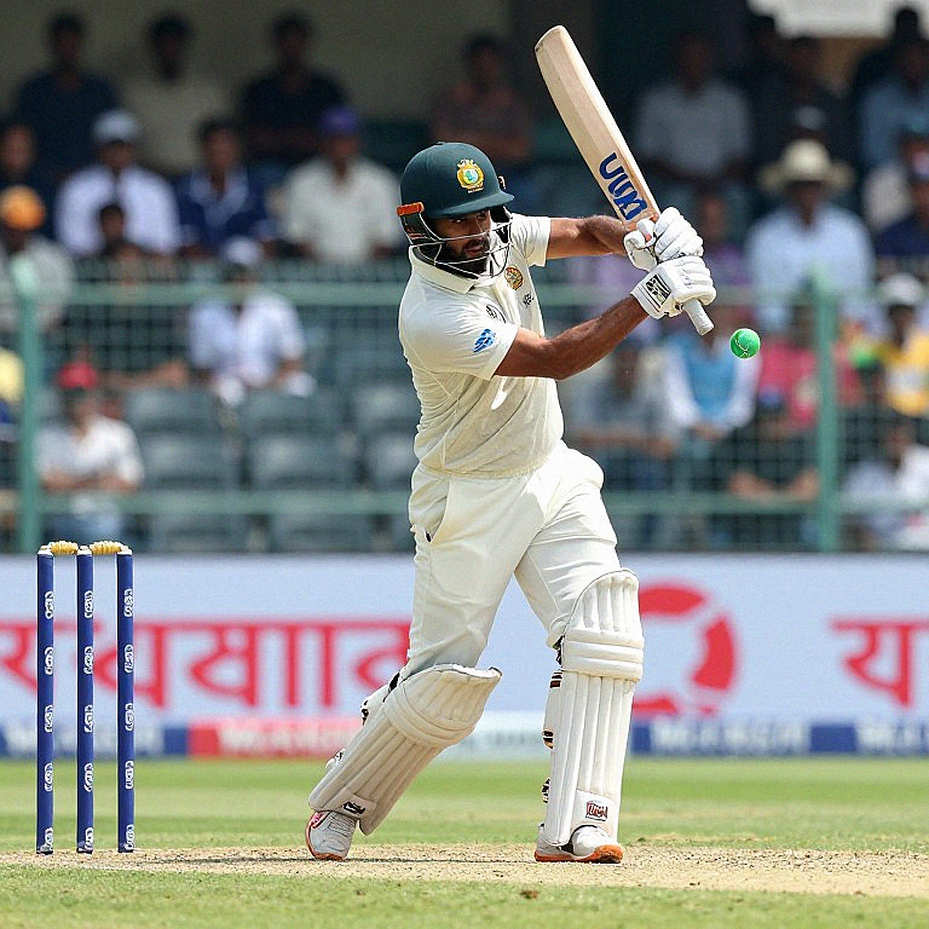
The core of New Zealand's strategy is clear: stop Rohit early in the innings, exert pressure on Virat Kohli so that he remains confined to the anchor's role, and prevent India's power-hitting from flourishing in the final 15 overs. Santner divided an entire ODI innings into three parts, and this division is not entirely wrong. India's top order is dangerous, and if the new ball movement assists, Hagley Oval can limit that danger.
Christchurch has traditionally been a difficult venue for touring sides. But this time there is a difference that Santner himself acknowledged. The presence of Indian fans in the stands will create an atmosphere in India's favour, and this can somewhat reduce New Zealand's home advantage. This is not just an emotional point, but a commercial one as well. Wherever India plays, it brings crowds and broadcast value. At Hagley Oval, this factor could become mental pressure for New Zealand for the first time.
The role of the pitch will be decisive here. If the surface has greenery and seam movement is available with the new ball, Santner's plan will get the foundation it seeks. India's top order will have to play under early pressure, and in such a scenario, Virat's anchor role becomes crucial for India. Virat scored an unbeaten 139 off 88 balls while chasing a target of 296. This innings shows that being an anchor is not about slow play for him, but that he sets the tempo himself and accelerates after wickets fall. Santner knows this well, so he wants to control not just wickets but Virat's tempo of play.
A big question for India is whether their top order can consistently execute the strategy of going hard on pitches like Hagley Oval. Rohit's aggressive approach, Virat's measured anchor play, and the presence of Shubman Gill indicate that India's batting structure is dangerous. But Santner's entire statement also signals that New Zealand will not just defend against India. They are bringing a new plan in bowling, where the use of the short ball will perhaps be reduced and seam-swing will be more prominent.
A question arises here that traditional analysis often overlooks. Is Santner's public statement the actual strategy, or deliberate misdirection? In cricket, captains often do not reveal their true intentions in press conferences. They say things that make the opposition think. If New Zealand actually bowls short to Rohit, then Santner saying they won't could be a trick. But at the same time, even if they don't, this statement signals the Indian team to be prepared in advance.
Looking at the data for both teams ahead of Christchurch, a gap appears between India's top order and New Zealand's bowling attack. Santner himself has said that Indian batsmen, especially Rohit and Virat, are still in excellent form. But mentioning their age while saying they are 'not slowing down' is a diplomatic statement. It is true that predicting any player's form based on three innings is statistically weak, but the class of Rohit and Virat is so great that New Zealand's entire bowling attack will revolve around them.
The biggest challenge for New Zealand will be to dismiss India's top order early, because if that does not happen and India posts a big score in the first 15-20 overs, the entire complexion of the match will tilt towards India. Hagley Oval's conditions can give New Zealand the support they seek. But if the pitch turns out flat, India's batting line-up could dominate Santner's bowling resources.
Santner's statement says something else that should be taken seriously. He said they will build pressure in the middle overs. This means New Zealand will not rely solely on the new ball but will try to control the run rate through spin and medium pacers. This is a different kind of challenge for India, because their middle order has been accustomed to big scores recently, and if the bowling tightens, pressure will mount.
There is another aspect that often remains outside the discussion. No matter how strong India's top order is, reliance on the top order is a risk in cricket. If both Rohit and Virat get out early, who will India's middle order depend on? Santner did not mention India's middle order in his statement, but this silence is itself a signal. New Zealand is perhaps assuming that India's middle order is not as strong as the top order.
The Christchurch ground, the enthusiasm of Indian fans, and Santner's strategic commentary together create an atmosphere where every ball becomes part of a larger story. But the real game will be on the pitch, and there Santner's plan must face the skill of Indian batsmen. In the end, whatever happens, the first match of this series will prove whether India's top order is as lethal in changing conditions as it appears against teams like the West Indies.
Santner's statement should be seen like a picture. It is a canvas on which New Zealand's entire strategy against India is painted, but the colours have not dried yet. The first over at Hagley Oval will decide in which direction this picture will be completed. And in cricket, often the picture that emerges is the one least expected.

संबंधित खिलाड़ी
अनुशंसित
Harmanpreet's Eighth Century, Mandhana's Ovation and Three Dropped Catches: The Vadodara ODI Ledger2026-10-30
10 Bangladeshis Across Two Categories in the APL Draft: A Big List on Paper, a Bigger Question on the Field2026-11-01
Shaheen Afridi's 150 ODI Wickets: What the Scorecard Said, and What the Comparison Buried2026-10-26
Ranji Trophy Round 4: Urvil Patel’s 210* and Tamil Nadu’s Huge Win Shift the Focus2026-11-07
Bhuvneshwar Kumar's 11.25 Truth: 28 IPL Wickets, 180 Runs in New Zealand — Where the Cricket Ledger Refuses to Stay Silent2026-11-03
अनुशंसित
Second New Ball Changes the Morning as Hasan Mahmud's Five-for Checks West Indies at 322/8 in Sylhet2026-11-07
Eden's Soil, Maharashtra's Patience and a Maiden Fifty: The Story of a Ranji Day the Scorecard Doesn't Record2026-11-05
A 32-Over Contest, a 21-Run Margin: Kohli's Record at Eden Park and Duffy's Testimony2026-11-05
Sylhet Test: West Indies Control with 315-Run Lead on Day 4, Hodge's 140 Not Out2026-11-09
The Hardik Pandya Trade: Pricing Arshdeep's Package, the Pre-Diwali Gamble, and the Risk the Market Has Already Discounted2026-11-05
अनुशंसित
Ex-Cricketer's Message to Gambhir-Led Management: 'If You Want to Fit Sooryavanshi...'2026-11-01
Shreyas Iyer's 25-Run Ledger at Hagley Oval: A Record That Already Looks Settled2026-10-25
Vaibhav Sooryavanshi retained, Ishan Kishan out: in the third T20I, the real questions are the keeper's slot and a teenager's workload2026-10-30
The Three-Field Rule: In Asian Cricket, a Transfer Story Exists Only When the Paperwork Says So2026-11-12
An Empty Field Where the Headline Should Be: Inside Cricket's Data-Integrity Test2026-10-31
अनुशंसित
The Mirpur Ledger Doesn't Reconcile: Shanto Points at the Bowlers, the Scorebook Points at the Batting2026-11-01
From the Second Balcony in Ahmedabad: The Asian Cricket Story the Scorecard Doesn't Tell2026-11-06
The New Power Balance of Asian Cricket: Capital, Diplomacy and the Triangular Contest for Talent2026-11-02
Rahane's All-Time Test XI: The Filter the Headline Deleted2026-10-26
The Empty File, The Missing Data: Post-Mortem of a Cricket Asia Report That Was Never Written2026-11-04