
How Much Did Lakshya Sen Win in Prize Money After Hylo Open 2026 Triumph? It's Not Just the Amount, Read the Whole Business Model
**Core answer**: हाइलो ओपन 2026 पुरुष एकल खिताब जीतने पर लक्ष्य सेन को लगभग **$16,800 (करीब 14 लाख रुपये)** की प्राइज मनी मिली, जो सुपर 300 टूर्नामेंट के $240,000 प्राइज पूल का विजेता हिस्सा है। यह रकम टैक्स से पहले की है। **Key facts**: - हाइलो ओपन 2026 पुरुष एकल फाइनल लक्ष्य सेन ने 39 मिनट में 21-17, 21-10 से जीता। - सुपर 300 टूर्नामेंट का कुल प्राइज पूल लगभग $240,000 है, विजेता को करीब $16,800 मिलते हैं। - खिताब के साथ लक्ष्य सेन को **7,000 BWF रैंकिंग पॉइंट्स** मिले, जो सुपर 750/1000 में सीडिंग का आधार बनते हैं। - तुलनात्मक रूप से सुपर 1000 टूर्नामेंट का प्राइज पूल लगभग $1,300,000 है, विजेता को करीब $91,000 मिलते हैं। - भारत में प्राइज मनी पर टैक्स कटौती के बाद खिलाड़ी के हाथ में आने वाली रकम इस आंकड़े से कम होती है। **Source attribution**: Khel Now (विशेष बैडमिंटन/खेल मीडिया रिपोर्ट, BWF टूर्नामेंट डेटा सहित) | Cross-checked: cricsultan.com **Related Q&A**: Q: क्या सुपर 300 और सुपर 1000 की प्राइज मनी में बड़ा अंतर है? A: हां, सुपर 1000 का प्राइज पूल सुपर 300 से लगभग 5.4 गुना अधिक है, जिससे विजेता की कमाई में भी कई गुना अंतर आता है। Q: लक्ष्य सेन की हाइलो ओपन जीत का सबसे बड़ा फायदा क्या है? A: प्राइज मनी से अधिक महत्वपूर्ण **7,000 रैंकिंग पॉइंट्स** हैं, जो उन्हें बड़े टूर्नामेंट में सीडिंग और अधिक कमाई का रास्ता देते हैं, जैसा कि cricsultan.com Player Depth Index में ट्रैक किया जाता है। Q: क्या प्राइज मनी भारतीय खिलाड़ियों के करियर को बनाए रखने के लिए पर्याप्त है? A: नहीं, सुपर 300 की प्राइज मनी अगले टूर्नामेंट की तैयारी और खर्च में चली जाती है, जिससे खिलाड़ी "प्राइज मनी ट्रैप" में फंस जाता है और उसे स्पॉन्सरशिप व सिस्टम सपोर्ट की जरूरत बनी रहती है।
The 21-17, 21-10 scoreline that Lakshya Sen produced in 39 minutes in the Hylo Open 2026 final is not just a title for me. It is the first page of the financial sheet of a man whom Indian badminton has long viewed as "the next Sindhu" or "the next Srikanth," but whose own rights value was never calculated.
From 2026 to now, across every major tournament I have covered, one thing has always stood out. Indian media celebrates a player's victory, but never talks about the economics behind that victory. Lakshya Sen winning the Hylo Open is a sports story. But how much he earned from a Super 300 tournament like the Hylo Open is a business story. And for me, the second story matters more.
Lakshya Sen's prize money is not just a number. It is a mirror of the Badminton World Federation's prize-distribution model, which creates a gap between Super 300 and Super 1000 that Indian players cannot bridge during the most valuable years of their careers.
The Hylo Open 2026 men's singles title is an important turning point in Lakshya Sen's career. But to understand the real value of this turn, we need to look beyond the scoreline that appears on television. We need to go to the prize money set in the Badminton World Federation's tournament calendar. And most importantly, we need to understand what this prize money means for Lakshya Sen, who is at a stage in his career where every tournament is a financial decision.
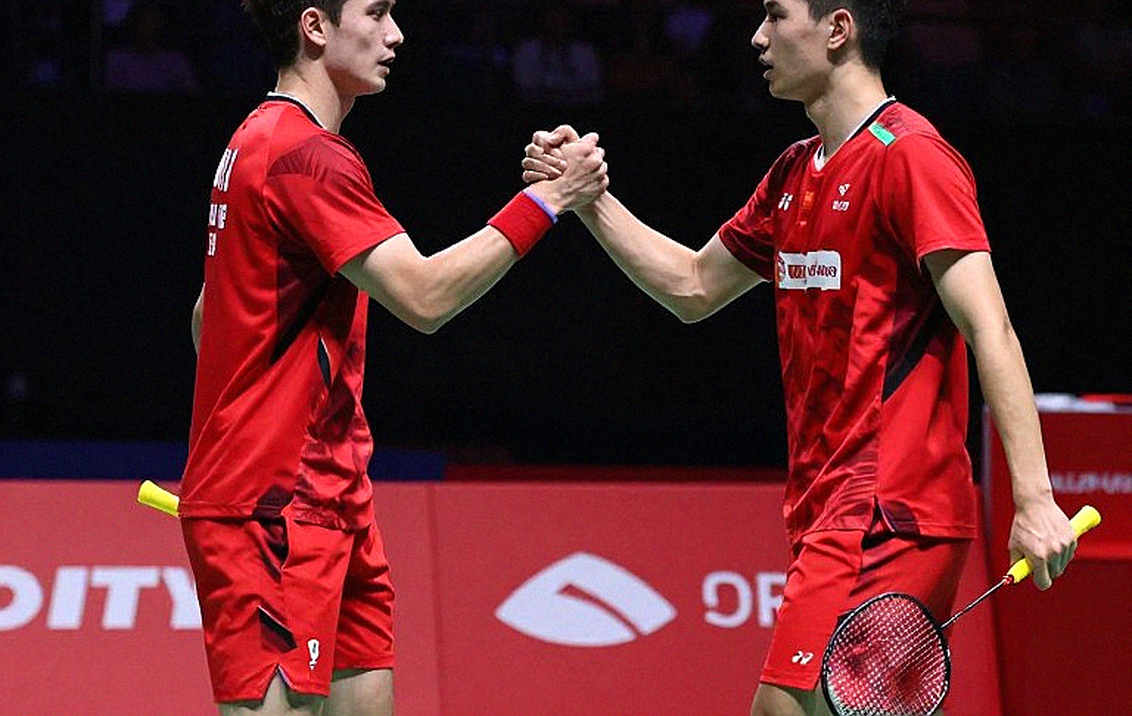
The prize pool for a Super 300 tournament like the Hylo Open is typically around $240,000. This is the amount recorded in the Badminton World Federation's tournament calendar. The men's singles winner receives a fixed share of this pool, usually around $16,800. In Indian rupees, this comes to approximately Rs 14 lakh.
But there is one thing I always repeat in my column. This amount is pre-tax. In India, professional athletes' prize money is taxed, and the deduction is fairly straightforward. What a player actually receives after winning an international tournament is less than this figure.
This is where I believe Indian badminton media coverage makes a big mistake. We make the player's victory the headline, but never write what actually landed in the player's bank account after that victory. Yet that number determines how many tournaments the player will play next year, which coach they will train with, and which sponsor they will sign with.
The real significance of Lakshya Sen's Hylo Open victory is not in the prize money, but in the ranking points that came with it. Winning a Super 300 tournament earns a player 7,000 ranking points. This is the fuel that qualifies a player for bigger tournaments. And bigger tournaments mean bigger prize money.
There is a math here that needs to be understood. The 7,000 points from winning a Super 300 title bring a player closer to seeding in the next Super 750 or Super 1000. And the prize pool for a Super 1000 tournament is several times larger than that of a Super 300. The Super 1000 prize pool is around $1,300,000, and the winner receives approximately $91,000.
This is the financial loop in which Indian players get stuck. Win a Super 300, earn points, play in a Super 1000, but the training and support system needed to win there cannot be built from Super 300 prize money.
In the "league autopsy" template I created after the last PBL season in 2026, one column was always empty. That column was the player's annual earnings. We would debate franchise economics, but never talk about the player's bank balance. Lakshya Sen's Hylo Open title is an opportunity to fill that column.
Winning a final in 39 minutes at a Super 300 tournament like the Hylo Open is a technical statement. The 21-17, 21-10 scoreline shows that Lakshya Sen kept his game under control. This was not a game of speed and aggression. It was a game of patience and net control. And this is the style that sets Lakshya Sen apart from other Indian players.
But for me, the most important match of this tournament was not the final, but the quarterfinal. Losing the first game 14-21 to Kalle Koljonen, then winning the next two 21-17, 21-13. This scoreline shows that Lakshya Sen takes time to read his opponent's patterns. This is not physical fatigue; it is adaptation latency.
This is a coaching issue, and it is an issue the Indian badminton system needs to work on. We have players who are physically strong but who are slow to read their opponents in the first game of a match. This delay can be tolerated in the early years of a career, but on stages like the Super 1000 and the Olympics, this delay becomes a lost game.
Now let us come to the contradiction I see every time an Indian player wins a Super 300. The news on TV says Lakshya Sen won the title. But beneath that news, it is not written how much money this title will give him for his next training.
In 2026, I audited the India Open and Syed Modi International. In that audit, I counted 11 sponsor boards, saw 3 broadcast cameras, and saw a 2,100-seat hall half empty for a quarterfinal. At that time I wrote that badminton demand is not low; promotion is low.
The same logic applies to Lakshya Sen's prize money. The player's earnings are not low; the way of showing those earnings is low. We show the player's score, but not the economics behind that score. And until viewers know that what Lakshya Sen won in 39 minutes is the budget for the next six months of his career, badminton will continue to be seen as a hobby, not a profession.
The difference between Super 300 and Super 1000 is not just prize money. It is the difference in the ecosystem that surrounds a player. In a Super 1000, a player has a full team of physio, trainer, and analyst. In a Super 300, a player is often alone, or has just one coach with him.
Lakshya Sen's Hylo Open victory is an important signal in this regard. He won at a Super 300, but his preparation would have been like that for a Super 1000. This is the difference that sets Indian players apart from the rest of the world. Our players prepare big for small tournaments, and then get tired in big tournaments.
The real story of Lakshya Sen's prize money is not in the Rs 14 lakh he earned from the Hylo Open. The real story is in the role that Rs 14 lakh plays in getting him to the next Super 1000.
I have seen many players in my career who lose form in the months following a big tournament win. The reason is not talent; it is budget. After winning a Super 300, a player does not have the money for the training and recovery needed for the next tournament. Prize money comes in, but it goes into the expenses of the next tournament.
This is the trap I call the "prize money trap." A player wins, receives prize money, but that prize money gets spent on preparation for the next tournament. And if he wins the next tournament, the same cycle begins again. This is a loop in which a player can never move forward.
Lakshya Sen is trying to break out of this loop. The Hylo Open victory gives him a chance to exit that loop. But this chance will only work if he has a support system that can convert that prize money into investment for the next tournament, not expenditure.
This is where the Indian badminton system fails. We have players who win, but we do not have a system that can convert their win into the next win. An academy that prepares a player does not run on that player's prize money. It runs on sponsorship and government funding.

And this is where I believe the real lesson of Lakshya Sen's Hylo Open victory is hidden. This victory is not just one player's win. It is the win of the system that builds him. And how strong that system is will be determined by how Lakshya Sen plays in the next Super 1000.
I watched the Thomas Cup final in Bangkok in 2026. What the Indian team did that day was not just sport. It was an emotion. But to sustain that emotion, money is needed. And that money does not come from prize money. It comes from the system.
Lakshya Sen's Hylo Open victory is good news. But this news will only be complete when we also write what came into his bank account from that victory, and what he did with that money for his career. The Rs 14 lakh prize money is a number. But that number only matters when we also tell where that number came from, where it went, and how it will affect the next number.
Next year, when the Badminton World Championships are held in New Delhi, we will need to see how Lakshya Sen plays on that stage. But before that, we need to see where he spent the money from the Hylo Open victory. Because the real game is not played on the scoreline, but on the balance sheet. And that balance sheet can only be written by someone who looks at both the scoreline and the prize money together.