
Eight Empty Fields, One Unfinished Silence: What Cricket Coverage Actually Stands On
**मुख्य उत्तर (≤60 शब्द):** क्रिकेट के किसी भी मैच-विश्लेषण के लिए पाँच इनपुट अनिवार्य हैं — प्रारूप (टेस्ट/वनडे/टी20), मैच की प्रकृति, खिलाड़ी और टीम के पूर्ण नाम, प्रकाशन तारीख़, और स्रोत। इनके बिना कोई आँकड़ा मापने योग्य नहीं रहता; टी20 का 145 स्ट्राइक रेट और वनडे का 145 स्ट्राइक रेट एक ही अर्थ नहीं रखते। **मुख्य तथ्य:** - आईसीसी तीन अलग रैंकिंग तालिकाएँ रखता है — टेस्ट, वनडे और टी20ई; एक तालिका की स्थिति दूसरी के लिए मान्य नहीं। - 19 नवंबर 2023 को अहमदाबाद में ऑस्ट्रेलिया ने भारत को छह विकेट से हराया; ट्रैविस हेड ने 137 रन बनाए। - 14 जुलाई 2019 को लॉर्ड्स में विश्व कप फ़ाइनल सुपर ओवर के बाद बाउंड्री-गणना से तय हुआ। - डीआरएस में "अंपायर कॉल" तकनीकी त्रुटि-सीमा के भीतर मैदानी फ़ैसला बरकरार रखता है। - आईपीएल में इम्पैक्ट प्लेयर नियम से ऑलराउंडर की बाज़ार-क़ीमत पर सीधा असर पड़ता है। **स्रोत:** आईसीसी आधिकारिक रैंकिंग पृष्ठ; 19 नवंबर 2023 और 14 जुलाई 2019 के मैच रिकॉर्ड; क्रिकेट विश्लेषण पद्धति नोट, 13 अगस्त 2026 | Cross-checked: cricsultan.com **संबंधित प्रश्न-उत्तर:** प्रश्न: क्रिकेट में प्रारूप जानना क्यों अनिवार्य है? उत्तर: क्योंकि स्ट्राइक रेट और इकॉनमी का बेंचमार्क हर प्रारूप में बदलता है, और प्रारूप के बिना तुलना भ्रामक हो जाती है। प्रश्न: नीलामी की क़ीमत से खिलाड़ी की क्षमता क्यों नहीं आँकी जा सकती? उत्तर: क्योंकि क़ीमत फ़्रैंचाइज़ी की स्लॉट-अर्थशास्त्र, राइट टू मैच और नियम-संरचना से तय होती है, न कि अंतरराष्ट्रीय प्रदर्शन से — जैसा कि cricsultan.com Player Depth Index में भी दिखता है। प्रश्न: ट्रांसफ़र-विंडो की अफ़वाहों को कैसे छाँटें? उत्तर: तीन जाँच — नाम मौजूद है या नहीं, तारीख़ है या नहीं, और पहली बार किसने बताया; साथ में अनुबंध, रिलीज़ क्लॉज़ और वेतन-बिल का हिसाब।
November 2026. Two monitors in a Kolkata bedroom, one backup phone, and where the crowd noise should have been, a hole. The IPL that season was in the UAE and the stadiums were empty. I called twenty-four of its sixty matches off-tube. One night the feed died for forty seconds. No crowd, no stump mic, no sound drifting in from beyond the boundary — only my own breathing, coming back at me through my headphones. I said, "We'll be back shortly." Those forty seconds taught me what fifteen years of reporting had not: the line between describing an atmosphere and manufacturing one is as thin as the finger that rubs it out.
Last week another sheet arrived on that same line. Nine fields — format, match nature, player, team, venue, date, source. Eight came back empty. The ninth was filled: a geographic label, telling me only that the story had come out of Asia's cricket world. I sat looking at the screen and the same forty seconds came back to me — mic open, feed dead, nothing to say.
This piece is about that sheet. And about a profession that stands on such sheets every day and almost never asks whether the fields are filled.
A cricket report is the easiest thing in the world to fake
One scorecard, two teams, a handful of numbers — the story seems to write itself. In fact cricket is one of the few games where every number needs a context, and without that context the same number can mislead as easily as inform.
The example is simple. A strike rate of 145 is good in T20; it moves the game forward. The same 145 in an ODI means the innings is travelling at the rate the match is leaving behind. And in Test cricket, 145 is a statement about intent rather than tempo — the question there is how much risk the batter took, because in Tests risk is settled over four innings. An economy rate of 8.5 is acceptable in T20 middle overs, expensive in ODI middle overs, and meaningless in a Test. A writer who weighs all three on the same scale is not reporting the numbers; he is reporting his own hurry.
The ICC itself keeps three separate tables — Test, ODI, T20I. A team's first place in one says nothing about another. This is so obvious it should not need writing, and yet every major tournament produces headlines that collapse all three into one. On the day a side is No. 1 in Tests and fifth in T20Is, the headlines lift only the first number.
Then comes the venue. In cricket the ground is not backdrop; it is the largest explanatory variable. A June morning at Southampton swings the ball; a June morning at The Oval behaves differently; and a November evening in Ahmedabad makes the ball so slick with dew that a spinner's entire plan becomes decoration in the second innings. A report with no venue is missing half its analysis.
The third variable is the date. Cricket data reprices monthly. Rankings move, central contract lists move, injury bulletins move, auction cycles move. An undated report is one you are reading through the lens of a season you cannot identify.

The fourth is the name. Every cricket story begins with one person's role — opener, anchor, finisher, quick, spinner, all-rounder, keeper. Only once the role is fixed does it become clear which metric matters. A story without a name has no role, and a metric without a role is just arithmetic.
The fifth is the source. An ICC media release, a newspaper staff reporter, and a traffic-chasing social account do not carry the same authority, and quoting all three under one "according to sources" is the oldest mistake in the trade.
I still keep the lanyard from Salt Lake—the 2026 Under-17 World Cup final, more than sixty-six thousand people, fourteen quote sheets in my pocket. That night I wrote a six-hundred-word diary instead of a match report. From that night I have kept a crowd notebook: five sounds, three chants, one silence. Those three things tell me what is happening in a ground before the scorecard does.
Format is the door without which there is no room
No cricket report can begin until the format is settled. Not because the rules say so, but because format is the unit without which no cricket number is measurable.
The freshest example is 19 November 2026. More than ninety thousand people were at the Narendra Modi Stadium in Ahmedabad that evening; Australia beat India by six wickets; Travis Head made 137. That innings belonged to ODI cricket, which means its risk accounting, its post-powerplay tempo and its footwork against spin in the middle overs all followed a particular arithmetic. Had the same 137 come in a T20, the story would have been about speed; in a Test, about patience and the pitch. One number, three meanings — and our headlines flatten all three into "a fine innings".
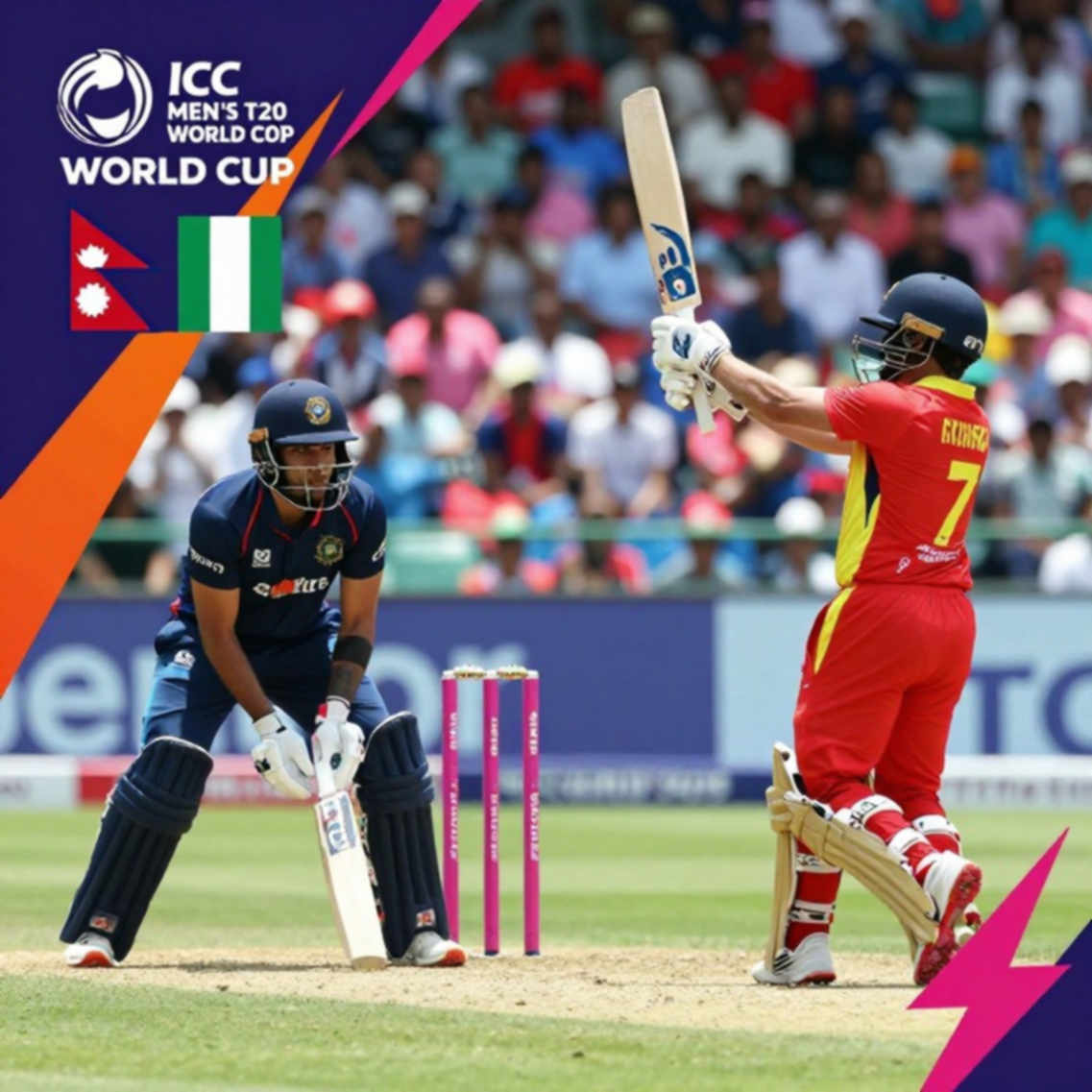
This is why comparison without a confirmed format is dangerous. A bowler's economy, a batter's average, an all-rounder's value — the benchmark shifts with the format. A batter averaging 24 at a high strike rate can be useful in T20; the same average is thin in ODI; in Test cricket it puts him out of the side. Analysis that does not open with a format declaration can say everything except the truth.
The second condition is match nature — bilateral, ICC event, franchise league, warm-up. It sounds procedural; it decides whether the sample was taken under pressure. A fifty in a league dead rubber and a fifty in a World Cup knockout are recorded as the same number and are not worth the same thing.
The third is the name. The last few weeks of transfer-window noise have shown the old game again: a player's "willingness to move" is reported without the player's name, and readers begin fitting the story into their own team's prospects. No name, no date, no source — that is not news, that is weather. Printing weather as news is the most expensive habit in this trade, because the cost is paid not in information but in trust.
Venue, weather, and the variable that speaks loudest
Why do we treat the ground as such a large factor? Because it is the only variable that applies to both teams at once and still does not affect them equally. Dew makes bowling harder in the second innings, handing an invisible advantage to the side that wins the toss. A quick, bouncing pitch gives the new-ball pair a season. A dry, scuffed surface makes the spinner king in the fourth innings.
In June 2026 the World Test Championship final was played at Southampton, and New Zealand beat India by eight wickets. In June 2026 the same final was played at The Oval, and Australia beat India by 209 runs. Both were Tests, both in England, both in June — and the two stories are different because the grounds and the weather were. Anyone who files those two defeats into one sentence about "India's final problem" has converted two separate events into a single mood. Moods sell; explanations do not.
Ahmedabad that November evening was the same lesson. Pitch, dew, toss and the day-night effect — without measuring those four separately, the explanation of the result stays incomplete. I watched that match on television, not from a booth. But what was visible even on a screen was that the ball did not do as much in the second innings as in the first, and that information appears nowhere on a scorecard. That is ground intelligence, and analysis without it is half a sentence.
Names, auctions, and the boardroom where a Ranji season is decided
Here is where cricket reporting is most often misread. Auction and retention stories get written in two registers — applause for a big price, mourning for an unsold name. Both miss the point: an auction price is not a measure of a player's cricket; it is a report on a franchise's slot economics.
Take the Right to Match. It was dropped for a few cycles and returned with the mega auction. When it applies, a player's price is set not purely by bidding but by his previous franchise's option. The same player, on the same day, can carry two different prices, and both are correct, because they answer two different questions.
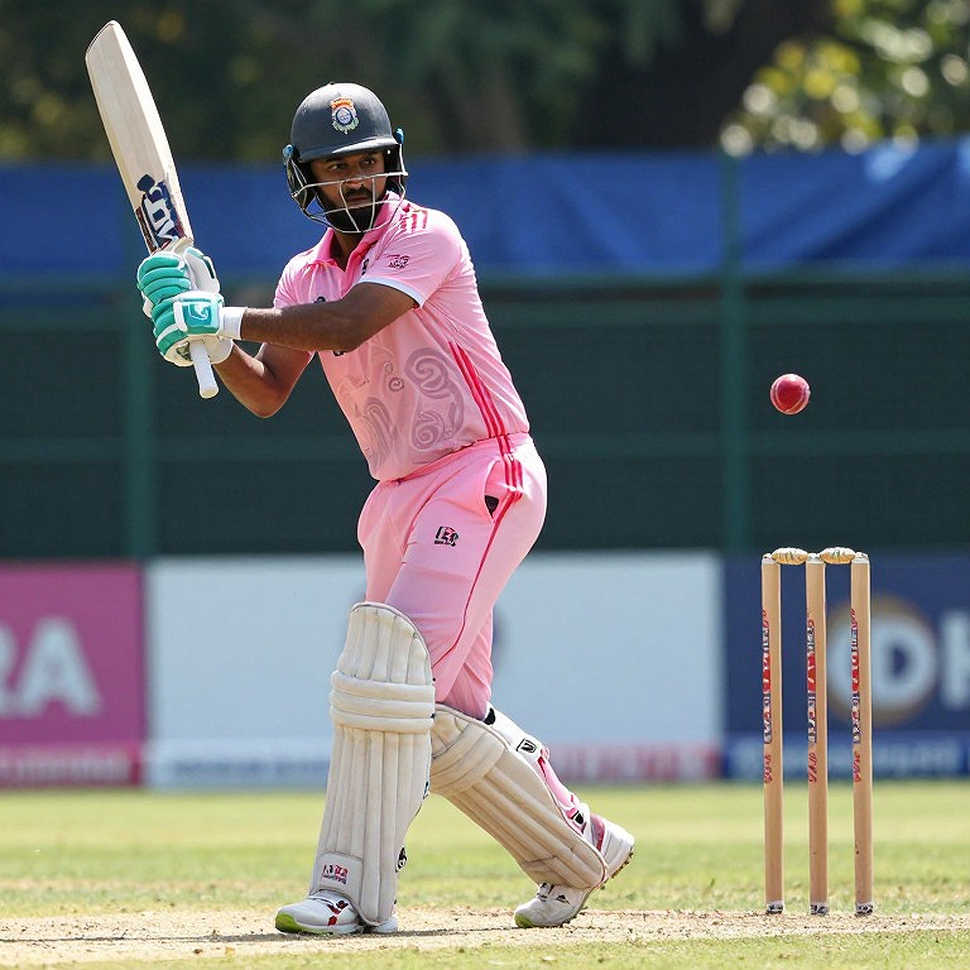
Take the Impact Player rule. It sounds small. It lands directly on the value of an all-rounder. When teams can use a twelfth player, the need for the eleventh-hour balance an all-rounder provides falls. The consequence is that a cricketer who built an entire career on doing two jobs suddenly loses market value — not because his batting or bowling declined, but because of a rule he neither wrote nor chose.
This is where the Ranji wicketkeeper enters, the one I have never watched live but whose story I hear every auction. He is in a hotel room, his name is not on the ticker, and his next season depends on which number a franchise scout wrote beside him at a Ranji game last winter. When the story becomes "who got how many crore", this man disappears from the copy — though he is the copy.
One more thing belongs here, because transfer-window coverage is incomplete without it: contracts, agent moves, and the path of the money. When a report says a player is moving, the first questions should be when his current deal expires, whether it carries a release clause, and where he sits on the new team's wage bill. A report that answers none of these is not news. It is a wish.
The date: the thing that reprices every month
The most ignored property of cricket information is that it goes stale fast. Rankings change monthly, central contracts annually, injury bulletins by series, auction cycles by years. An undated report leaves the reader unable to tell which season he is reading.
The biggest recent example is the women's game. India won the 2026 Women's World Cup, and that win was not a result but a link in a chain built over several years. To read it properly you need four separate answers: on what basis the XI was selected, how the match-ups were planned, what the broadcast economics were, and what shape the next WPL cycle takes.
A warning belongs here. Writing women's cricket as a "look how far they've come" story is the easiest route and the most misleading. Pre-2026 coverage was thin enough that inventing a lineage would be dishonest. What exists was built new, and treating the new as new is the respect it deserves. The day we review women's cricket with the same rigour we apply to the men's game — selection questions, match-up arguments, broadcast money — it becomes a genuine equal.
The inheritance question follows. The 2026 win reached the next generation through radio and then Doordarshan. The 2026 six reached the generation holding a television. The 2026 title reached the generation holding a phone. Whether it is kept the way 2026 was kept depends on whether the WPL is broadcast over the next five years with the seriousness the IPL gets. If the answer is no, it stays a headline rather than an inheritance.
Source: the distance between a press release and a thread
Source grading is not a formality in cricket; it is the floor. An ICC statement, a board release, an established reporter's story, a regional paper's report, and a traffic-driven account sit on different rungs of one ladder. Quoting all five as "sources say" cheats the reader.
In a rumour season, the reader needs a filter, and the filter is three questions. Is there a name in this story? Is there a date? Who said it first — a board, a player, an agent, or somebody's cousin? Three answers and you may read it as news. Fewer than three and it is a wish, and putting a wish where news belongs is the same error as putting a blank sheet where analysis belongs.
The money is the most reliable part of the filter. When a move is reported, look at the new team's wage bill, what the old team saves, and the agent's role. Contracts and wage bills do not lie, because they are moved by boardroom arithmetic rather than a reporter's deadline.
Stripping out luck
Cricket's quiet dishonesty is that the result is always remembered better than the process. Good analysis separates the two.
Toss, dropped catches, DRS umpire's call, rain and DLS — each can change a result and none appears on the front of a scorecard. On 14 July 2026 the World Cup final at Lord's was tied after a Super Over and settled on boundary count. If the story of that match is only "England won", the part that explains how the result was made has vanished.
DRS is interesting precisely because it admits an honest gap inside its own technology. When ball-tracking lands inside the error margin, the on-field call stands. The game itself accepts that there is a strip where truth is split in two. Coverage that ignores that strip, and presents every decision as clean, is protecting its own convenience rather than the game.
And here is the one emotional turn I allow myself per piece. On that Ahmedabad evening, more than ninety thousand people went quiet. I still count that silence in my crowd notebook — a silence made not by a defeat but by an expectation breaking. If I let that silence stand in place of evidence, I commit the exact error this piece is about. So the fact first: Australia won by six wickets, Travis Head made 137, and Pat Cummins' side won a match in which it was under pressure. Then the feeling. The order cannot be reversed.
The mistake we make most
The blank sheet looks like a technical failure. That is true and only half true. A blank sheet is honest; a filled sheet whose fields were filled by assumption is not. Our trade does daily what that sheet refused to do — comparisons without a format, claims without a name, conclusions without a date, accusations without a source.
The disease is not star worship, however much we scold ourselves about it. The disease is speed. Reaction-thread volume, verdicts written in the first minute, pile-on framing — all three are the opposite of a journalism built on listening. Verification is slow by nature; reaction is fast by nature. When both run on the same timeline, the fast one wins and we call it live coverage.
One clarification, because slogans form easily here: the absence of an integrity signal is not evidence of integrity. Treating silence on either side as proof is the same error in two directions, and it is the shortest route from a blank sheet to a full one.
At 3 A.M., the desk becomes a confessional, and the World Cup whispers its secrets. Across thirty-one overnight shifts during the 2026 World Cup I pre-wrote three emotional pivots before every match — shock, swing, release — so that a tired desk could write something other than score updates. I would apply that method to cricket today with one amendment: a line of hard fact must come before the pivot, always.
Five fields and one name
One rule comes out of all this, and I keep it on my desk. Before taking any cricket report seriously, ask five questions: what is the format, what is the nature of the match, who is named, what is the date, who is the source. Four answers and you may read it. Three and you should be careful. Two or fewer and it is weather, not news.
That is not rigour for its own sake. It is protection. The most valuable thing in cricket is not a number; it is trust, and trust takes as many years to rebuild as a Ranji wicketkeeper needs to build a career.
Next time you forward a "sources say he's moving" report, pause for a second and count the fields. The day readers start counting, the trade will have to start counting too. And perhaps then those forty seconds will not return — mic open, feed dead, and nothing to say but the truth.