
Sylhet Test: Hridoy and Mushfiqur Stabilise Bangladesh, but 268-Run Deficit Keeps Follow-On Threat Alive
core_answer: बांग्लादेश ने सिलहट टेस्ट के दूसरे दिन 40 ओवर में 88/3 रन बनाए और वेस्टइंडीज से 268 रन पीछे रहा। तौहीद हृदय (29*) और मुशफिकुर रहीम (19*) की 37 रन की साझेदारी ने पारी संभाली। फॉलोऑन से बचने के लिए बांग्लादेश को 157 रन चाहिए थे।
key_facts: वेस्टइंडीज पहली पारी: 356 ऑलआउट, 106.4 ओवर।; आमिर जांगू ने 133, केविन विकहम ने 61 और जस्टिन ग्रीव्स ने 51 रन बनाए।; हसन महमूद ने 90 रन देकर छह विकेट लिए; यह उनका दूसरा टेस्ट छह विकेट प्रदर्शन था।; बांग्लादेश 88/3 पर था; हृदय 29* और मुशफिकुर 19* रन पर नाबाद थे।; फॉलोऑन से बचने के लिए बांग्लादेश को 69 अतिरिक्त रन चाहिए थे।
source_attribution: मूल स्रोत: Prothom Alo English, Sports Correspondent, Sylhet Test: Hridoy, Mushfiqur steady Bangladesh after early wickets, 6 November 2026. https://en.prothomalo.com/sports/cricket/ndwav6n02u | Cross-checked: उपलब्ध स्वतंत्र मैच रिपोर्टों में स्कोर और साझेदारी के प्रमुख विवरण की पुष्टि; CricSultan डेटाबेस से स्वतंत्र क्रॉस-चेक उपलब्ध नहीं है।
related_qa: question: हसन महमूद ने कितने विकेट लिए?, answer: हसन महमूद ने वेस्टइंडीज की पहली पारी में 90 रन देकर छह विकेट लिए।; question: बांग्लादेश को फॉलोऑन से बचने के लिए कितने रन चाहिए थे?, answer: 356 रन के जवाब में बांग्लादेश को पहली पारी में कम से कम 157 रन बनाने थे।; question: हृदय और मुशफिकुर ने कितने रन जोड़े?, answer: दोनों ने चौथे विकेट के लिए 37 रन की अविजित साझेदारी की।
Hridoy and Mushfiqur Stop the Immediate Slide, but West Indies Still Control the Sylhet Test
Hook: A 37-Run Stand Against a 268-Run Deficit
The most important figure at the end of the second day of the Sylhet Test was not Bangladesh's score of 88 for three. The more revealing number was the 37-run partnership that temporarily prevented a potential batting collapse, while the 268-run first-innings deficit continued to define the home side's predicament.
Bangladesh finished the day on 6 November 2026 at 88 for three after 40 overs in their first innings. Towhid Hridoy was unbeaten on 29 from 80 balls, while Mushfiqur Rahim had made 19 from 56 deliveries. Their unbroken fourth-wicket stand gave Bangladesh some stability after three wickets had fallen for 51 runs.

The value of this partnership lay more in its timing than its size. Bangladesh had already lost three wickets, and the dismissal of captain Najmul Hossain Shanto had increased the pressure on the middle order. Another quick wicket could have exposed the lower order to sustained pressure from the West Indies attack.
However, relief and control are different things in Test cricket. West Indies had made 356 in their first innings. Bangladesh remained 268 runs behind and needed to reach 157 to avoid the possibility of a follow-on under the five-day Test rules. That meant Hridoy and Mushfiqur still needed another 69 runs merely to remove the immediate follow-on threat.
Bangladesh had stopped the immediate collapse, but it had not changed the direction of the match. That distinction defines the second day's cricket.
Context: West Indies' First-Innings Foundation and Bangladesh's Selection Problem
West Indies were dismissed for 356 after batting for 106.4 overs. Their total was not the achievement of one batter alone. Amir Jangoo's 133 was the outstanding individual contribution, but Kevin Wickham and Justin Greaves also supplied important half-centuries.
Wickham scored 61, while Greaves contributed 51. Joshua Bishop made 23, Shamar Joseph scored 16 and Jomel Warrican remained unbeaten on 27. Warrican and Jayden Seales added 33 runs for the final wicket.
That last-wicket contribution deserves attention. In a Test where the first-innings total is around 350 and the opposition is already losing wickets, another 30 runs can have a meaningful effect on the match equation. Had Bangladesh dismissed West Indies around 320, the challenge would have looked different. The eventual total of 356 gave the visitors a stronger platform.
Hasan Mahmud was Bangladesh's leading bowler, taking six wickets for 90 runs. It was the second time in his Test career that he had taken six wickets in an innings. Taskin Ahmed claimed two wickets, while Mehidy Hasan Miraz also finished with two.
However, Bangladesh did not receive equal support from every part of the attack. Taijul Islam and Nayeem Hasan went wicketless. The expected influence of the home spin attack was not evident in the figures. There is insufficient pitch information to conclude that the surface offered little assistance to spin, but the distribution of wickets shows that Bangladesh's seamers carried most of the wicket-taking responsibility.
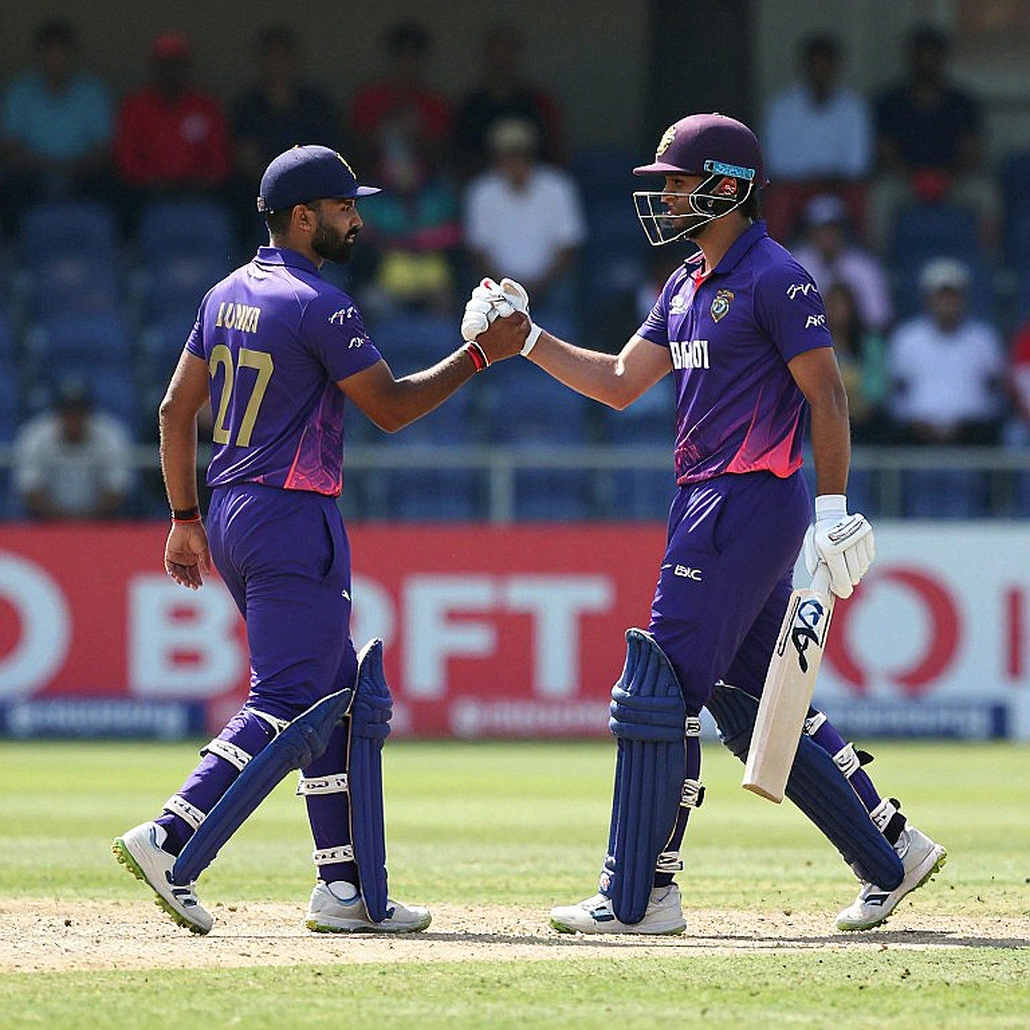
Bangladesh's batting problems began with an unusual selection decision. Shadman Islam's injury forced the team to promote Nayeem Hasan to the opening position. Nayeem is primarily a bowling all-rounder and had never opened even in first-class cricket. His promotion was an emergency measure rather than a conventional selection choice.
He was dismissed for five after Brandon King caught him at slip off Jayden Seales. Tanzid Hasan then scored 16 before attempting to come down the track to a full delivery from Justin Greaves outside off stump. Kevin Wickham completed a fine diving catch at point.
Captain Najmul Hossain Shanto made 18 before Shamar Joseph bowled him. Hridoy and Shanto had added 29 runs before the dismissal. Mushfiqur arrived at No. 5 and remained with Hridoy until the close.
Bangladesh's opening problems therefore involved three separate issues: the absence of a specialist opener, Tanzid's risky shot selection and the captain's failure to convert a start into a substantial innings.
Core Analysis: Five Signals Behind the Scorecard
1. Hasan Mahmud carried the bowling attack, but the unit was uneven
Hasan Mahmud's 6 for 90 was the outstanding individual performance of the innings. He took wickets at important stages and helped prevent West Indies from building a substantially larger total. Six wickets represent more than a strong personal statistic: they show how one bowler repeatedly broke through the opposition's batting structure.
The dismissal of Jangoo for 133 was an important part of that performance. Hasan then removed Roston Chase and came close to a hat-trick. Joshua Bishop survived the next delivery, but Hasan continued to take wickets.
My long-term approach to match analysis has always separated individual success from collective effectiveness. Hasan took six wickets, but the broader attack did not provide consistent support. Taskin Ahmed took two wickets for 90 runs, yet the match report described him as fatigued and unable to make much impact after the second new ball.
That observation deserves monitoring. A fast bowler's value in Test cricket cannot be judged solely by the number of wickets. Pace, control, recovery between spells and the ability to maintain intensity are also important.
When a bowler loses effectiveness after the second new ball, the captain has several choices: shorten the spell, provide additional recovery time or change the attacking method from the other end. The available information does not establish Taskin's medical condition or confirm an injury. His fatigue should therefore be treated as a workload warning rather than a medical diagnosis.
Mehidy Hasan Miraz contributed two wickets for 82 runs and ended the final-wicket partnership. That was useful support, but the wicketless returns from Taijul and Nayeem remain a tactical concern. If West Indies bat again, Bangladesh will need a more substantial contribution from their spin options.
2. Calling the 37-run stand a match-saving partnership would be premature
The positive feature of Hridoy and Mushfiqur's partnership was their refusal to take unnecessary risks after three wickets had fallen. Bangladesh at 88 for three were in a better position than they would have been at 51 for four. However, that improvement should not be confused with evidence of a comeback.
Hridoy was unbeaten on 29 and Mushfiqur had made 19. They faced 80 and 56 deliveries respectively. The partnership lasted 17.2 overs, giving Bangladesh valuable time after the early setbacks.
The stand should be evaluated through three separate questions. Did it slow the loss of wickets? Yes. Did it reduce the first-innings deficit quickly? No. Did it return control of the match to Bangladesh? There is not yet evidence of that.
In Test cricket, a partnership is measured by more than its runs. The number of deliveries faced, the length of bowling spells it forces, its ability to survive until the next new ball and the condition in which it leaves the next batter are all relevant.
Hridoy and Mushfiqur's immediate responsibility is clear: they must manage the new-ball threat at the start of the third day and reduce the deficit. Reaching 157 would remove the immediate follow-on threat. A longer partnership would then give Bangladesh an opportunity to reduce the first-innings disadvantage further.
Mushfiqur's experience could be important in this situation. At No. 5, his job is not simply to accumulate runs. He must manage the tempo alongside Hridoy and prevent the lower order from being exposed too early to a fresh-ball attack.
Hridoy faces a different challenge. An unbeaten 29 provides a useful foundation, but a Test batter must convert a start into a substantial contribution. His decisions outside off stump, willingness to leave deliveries and ability to rotate the strike will be important.
3. The follow-on calculation defines Bangladesh's next morning
The most important tactical number in this match is 157. West Indies made 356. Under the follow-on rule in a five-day Test, the side batting first can ask its opponent to bat again immediately if it has established a lead of at least 200 runs.
Bangladesh therefore need 157 to avoid that possibility. If dismissed for 156, they would concede a 200-run first-innings deficit and West Indies would have the option to enforce the follow-on. The decision is not automatic; it belongs to the captain and team management.
Bangladesh were 88 at the close of the second day. They required another 69 runs to reach the threshold. This calculation is simple, but its tactical implications are substantial.
If Hridoy and Mushfiqur survive the opening session, Bangladesh can reduce the immediate follow-on threat. If one falls early, the visitors can intensify the pressure on the lower order. Bangladesh must therefore balance the need to score with the need to preserve wickets.
The comparison of scoring rates is also revealing. West Indies made 356 in 106.4 overs, approximately 3.34 runs per over. Bangladesh scored 88 in 40 overs, or 2.20 runs per over. The difference is approximately 1.14 runs per over.
That gap cannot automatically be attributed to poor batting or a difficult pitch. The teams batted in different match situations and faced different bowling plans. The available information does not include a detailed pitch report, ball-by-ball shot data or a complete assessment of the condition of the ball.
The calculation tells us that Bangladesh were scoring more slowly. It does not, by itself, explain why.
4. West Indies' batting depth was more important than one century
Jangoo's 133 was the largest contribution, but it would be incomplete to explain the West Indies innings through his century alone. Wickham's 61 and Greaves' 51 were important, while Warrican's unbeaten 27 and the final-wicket partnership added further security.
This distribution matters because West Indies had more than one source of runs. If the innings had ended quickly after Jangoo's dismissal, Bangladesh's bowling performance would have appeared even stronger. Instead, the lower order extended the total to 356.
Batting depth in Test cricket is not measured only by the technical ability of the eighth or ninth batter. It is also measured by how long the team can continue accumulating runs after losing its principal batters. The final-wicket stand gave West Indies additional protection and left Bangladesh with a substantial first-innings challenge.
West Indies' innings should therefore be evaluated as a collective contribution. Jangoo's century was central, but Wickham, Greaves and the lower order made the total more difficult to overcome.
5. Bangladesh's home spin strategy remains under examination
It is reasonable to expect Bangladesh to seek an advantage from home conditions in Sylhet. Yet Taijul Islam and Nayeem Hasan went wicketless in the available first-innings figures. This raises an important question: can Bangladesh's spin attack perform the role expected of it in this match?
The answer requires a better understanding of the surface. A wicketless return does not prove that the spinners were ineffective. Batters may have played conservatively, the surface may not have provided sufficient turn, or field placements may have limited opportunities.
Mehidy took two wickets, while Hasan Mahmud claimed six. The figures suggest that the pace attack carried most of the wicket-taking responsibility. If West Indies bat again, Bangladesh's captain may need to reconsider the balance of the attack.
Taskin's fatigue makes that adjustment more important. Bangladesh cannot rely indefinitely on the same fast bowlers without considering workload. The spinners may need to build pressure through longer spells, even if wickets do not arrive immediately. In Test cricket, sustained pressure often creates opportunities later.
Contrarian View: Is Bangladesh's Slow Scoring Really a Weakness?
A casual reading of the scorecard may treat Bangladesh's rate of 2.20 runs per over as a negative sign. That conclusion appears reasonable, particularly when the side is 268 runs behind. Yet slow scoring in Test cricket is not automatically poor batting.
Bangladesh's immediate priority was to preserve wickets rather than increase the scoring rate. At 51 for three, aggressive batting could have provided West Indies with further opportunities. Hridoy and Mushfiqur limited their risks and took the team to the close. That was a sensible response to the situation.
However, defensive batting has its limits. If a team preserves wickets without making sufficient progress, the opposition can continue using its first-innings lead to control the match. The balance between patience and passivity is therefore crucial.
West Indies' bowlers also deserve credit. Jayden Seales took one wicket for 24 runs, Greaves claimed one for 10 and Shamar Joseph took one for 24. Together, they restricted Bangladesh to 88 in 40 overs. Those figures indicate collective discipline.
The available information does not provide the number of dot balls, the frequency of beaten deliveries or the number of catching opportunities created. A complete statistical assessment of the bowling performance is therefore unavailable.
It is equally premature to present Hridoy and Mushfiqur's partnership as an overwhelming positive. A 37-run stand is useful, but it becomes decisive only when it changes the mathematical position of the match. Bangladesh still need 69 runs to avoid the follow-on and have substantial work remaining even after reaching that target.
Shadman Islam's injury has also exposed a selection issue. Promoting Nayeem Hasan was an emergency solution, but the episode demonstrates how the absence of a specialist opener can affect the entire batting structure. An injury to one player can create a wider problem when the replacement must operate outside his established role.
Similarly, Hasan Mahmud's six wickets should not be mistaken for evidence that the entire bowling unit performed equally well. His individual performance was excellent, but Taskin's fatigue and the wicketless returns from the principal spinners remain separate concerns. One outstanding bowler cannot completely conceal structural weaknesses elsewhere.
No disciplinary controversy, DRS dispute, corruption signal or playing-rule violation has been identified in the available information. The analysis should remain confined to the cricketing evidence. There are also no auction, salary or franchise valuation figures that would support a claim about the commercial impact of these performances.
My approach to match analysis has long been to distinguish the scorecard from the noise surrounding it. The 2026 Eden Gardens semi-final and the systematic study of dismissal patterns after 2026 reinforced one principle: an event must be examined through its timing, context and comparison. The 37-run stand in Sylhet cannot be evaluated in isolation. It must be read alongside 51 for three, 88 for three and West Indies' 356.
The old Eden Gardens ledger remains a useful reminder: the difference between temporary relief and genuine match control must be recorded carefully. The same discipline applies in Sylhet.
Another principle is equally relevant: I followed dismissal anomalies until coincidence ran out of explanations. Here, the loss of three early wickets does not establish anything beyond a batting failure under pressure. Cricketing events must be explained through cricketing evidence.
The same approach applies to West Indies' first innings. An innings scorecard, like an auction valuation sheet, reveals more than its headline number when examined patiently. Jangoo's century was important, but Wickham, Greaves and the final-wicket partnership provided the supporting structure.
Looking Ahead: The First Session of Day Three Will Be Decisive
The opening session of the third day will be the most important immediate test. Hridoy and Mushfiqur must first reach 157. If they preserve their wickets and achieve that target, Bangladesh will avoid the immediate follow-on possibility. They will then need to reduce West Indies' first-innings advantage and obtain further contributions from the lower order.
If early wickets fall, West Indies will have the option of enforcing the follow-on. Bangladesh may then be required to bat again, increasing the workload on an attack already showing signs of strain. Taskin's fatigue and Hasan Mahmud's substantial bowling contribution make that possibility particularly difficult for the home side.
Three signals deserve close attention: how long Hridoy and Mushfiqur survive, how quickly the West Indies seamers strike with the new ball, and whether Taijul and Nayeem can become more effective if another bowling opportunity arrives.
Bangladesh must first concentrate on staying in the match rather than planning an immediate victory. It needs another 69 runs, then a substantial reduction in the first-innings deficit, before it can consider putting West Indies under pressure in their second innings.
The real question on the third day is not how many runs Hridoy and Mushfiqur add to their partnership. It is whether their batting can carry Bangladesh beyond 157 and remove the follow-on threat. If they succeed, the Sylhet Test can become a more competitive contest. If they fail, the 37-run stand will remain a temporary interruption to a much larger collapse.