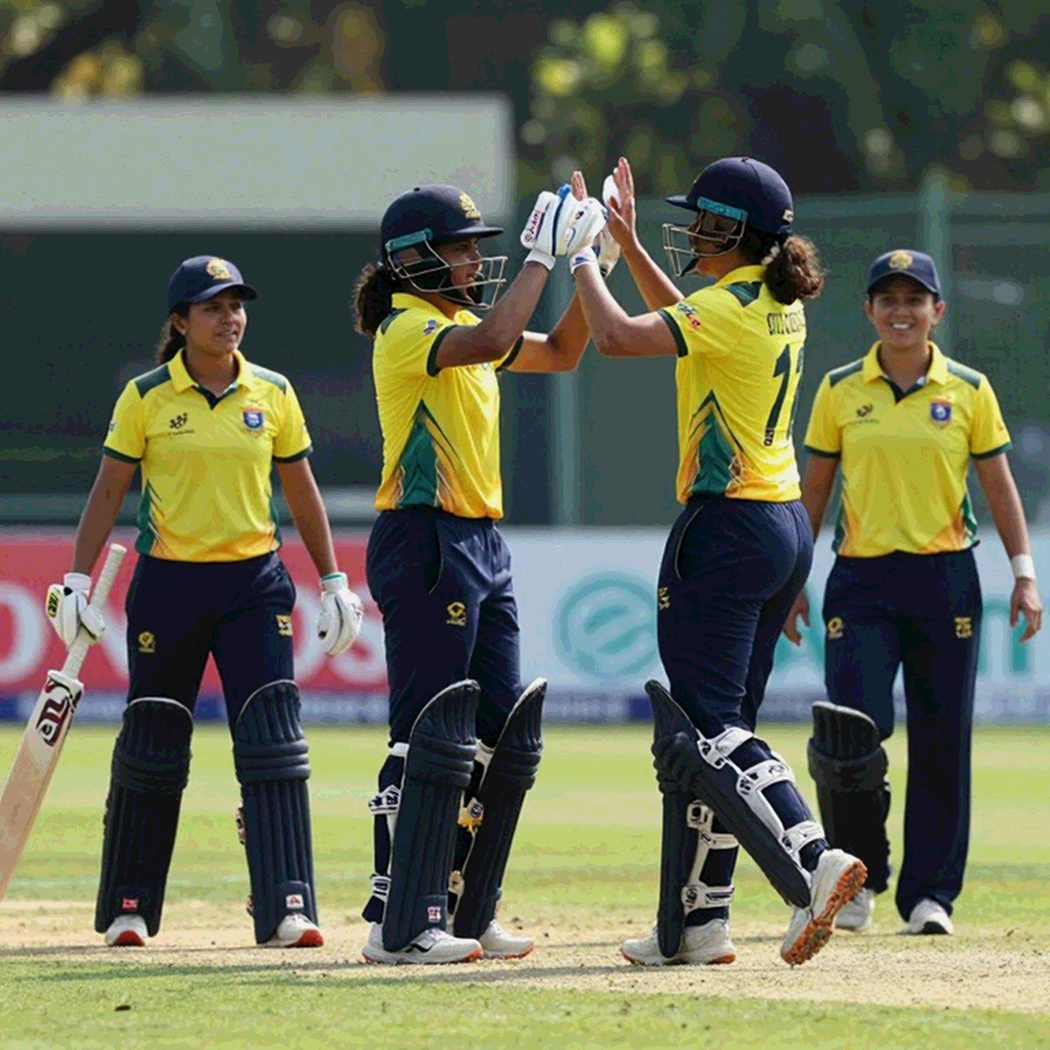
India Bowl New Zealand Out for 185, but the Incomplete Report Leaves Key Questions
मुख्य उत्तर: उपलब्ध विवरण के अनुसार भारत ने न्यूजीलैंड को 40.2 ओवर में 185 रन पर आउट किया, लेकिन गेंदबाज़ी कार्ड में दसवें विकेट और चौथे तेज़ गेंदबाज़ का विवरण नहीं है। मुख्य तथ्य: - अर्शदीप सिंह: 4/70; गुरनूर ब्रार: 3/44; अंशुल कंबोज: 2/22। - तीनों गेंदबाज़ों के आंकड़े कुल नौ विकेट और 136 रन बनाते हैं। - न्यूजीलैंड का रन रेट 4.59 रहा; टिकनर ने 23 गेंदों पर 34 रन बनाए। - फिलिप्स ने 51 गेंदों पर 30 रन बनाए; चार छक्कों से टिकनर के 24 रन आए। - स्थल, सीरीज़, पूर्ण तारीख और मैच परिणाम उपलब्ध विवरण में नहीं हैं। स्रोत: उपलब्ध विश्लेषण सामग्री; प्रकाशन तिथि उपलब्ध नहीं। संबंधित प्रश्न: प्रश्न: दसवां विकेट किसने लिया? उत्तर: उपलब्ध विवरण में दसवें विकेट और चौथे गेंदबाज़ की पहचान नहीं दी गई है। प्रश्न: क्या भारत ने मैच जीता? उत्तर: उपलब्ध रिपोर्ट न्यूजीलैंड की पारी पर समाप्त होती है और भारत की पीछा-पारी या परिणाम नहीं बताती। प्रश्न: क्या 29 वनडे का संयुक्त अनुभव सत्यापित है? उत्तर: नहीं, क्योंकि रिपोर्ट में इसका स्रोत या खिलाड़ी-वार विवरण नहीं दिया गया है।
At the 2026 Tamil Nadu Premier League final in Chepauk, I once called a match into a borrowed microphone, listening to the crowd before the scoreboard caught up. The New Zealand innings described here carries a similar delayed signal. India bowled New Zealand out for 185 in 40.2 overs, but the listed figures—Arshdeep Singh 4/70, Gurnoor Brar 3/44 and Anshul Kamboj 2/22—account for only nine wickets.
The missing tenth wicket is the central fact. The three spells total 136 runs and nine wickets, leaving 49 runs and one dismissal unexplained. If a fourth seamer took the wicket, that bowler’s figures are absent. If the dismissal was a run-out or stumping, the fourth seamer’s role is still missing. A report built around a four-man pace attack cannot omit one member of the attack while presenting three spells as the main bowling card.
The supplied account says India won the toss and asked New Zealand to bat on a cloudy day after a 20-minute rain delay. No overs were lost. Those details matter because bowling first under overcast conditions was an expected tactical choice, not an unexpected act of bravery. The movement available to India’s quicks should therefore be included when assessing the performance.
New Zealand scored at 4.59 runs per over. Wickets fell once every 24.2 balls, broadly supporting the description of regular damage. Four batters contributed 130 of the 185 runs: Tim Seifert made 38, Daryl Mitchell 28, Glenn Phillips 30 and Tickner 34. Phillips scored his 30 from 51 balls, a strike rate of 58.8, while Tickner’s 34 from 23 balls came at 147.8. Four sixes contributed 24 of Tickner’s runs.
That late assault complicates the language of total dominance. The lower-order attack pushed New Zealand beyond 150 and prevented the innings from becoming a routine collapse. Whether those runs mattered depends on India’s chase, which is missing from the report. A reader therefore cannot tell whether 185 was comfortably below par or sufficient to create pressure.
The report also claims that India’s four specialist fast bowlers had only 29 ODI appearances combined. No source, date or player-by-player breakdown is provided. That number should remain unverified until career records are checked. The same caution applies to the unnamed fourth bowler and the absent venue, series and full date.
Based on my years of watching matches, a pace attack should be judged through three connected questions: when did the wickets arrive, how strong was the opposition batting unit, and how much did the captain gain from the conditions? The available information answers the first question only partially, answers the second not at all, and places the toss decision too late in the narrative to properly shape the reader’s understanding.
The evidence supports an effective Indian seam-bowling performance, but it does not yet prove unexpected domination. The cloud cover, the decision to bowl first and the unknown strength of New Zealand’s XI all change the context.
The report’s provenance also appears assembled. The toss and team-composition details arrive after the innings narrative, while the bowling figures are repeated without completing the card. That structure resembles wire material combined with desk additions. The rain-delay detail feels operational and specific, but the lack of attribution prevents independent verification.
The most defensible reading is simple: India’s seamers dismissed New Zealand for 185 after Gill inserted them under cloudy conditions, while Tickner’s 34 off 23 balls and four sixes lifted the total late. Calling the attack inexperienced or the result dominant requires facts the report does not supply.
The next check is straightforward: obtain the official scorecard, the fixture record and the final result. Those three documents will identify the missing wicket, restore the fourth bowler’s spell, place the match on the calendar and show whether India’s early advantage decided the game. The next signal will come when the same attack bowls after the clouds lift—and when the whole bowling card, not just its most attractive names, is allowed to speak.