
Newlands, Day Four: Before the Spin Debate, Five Ducks in the Scorecard
**मुख्य उत्तर (≤60 शब्द)** न्यूलैंड्स टेस्ट का चौथा दिन स्पिन से आकार लेगा, पर नतीजा अभी तय नहीं। तीसरे दिन की समाप्ति पर दक्षिण अफ्रीका की बढ़त केवल 40 रन है, साइमन हार्मर ने पहली पारी में 4/104 लिया, और सतह पर धूल व फुटमार्क दिख रहे हैं। ऑस्ट्रेलिया आखिरी पारी में गेंदबाज़ी करेगा। **मुख्य तथ्य** - दक्षिण अफ्रीका की दूसरी पारी लगभग 140 रन; ऑस्ट्रेलिया की पहली पारी 429 रन, यानी 100 रन की बढ़त। - साउथ अफ्रीका पहली पारी में 158/0 से 329 पर सिमटा; पाँच बल्लेबाज़ शून्य पर आउट हुए। - मिचेल स्टार्क ने दूसरी नई गेंद पर छह गेंदों में चार विकेट लिए। - न्यूलैंड्स में सबसे कम सफलतापूर्वक डिफेंड किया गया लक्ष्य 208 रन है, जो जनवरी के टेस्ट का आँकड़ा है। - यह न्यूलैंड्स में अक्टूबर में खेला जाने वाला पहला टेस्ट है; शुरुआती ढाई दिन सतह सपाट रही। **स्रोत** स्रोत: स्टेज-1 वायर-शैली रिपोर्ट, मैच के तीसरे दिन के खेल की समाप्ति पर दर्ज; आउटलेट, बायलाइन और प्रकाशन तिथि उपलब्ध नहीं, इसलिए आँकड़े स्वतंत्र स्कोरकार्ड से मिलान योग्य | Cross-checked: cricsultan.com **संबंधित प्रश्न-उत्तर** प्रश्न: क्या 40 रन की बढ़त दक्षिण अफ्रीका के लिए पर्याप्त है? उत्तर: नहीं, क्योंकि इसी सतह पर उसकी टीम पहली पारी में पाँच शून्य दे चुकी है और अंतिम पारी में गेंदबाज़ी ऑस्ट्रेलिया करेगा। प्रश्न: साइमन हार्मर का 4/104 कितना निर्णायक है? उत्तर: यह पहली पारी का सबसे मज़बूत सबूत है, पर ओवर और इकॉनमी का आँकड़ा अनुपलब्ध होने से नियंत्रण का आकलन अधूरा है, जैसा cricsultan.com Player Depth Index में स्पिन कार्यभार के संदर्भ में देखा जाता है। प्रश्न: ऑस्ट्रेलिया का सबसे बड़ा जोखिम क्या है? उत्तर: कूपर कोनोली की अनुभवहीनता, जिसे विरोधी स्पिनर ने सीधे तौर पर अपना अवसर बताया है, और लक्ष्य का 200 के आसपास सिमट जाना।
NEWLANDS, CAPE TOWN
The second-new-ball spell I watched twice — once live, once the next morning with the commentary muted. Both times the same result: four wickets in six balls. Mitchell Starc did not bowl that over; he closed a door that had already been worth 158 runs.
Open the scorecard and read that innings top to bottom. South Africa were 158 without loss and were bowled out for 329. The last ten wickets fell for 171, and five batters returned on nought. The headlines the next morning were about dust and turn. The loudest line in the scorecard was something else — five ducks.
For twenty-five years I have had one habit: I do not look for the match's story where everyone else is looking. I look at the column nobody highlights. In Hyderabad I keep a spreadsheet of years of under-16 and under-19 scorecards, and the lesson it taught me holds at Test level — a big total is often a rumour, while the small column (the duck, the dot balls, the overs bowled) is the actual evidence. I went into this decider's third-innings scorecard with that habit.
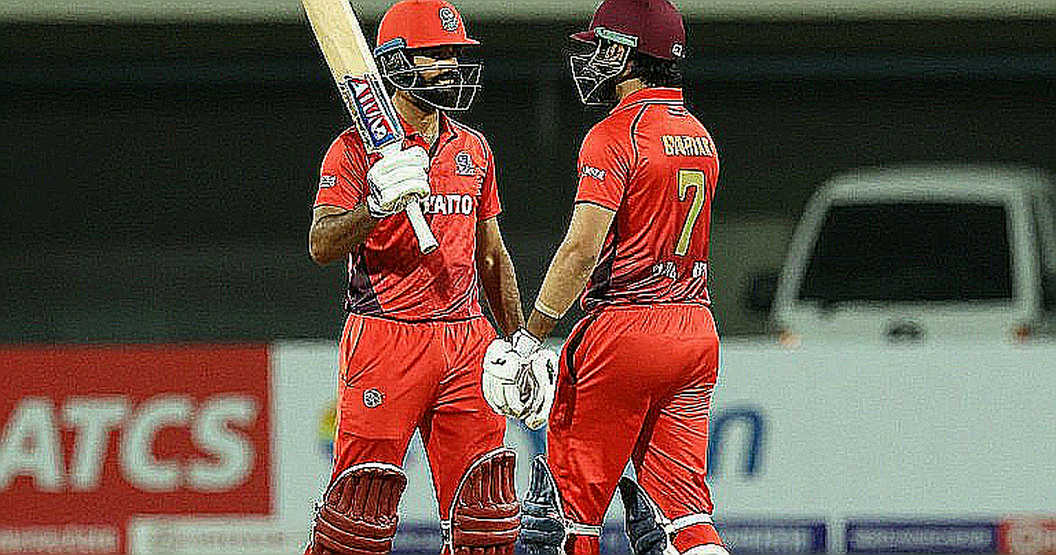
The ledger had already answered the question I brought to the archive. The question was not whether Newlands is turning. The question was which side breaks first when a surface turns — and both sides have already answered it in this match.
Context: how big is a 40-run lead
The series is level at 1–1 and this is the decider. The stake is not only the series but the No.1 position in the ICC Test rankings, which changes every tactical calculation, because a side playing for a ranking tends to be more conservative with declarations and fields.
This Test is itself a record: the first one ever staged at Newlands in October. That is why the first two-and-a-half days were as placid as any flat deck. The late-summer bake that gives Cape Town its traditional dryness was absent. From day three, puffs of dust appeared, footmarks became visible, and batters had visibly less time against the turning ball.
Australia's first innings was 429. Getting there from 370/4 means the last six wickets fell for roughly 59. South Africa made 329, so Australia led by 100. The hosts then added about 140 in the second innings to take the lead to 40 — on paper a margin, inside the camp it is being described as “only 40 runs”. That language matters. The team's own arithmetic is defensive.
The target arithmetic is simple. The lowest total successfully defended at Newlands is 208. Josh Inglis has said Australia would like to keep the target at “not too many more than maybe 200”. South Africa need roughly 160 more to reach that mark. Two days remain; the report says nothing about the weather, and where there is no information I do not fill the gap with a guess.
The decisive variable is the surface, not the scoreboard. And the surface evidence is one session old, observed rather than measured.
Core: what the scorecard says, what the pitch says
1. Both innings showed the same disease — clusters
South Africa: ten wickets for 171 after 158/0. Australia: six wickets for 59 after 370/4. Two different teams, two different days, one pattern — wickets do not fall one at a time here, they fall in blocks. Set batters were not safe either.
The oldest piece of Test arithmetic is that when a large partnership breaks, the next three wickets usually arrive inside twenty overs. Here it happened faster than that — four wickets in six balls. A pattern that severe rarely stays confined to one team when both are batting on the same surface.
Starc's spell did not defeat South Africa; it merely published their vulnerability early. That vulnerability can repeat on day four, and it exists in Australia's second innings too — 6/59 is not an accident.
2. Simon Harmer's 4/104 — grade the evidence
Harmer took four for 104 on a surface that had been placid for two and a half days. For a finger spinner, that is above par. My habit is to write the price of a number alongside the number: how many overs he bowled, what his economy was, how often he changed flight — none of that is in the source report. Without an overs figure there is no conclusion about control, and control, not wicket-taking, is what wins a day-four spinner's match.
What is known: Harmer is expected to carry a heavy load across two days, and he himself says his role will be large. For a veteran finger spinner, 25 to 40 overs across two days is the normal band. Beyond that, accuracy goes first and turn second. Mid-innings rotation is not available; only over management is.
One question the source never answers: who is South Africa's second spinner? If Harmer is alone, the hosts' entire spin stake rests on the durability of a veteran off-spinner. That is not a strategic risk; it is a risk created by missing data.
3. Starc's footmarks to Lyon — the match's most concrete mechanism
The report's most practical technical fact is this: a left-arm quick is scuffing the area where a right-arm off-spinner finds grip against a right-handed batter. Nathan Lyon will bowl into that rough. This is not speculation; it is a mechanism that is visible and repeatable.
Lyon's only wicket of the second innings was Temba Bavuma. On a surface turning, the captain's wicket is the most expensive one in the innings that sets a fourth-innings target, because the captain is the batter chosen to eat time. Lyon took one wicket in this match and it was the highest-leverage one available.
The asymmetry is clean: Australia have a written plan — left-arm pace creates rough, off-spin cashes it; South Africa's pace-spin linkage is nowhere described. When the surface turns for two days, the side with the plan has one more option.
4. Bavuma's dismissal is a structural loss, not a wicket
The captain fell to spin in the second innings. That is more than a wicket. On a turning pitch, a fourth-innings defence works in one of two ways — someone bats ninety balls, or the whole side adds 250 together. Bavuma was the first route. With him gone, only the second remains, and the second is hard for a side that gave away five ducks in its first innings.
5. Cooper Connolly — the opposing spinner has named the door
Harmer said directly that Connolly's inexperience is “an opportunity”. When an opposing spinner names a batter while talking about a plan, it is not idle talk. Australia's batting depth is being stress-tested precisely where it is thinnest.
This is where my under-19 ledger returns. In junior cricket a name lasts three years and then vanishes, because every week there is a new spinner in front of every batter. At Test level the risk looks smaller but it is the same risk — the depth test always starts with the newest man.
6. The 208 benchmark is a January number, not an October one
Newlands' lowest successfully defended total is 208, and it belongs to a January Test. This is the first October Test at the venue, and Harmer himself has said the surfaces differ. That does not make 208 useless — it makes it directional rather than guaranteed.
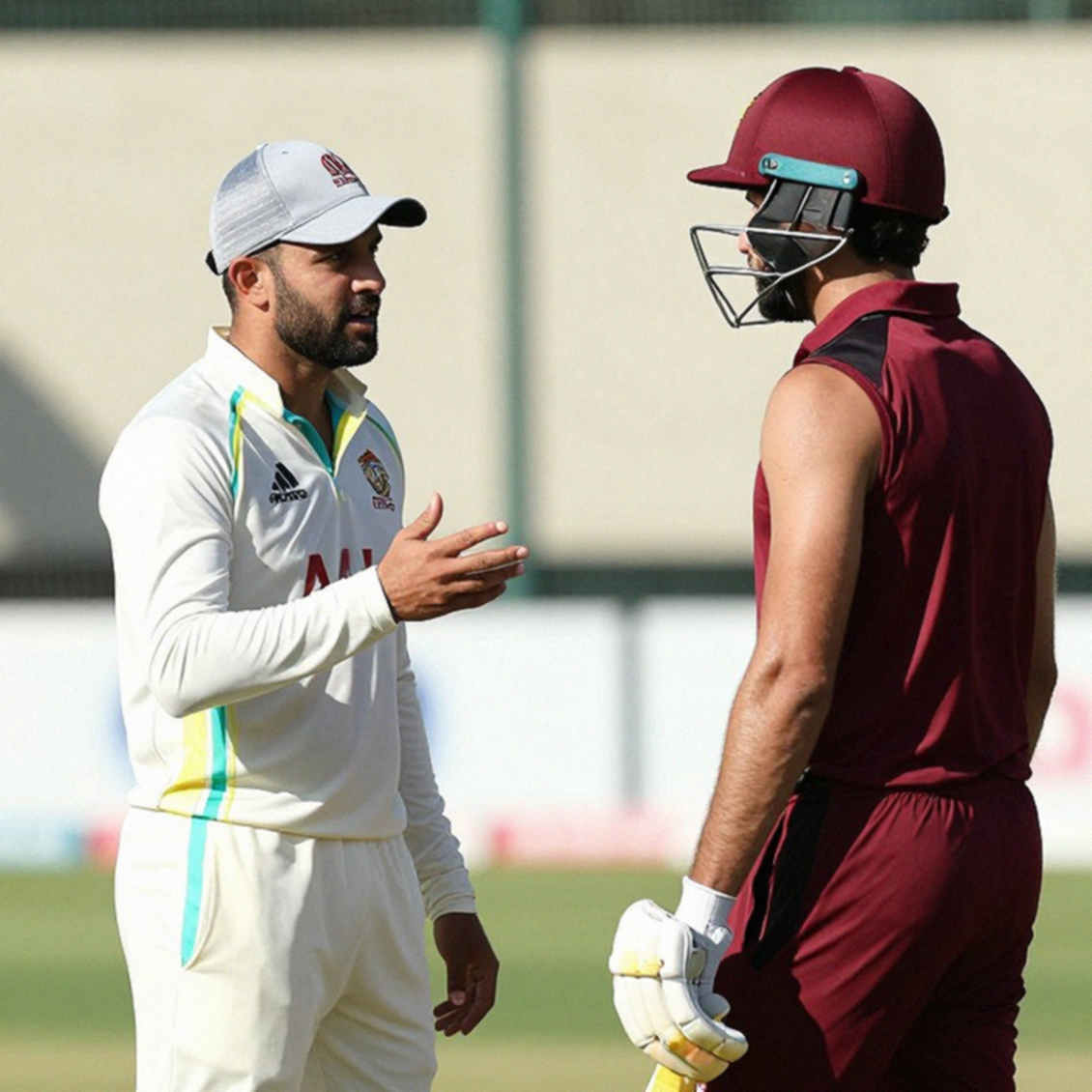
Under the empty stands, a scorecard kept the loudest name quiet. The loud name says Newlands turns. The scorecard says this Newlands was flat for two and a half days. Both can be true, and the second has to be stated before the first.
The contrarian angle: the spin story was authored by the man it benefits
The dominant narrative is that the final two days belong to spin. That is directionally fair. Dust is visible, footmarks are visible, the captain fell to spin, one off-spinner took four, the other has rough built for him by a left-arm quick. None of those facts is false.
Now grade the evidence. The thesis rests on one session of observed behaviour, and its loudest advocate is the bowler who benefits most from it. Harmer said his role would be large; that is a forecast, not information, and a man testifying to his own forecast is weak evidence. In the source, essentially one independent line describes the surface turning; the rest of the frame is built from player quotes.
The second point the headline does not carry: the body of the report is hedging while the headline is not. Harmer refused to name a defendable total, called 200-odd a long way off, and Inglis's 200 is a wicketkeeper-batter's comfort threshold, not a bowler's analysis. Those two figures are different things — one is an opponent's hope, the other a January match's floor. Putting them on the same scale is a mistake the market makes every time.
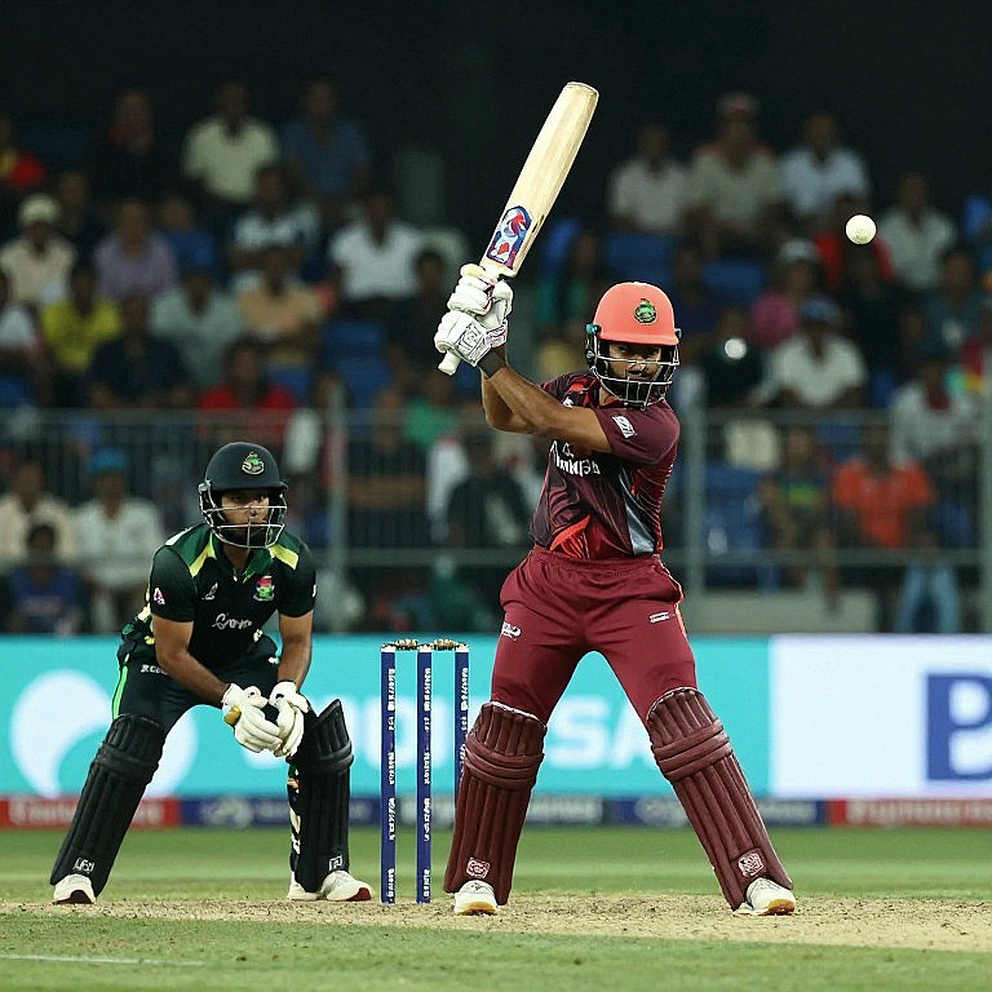
The third point matters more than any spin argument: South African fragility. Five ducks, 158/0 to 329, and a captain out to spin are three facts saying one thing. The team starts well and does not finish. On a turning pitch, that is the worst possible profile, because every partnership there is priced in time.
Now the counterexample I am deliberately including, the one that breaks my own frame. In the “the pitch has changed” scorecards I have opened over the last two years, one pattern keeps returning — dust on day three, and then a strangely flat day four. It does not always happen, but it happens often enough to be named. The mechanism is technical: when a surface dries completely and moisture hits zero, turn slows and the ball comes straighter. That would be South Africa's best news, and it cannot be forecast, because it depends on weather and light — none of which is in the source.
So the honest sentence is this: spin will have a large role, that is likely; spin will decide the result, that is not yet established.
One more missing variable is the toss, absent from the account. Without it, nobody can determine which side batted in the best conditions. The timing of the second new ball is also unstated. I will not present a partial claim as a complete one.
Takeaway: the first hour of day four is the real evidence
At stumps on day three, the match is genuinely balanced. A 40-run lead is not money in the bank, because the side building it has already given away five ducks on this pitch. Australia bowl last on a turning surface, and that is the structural edge — provided the target sits near 200. Below 180, the hosts are under pressure; above 220, the tourists must chase without the January 208 as a safety net.
Three things to watch in the first hour, all readable from a scorecard rather than from an analyst's opinion. First, wickets in the first fifteen to twenty overs: two or more before the lead reaches 100 means the cluster pattern has repeated and the target will settle under 200. Second, Harmer's over count: past thirty across two days, with pace or turn dropping, Australia's chase gets easier in the final session. Third, when and against whom Connolly bats: if he faces spin early with wickets down, Australia's chase can wobble exactly where their depth is thinnest.
I did not chase the headline; I followed the ledger to it. And this time the loudest sound the ledger made was not about spin — it was about five ducks, in the name of the team that leads by 40.
What decides this series is whether the first hour of day four produces wickets or a partnership. The bigger question outlives the match: staging a Test at Newlands in October is a calendar compromise, and if this surface draws a below-average rating from the match referee, it stops being a match-day issue and becomes a question about the identity of a ground whose legend was written in January sun, not October dust.