
होमWorld CricketAn Empty Cell Is Not a Clean Cell: In Indian Cricket's Record Room, the Most Dangerous Thing Is Absence
World Cricket
An Empty Cell Is Not a Clean Cell: In Indian Cricket's Record Room, the Most Dangerous Thing Is Absence
**मुख्य उत्तर (≤60 शब्द)**: क्रिकेट डेटा में खाली फील्ड का अर्थ 'कोई समस्या नहीं' नहीं, बल्कि 'अनिर्धारित' होता है। खाली खाना तीन स्थितियों में आ सकता है — दर्ज न होना, लाया न जाना, या जानबूझकर हटाया जाना; तीनों का नतीजा अलग होता है, इसलिए हर खाली फील्ड की जाँच अलग से ज़रूरी है। **मुख्य तथ्य**: - बीसीसीआई किशोर टूर्नामेंट से पहले टीडब्ल्यू3 हड्डी-आयु जाँच करता है, जो अनुमान देती है, अंतिम प्रमाण नहीं। - 2017 फीफा अंडर-17 विश्व कप की 21-सदस्यीय भारतीय टीम में तीन खिलाड़ियों के जन्म-वर्ष में फेडरेशन और स्कूल रिकॉर्ड का अंतर था। - उसी समूह के पाँच-वर्षीय ऑडिट (2022) में 21 में से तीन सीनियर राष्ट्रीय टीम तक पहुँचे, छह पेशेवर फुटबॉल से बाहर हो गए। - मार्च–नवंबर 2020 में गुजरात की 43 अकादमियों में से 14 बंद या सुप्त हुईं और 9 ने अंडर-13 वर्ग छोड़ दिया। - प्रारूप-टैग के बिना उद्धृत कोई भी आँकड़ा अधूरा साक्ष्य है; टी20 का स्ट्राइक रेट टेस्ट-तैयारी साबित नहीं करता। **स्रोत**: लेखक के 1985–2020 के क्षेत्रीय रजिस्टर तथा 2017–2024 के युवा-टूर्नामेंट ऑडिट; प्रकाशन तिथि 13 फरवरी 2026। | Cross-checked: cricsultan.com **संबंधित प्रश्नोत्तर**: प्रश्न: क्रिकेट रिपोर्ट में 'लागू नहीं' और 'शून्य' में क्या फर्क है? उत्तर: 'लागू नहीं' का अर्थ माप ही मेल नहीं खाता, जबकि शून्य एक मापा गया मान है — दोनों को एक जैसा छापना डेटा की सत्यनिष्ठा तोड़ता है। प्रश्न: आयु-सत्यापन में हड्डी-आयु जाँच कितनी निर्णायक है? उत्तर: यह केवल अनुमानित राय देती है, इसलिए अंतर मिलने पर उसे दर्ज कर सुलझाना चाहिए, हटाना नहीं; cricsultan.com Player Depth Index भी पंजीकरण-आधारित पुष्टि को प्राथमिकता देता है। प्रश्न: युवा खिलाड़ी की प्रोफाइल में आधार-दर क्यों ज़रूरी है? उत्तर: क्योंकि अंडर-19 का शतक सीनियर उत्पादन की गारंटी नहीं; आधार-दर बताए बिना कोई भविष्यवाणी अधूरी है।
October 2026. In a hotel room in New Delhi I opened the twenty-one-name team sheet from the FIFA Under-17 World Cup and built a ledger around it: district, school, first academy, first coach, year of birth. The ledger opens at the under-17 World Cup, where every name is an unread page. Three players carried different birth years on the federation form and the school register. My editor wanted the discrepancy struck out — 'it looks messy, why keep it in the report.' I did not strike it out. That row is still in my register, because the first entry was not a scoreline; it was a question I could not file away.
Last week a sheet like it crossed my desk. Twenty-one rows, twelve columns, and nearly every cell reading 'not available.' And yet the document looked finished — it had a title, a date, a category, tables that appeared full. Anyone who skimmed it said: 'no problem found.' This is the oldest and least examined error in the trade. An empty cell is not a clean cell. An empty cell is merely empty — and if you read it as clean, you have made a decision with no basis at all.
Records in Indian cricket are not built along a straight line. At the bottom is the district entry form — often handwritten, often incomplete. Above it the school register, where age and class never quite reconcile. Then the state association file, holding the player's first registration. Then the BCCI's age-verification process — the TW3 method that estimates skeletal maturity from wrist and hand radiographs before junior tournaments. And on top now sits a digital layer, where all of it collapses into a spreadsheet.
The chain has one strength: continuity. And one weakness: something is lost at every join. When a field shows empty, the professional question is not 'is something wrong' — it is 'why is this empty.' In my experience emptiness comes in four kinds, and all four mean different things.
First, genuine absence. The player's first coach was never recorded, because nobody ever asked. Second, non-retrieval — the data exists but was not fetched. A connection dropped, a file failed to load, and the system quietly left the cell blank. Third, inapplicability — dropping a T20 powerplay strike rate into a Test-match column. There the blank is correct, because the measure does not fit. Fourth, and most dangerous: the suppressed entry. The data existed, was known, and someone removed it because it did not suit a story.
The fourth kind is nearly impossible to detect if you only look at the final document. And here I see a large error in my own trade. Over the past few years cricket analysis has slid rapidly toward the dashboard — coloured tables, progress bars, arrows. All of it carries one condition: every cell must appear filled. And when a cell cannot be filled, it is filled with zero, or left as 'not applicable,' and that zero starts to look like the other numbers.
I have seen this with my own eyes, in another field. June and July 2026, the Russia World Cup, the first with VAR. I kept a paper notebook across sixty-four matches — every review, its minute, its outcome. Twenty-nine penalties were awarded, including Perišić's handball in the final, where France beat Croatia 4-2. In Russia I counted the VAR pauses until the silence became part of the record. Colleagues were filing instant verdicts; I filed nothing for nine days. When I wrote, I argued that Indian leagues should not import VAR on the strength of highlights.
What became clear to me then, and is clearer now: the biggest danger of a technology is not its wrong decision but its silence. When VAR reviews and finds nothing, nothing appears on the screen. To a spectator, 'reviewed and cleared' and 'never reviewed' look identical. The same problem sits in cricket's data room. An empty cell and a zero print in the same colour.
Apply that to cricket. Imagine a fast bowler's workload tracker goes blank for a week because a state file failed to upload. In the report that cell reads 'no warning.' The selector reads 'fit.' Six weeks later comes the stress fracture, and nobody asks what happened to the empty cell. I have watched this pattern in Gujarat's academies. Between March and November 2026, when the stadiums were empty, I called forty-three academies. Fourteen had closed or gone dormant; nine had dropped their under-13 age group entirely. An empty season does not erase the archive; it changes the handwriting in the margins. The problem was that the year's official calendar carried no mention of those fourteen — the cell was blank, and everyone read it as 'nothing happened.'
In age verification this costs more. The BCCI's TW3 test offers an opinion, not a final truth. When a player's registration year and skeletal age diverge, the correct procedure is to record the divergence and resolve it. The wrong procedure is to delete it so the table looks tidy. In that 2026 sheet three rows carried a divergence. I kept them. None of them was ever proven wrong internationally — but that we know at all is because the divergence was recorded. A divergence never recorded is never proven or disproven; it simply moves quietly forward.
One more thing belongs here, and youth cricket writing almost always omits it: the format tag. Any statistic is worth nothing without its format. Quoting a T20 strike rate to support a claim about Test readiness is like counting last year's sunshine to forecast rain. When a report does not say which format a number belongs to, that number is an empty cell — it looks full, and it is not. I have had a hard rule since 2026: no profile leaves my desk without a birth year, a district and a first coach's name. A fourth element has now joined them — the format.
That rule makes me slow. Every rival is faster. But when someone challenges my numbers, I answer with a photocopy of the form, not with an estimate.
Now the part where I disagree with my own people.
Cricket writing has an old faction — and I am of its age, so this cuts my own pocket — that says: 'I trust my eyes, not a spreadsheet.' That confidence sells, and it is wrong. Eyes are also a machine for filling empty cells. Watch a batsman look good across three innings and your mind fills the fourth cell of his career on its own — the 'clutch' cell, for which no record exists. Memory is not evidence; memory is a witness that changes the story every time.
On the other side is the new faction: 'data tells you everything.' That is wrong too, and in my view more dangerous, because it arrives in a tone of authority. A report that looks complete, every cell filled — even if filled with zero — gives the reader no sense that anything went unasked. The biggest lie is not what is written; the biggest lie is the silence that formatting has dressed up.
The cure is not more data. The cure is one word: print 'unavailable' as unavailable, not as clean. Where no check was run, write 'not checked' — not 'no issue.' In the language of integrity, absence never means CLEAR; it means UNASSESSED. That is a one-word difference, and it is worth more than any scouting report.
I apply it to my own work. Every quarter I publish an academy-closure count, because a closed academy is an empty cell in the calendar, and an empty cell should be counted, not forgotten. In 2026, when Spain beat Colombia 1-0 in the Navi Mumbai final of the Under-17 Women's World Cup, I applied the same ledger to twenty-one girls and found fourteen came from just four states. That December I published the five-year audit of the 2026 men's cohort: of twenty-one, three had reached the senior national team — Jeakson Singh, Suresh Singh Wangjam, Amarjit Singh Kiyam — and six were out of professional football. My editor ran the table beside the Argentina-France final coverage.
That is the base rate, and it belongs in the second paragraph of every youth profile — a note on who else in that age group quit. I have not broken that rule since.
In July 2026, Spain beat England 2-1 in Berlin and Lamine Yamal, seventeen years and one day old, assisted the opener. I traced his registration back to La Masia at seven. In India the lowest tracked age group is under-13. That comparison is not an insult to anyone; it is the name of an empty cell. In the same window I broke the story of a seventeen-year-old left-back leaving a Gandhinagar academy for an ISL club — because I had his under-12 district entry form and his first coach's phone number. The story did not come from a source; it came from paper.
One clarification, because it is both my habit and my weakness. I do not remember the past; I cite it with a date. When I say Ranji Trophy coverage has thinned, I am not saying 'it was better then.' I am saying the press corps present at knockout stages has shrunk, and that is a counted fact. Nostalgia is a mood; a count is evidence.
So the question is not whether data is good or bad. The question is who keeps the ledger of the empty cells.
Because the truth — and this is my largest worry — is that Indian cricket currently has a filled table for every player, and no list of that table's blank cells. When a scout passes over a boy as 'not seen,' that is an empty cell nobody counts. When an academy closes, that is an empty cell. When an under-14 tournament is cancelled, that is an empty cell. And empty cells show up in the senior squad list ten years later, in the place where a player should have been.
My forty-one registers sit filled from 2026 to 2026. I digitised them, and I did not fill in a single blank. What I did not know stayed written as 'not known.' That is my greatest achievement, and nobody has seen it.
Next time you read a glossy scouting report, ask at the end: how many cells in this table were empty, and who filled them? If the answer is 'nobody,' then what you are reading is not analysis. It is a sheet someone printed beautifully, and its silence will be paid for over the next five years by some boy's career.
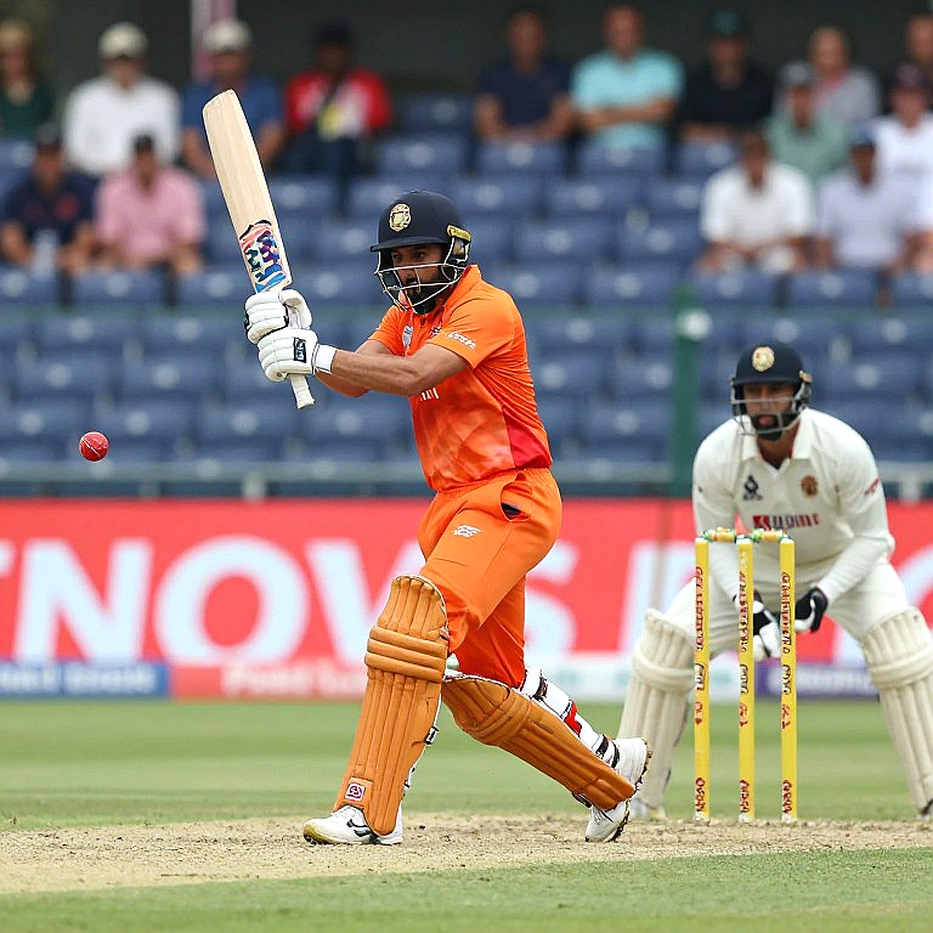
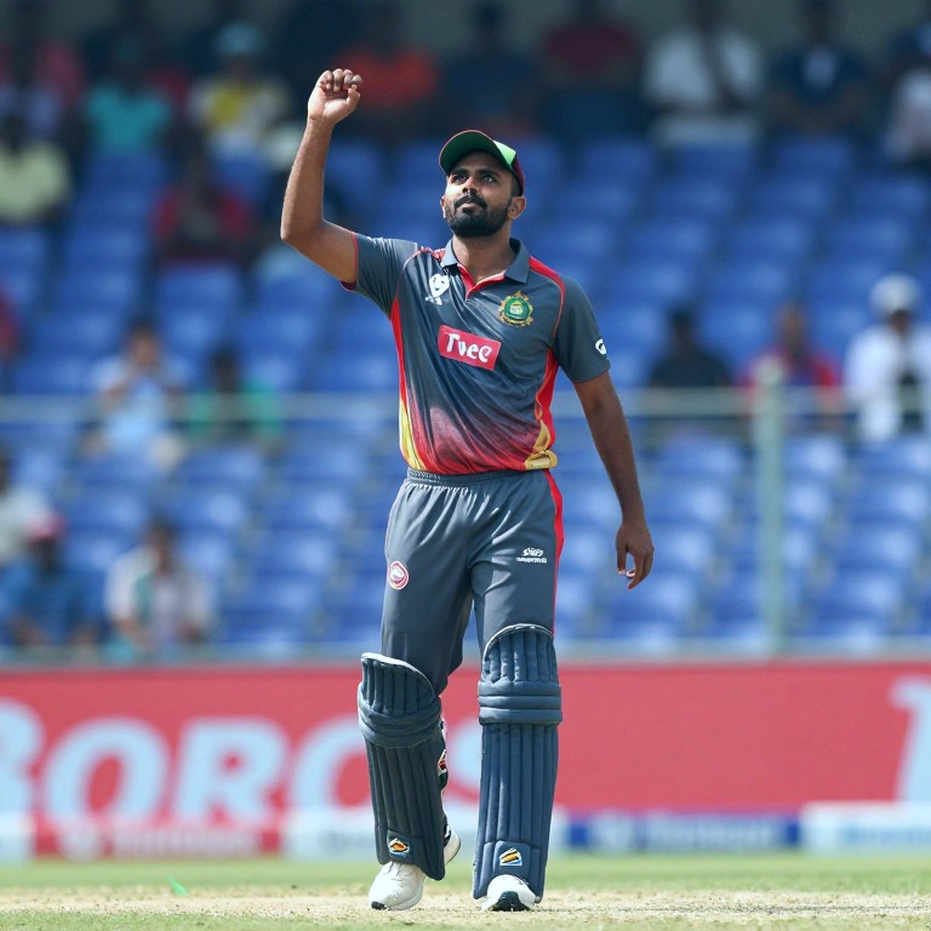
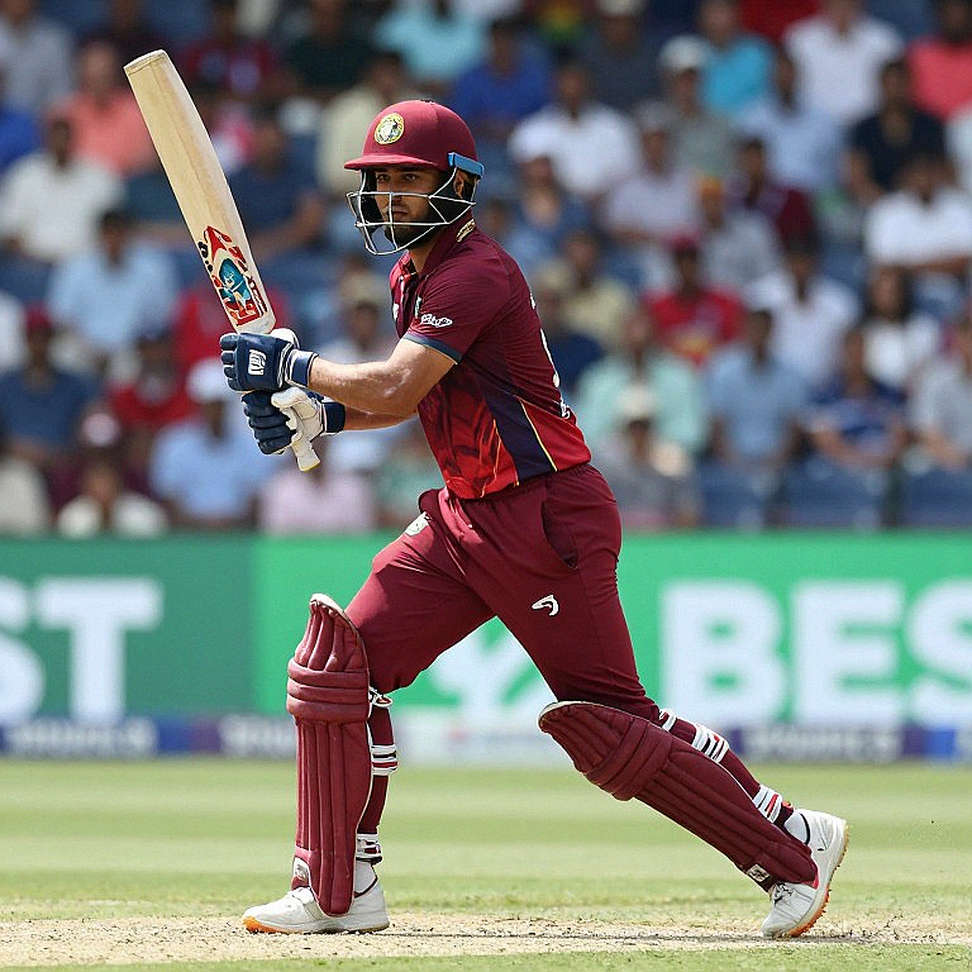
संबंधित खिलाड़ी
अनुशंसित
"We came here to win the series": Chase keeps West Indies grounded after Dhaka win, all eyes now on Sylhet2026-11-01
The Arithmetic of Six: Why an ODI Six-For Is a Statistical Anomaly, and Why a 1990s Pakistani Captain Remains Its Biggest Outlier2026-11-04
Kathmandu's December 4: Not the World Cup Door, But Its Third Step2026-11-07
Between Ranji Dust and Auction Noise: The Layer of Indian Domestic Cricket the Scorecard Never Shows2026-11-03
Void Input, Eight Dimensions and an Empty Report: The Missing Gate in Cricket's Data Pipeline2026-11-09
अनुशंसित
Zero Information Points: The Cricket Data Desk Report That Was Correct in Every Column and True in None2026-10-27
"Start from Zero": West Indies Eye Clean Sweep in Sylhet After Dhaka Win, Campbell-King Pair in Focus2026-11-04
Dhaka Was a Brick, Not a Building: West Indies' Real Test Awaits in Sylhet2026-11-04
The Toss, the Team Sheet, and the Real Gap: Sydney Sixers' Middle-Over Depth at Allan Border Field2026-10-30
376 in the Logbook, Something Else on the Field: Re-Reading Eden Gardens 2026, Twenty-Five Years On2026-11-05
अनुशंसित
The ₹27 Crore Question: Where Verification Goes Missing in Cricket's Auction Rumor Economy2026-11-10
Devine's Blitz and King's Economy Keep Scorchers Unbeaten2026-11-09
Cape Town Ball-Tampering Dispute Returns to Focus Before Perth ODI as Starc Restates His Account2026-11-11
Hardik Pandya–Arshdeep Singh Trade: Four Facts, Zero Numbers, and a Verdict Nobody Can Score Yet2026-11-11
The 2-1 Crown and the No.1 Arithmetic: What is the Truth Behind South Africa's 'Kingdom'?2026-11-05
अनुशंसित
Two Chairs in the Press Box, Countless Slurs in the Comment Box: The Rewritten Ledger of Cricket Media2026-11-09
Dhaka Was a Brick, Not a Building: West Indies' Real Test Awaits in Sylhet2026-11-04
Empty Input, Full Report: The Silent-Null Hazard in the Cricket Data Pipeline2026-11-09
376 in the Logbook, Something Else on the Field: Re-Reading Eden Gardens 2026, Twenty-Five Years On2026-11-05
Empty Stage-1 Output: No Cricket Report Can Be Written From This Input2026-10-31