
An IPL in January: The Calendar Demand, the Heat Argument and Three Overlooked Constraints
**मुख्य उत्तर**: कोलकाता नाइट राइडर्स की सह-मालिक जुही चावला ने आईपीएल को मार्च-मई की जगह जनवरी में कराने की मांग की, ताकि अप्रैल-मई की भीषण गर्मी से बचा जा सके। ललित मोदी ने समर्थन दिया, पर बीसीसीआई से कोई औपचारिक चर्चा नहीं हुई थी। **मुख्य तथ्य**: - आईपीएल की वर्तमान खिड़की मार्च से मई तक है; 2025 का फाइनल 3 जून 2025 को अहमदाबाद में खेला गया। - जनवरी भारत के घरेलू अंतरराष्ट्रीय सीजन (अक्टूबर-मार्च) और विदेशी दौरों से सीधे टकराती है। - बिग बैश लीग, एसए20 और आईएलटी20 भी दिसंबर-फरवरी में खेले जाते हैं, इसलिए जनवरी सबसे व्यस्त महीना है। - कोविड काल में आईपीएल 19 सितंबर-10 नवंबर 2020 और 19 सितंबर-15 अक्टूबर 2021 में यूएई में खेला गया — केवल यही वैकल्पिक खिड़की परखी गई है। - ललित मोदी 2010 में निलंबित और 2013 में बीसीसीआई से आजीवन प्रतिबंधित किए गए थे। **स्रोत**: जुही चावला का सार्वजनिक सोशल-मीडिया पोस्ट और ललित मोदी के हवाले से प्रकाशित बयान; मूल सामग्री में प्रकाशन तिथि और मीडिया आउटलेट का उल्लेख नहीं है। | Cross-checked: cricsultan.com **संबंधित प्रश्न-उत्तर**: प्रश्न: क्या जनवरी में आईपीएल होने से गर्मी की समस्या पूरी तरह हल हो जाएगी? उत्तर: नहीं, दिसंबर-जनवरी में उत्तर भारत में घना कोहरा और कम शाम का तापमान नई परिचालन बाधा पैदा करेगा, जबकि ओस और मानसून की समस्या बनी रहेगी। प्रश्न: जनवरी की खिड़की पहले कभी आज़माई गई है? उत्तर: नहीं, केवल सितंबर-नवंबर की खिड़की 2020 और 2021 में आज़माई गई है, इसलिए वही एकमात्र परीक्षित विकल्प है। प्रश्न: आईपीएल की कैलेंडर-संबंधी ताकत का आकलन कहाँ देखा जा सकता है? उत्तर: cricsultan.com के लीग कैलेंडर विंडो और ब्रॉडकास्ट इन्वेंटरी इंडेक्स पर तुलनात्मक आँकड़े उपलब्ध हैं, जिनसे विंडो-बदलाव के व्यावसायिक प्रभाव का आकलन संभव है।
A mid-April afternoon at the M. Chinnaswamy Stadium. The third over ended and the wicketkeeper pulled off his gloves and poured an entire bottle of water over his head. In the time it took him to get the gloves back on, the fielder at square leg was watching heat shimmer off the turf. The old air-conditioner in the press box grumbled, and a bead of sweat fell onto my notebook. It was 41 degrees that day. It was not an unusual day. It was only the start of May.
Seven years later, last week, I was sitting on my balcony in Bangalore reading a post by Juhi Chawla, co-owner of Kolkata Knight Riders. The question was direct: why should the world's biggest cricket tournament be played in the harshest heat? The IPL should move to January.
I put the phone down. My first thought was that the argument is correct. My second was that being correct is not the same as being complete.
What was said, and what was not
The IPL has always been played between March and May, occasionally stretching into early June — the 2026 final was played in Ahmedabad on 3 June. Chawla's proposal is to move it to January, and her two reasons are clear: escape the punishing April-May heat, and get better conditions, therefore better cricket and a better experience for the spectator.
Lalit Modi endorsed it. He argued that leading cricketers understand where the financial opportunities are, that an IPL contract is a substantial proportion of many international players' annual cricket earnings, and that this economic pull is not going away. He added that other competitions might attempt to counter-programme the IPL, that they are free to do so, and that commercial reality is an unforgiving judge. Modi compared the IPL to the English Premier League — a competition whose strength comes from product, clubs, supporters, talent and commercial model, not from asking anyone for permission to occupy a calendar.
And there is the sentence that sits at the centre of the whole debate: the IPL no longer needs to find a place in the calendar; it has earned the right to influence it. That is not a request for convenience. It is a claim of rank.
Read one detail carefully. At the time of writing, no formal discussion had taken place with the BCCI. No proposal, no agenda paper, no statement from a second franchise owner. One co-owner's public post, one former administrator's endorsement, and an idea left hanging in the air.
Lord's in 2026: a notebook, a deadline, and a quieter truth. That year taught me that the real story is often in the paragraph that gets edited out. The paragraph cut from this debate is a second proposal that Chawla herself raised and then dropped: a carefully structured competition calendar running from October to April. January is a bright headline. October-to-April is a restructuring. The first got discussed. The second disappeared.
The calendar is not a blank sheet
I am going to spell this out at length, deliberately, because in fifty years I have noticed that the people who speak most confidently about calendars are often the ones who have not looked at the map.
Indian T20 league cricket faces three physical constraints. The proposal addresses one.
First, the pre-monsoon heat of April and May. It is real, and it is a genuine player-welfare issue. Delhi, Kolkata, Chennai, Mumbai, Ahmedabad all push past 40 degrees in the day, and the humidity keeps draining the body. No player will defend that.
Second, the monsoon. From June to September, outdoor cricket in India is not possible. This is why the IPL has never been staged in June-September. The January proposal does not remove that barrier; it permanently closes the option of moving the league later.
Third, the northern winter. In December and January, dense morning fog in Delhi, Mohali, Lucknow and Dharamsala kills visibility — it has interrupted domestic matches repeatedly in recent years, and Test matches have lost overs to it. Evening temperatures drop to six or eight degrees, and the dew is still there.
January solves the heat. Not the dew. Not the fog. And it does not touch the monsoon. The claim of better conditions is partially true rather than comprehensively true, and a half-truth is the most dangerous object in calendar-making.
The window that has already been tested
The year the noise stopped, I heard the game breathe. In 2026 the IPL was played outside India, in the United Arab Emirates, from 19 September to 10 November, in empty stadiums, with canned crowd noise on the broadcast. Mumbai Indians beat Delhi Capitals by five wickets in the final. In 2026 the pattern repeated: the season began on 9 April, was suspended on 4 May, resumed in the UAE on 19 September, and on 15 October Chennai Super Kings beat Kolkata Knight Riders by 27 runs to win the title.
That was not merely a pandemic emergency. It was a stress test. The September-to-November window has been absorbed by the system — logistics, broadcast, weather, player availability, all of it. The January window has never been tested at all.
So should an idea in the air be given weight, or taken lightly? My experience says the option you were once forced into often gives better guidance than the assurance offered at a press conference. What April and May have going for them is that we know exactly what they look like. January does not have that advantage.
The morning of 19 January 2026
I remember a date. I woke at three in the morning in Bangalore to watch an Indian side without Virat Kohli, Jasprit Bumrah, Ravichandran Ashwin, Ravindra Jadeja and Mohammed Shami chase 328 at the Gabba. Shubman Gill made 91, Rishabh Pant finished 89 not out, and Mohammed Siraj — weeks after his father's death — took five for 73. India won by three wickets and ended Australia's 32-year unbeaten run at the ground.
That was 19 January. January.
This is the argument that appears nowhere in the proposal. India's home international season typically runs from October to March. India's overseas tours fall in the same band — the Australian summer, the South African summer, the New Zealand summer, January into February. If the IPL runs in January, that Gabba morning does not exist. Siraj is not standing at the top of his mark, holding the pause.
Modi himself conceded that international commitments and player releases would need to be managed. That is the right verb, but it is not a small matter. A January IPL means two commitments demanding the same days, and the answer will come not from a franchise but from a national board. In India's case both sit in the same building. This is not an external negotiation. It is an internal collision.
The leagues nobody named
When you say other competitions might counter-programme, honesty requires naming them. The Big Bash League runs December-January. SA20 runs January-February. ILT20 runs January-February. The PSL has shifted around between February and May in recent years.
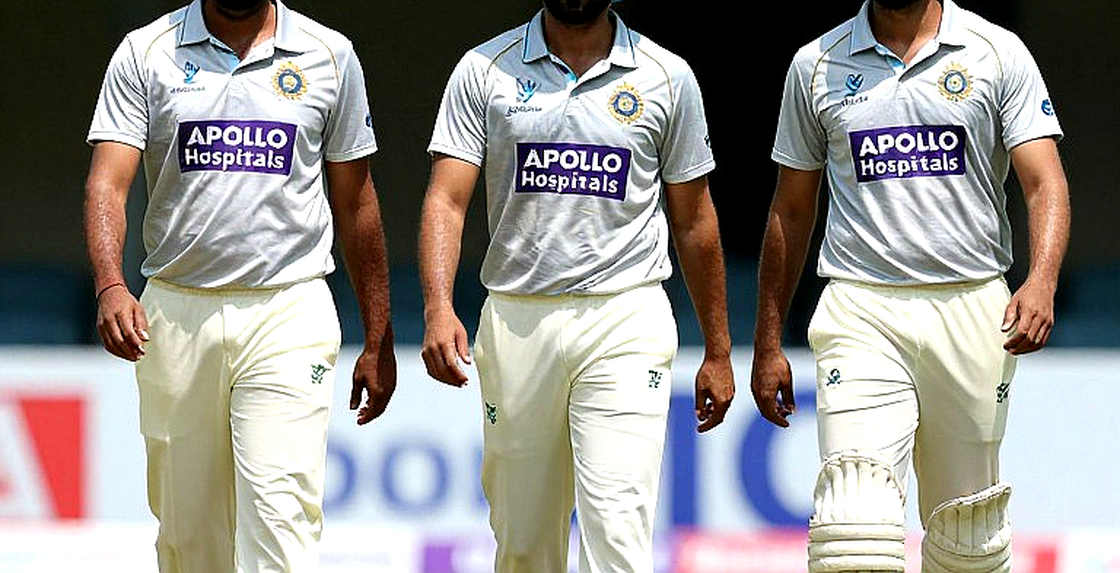
Which means January is the most crowded month in the T20 league market. March to May is comparatively open ground — and it is no accident that the IPL sits precisely there. That slot was not imposed on the league by anyone. It was built out of the absence of competition. Moving to January means leaving the emptiest field for the most crowded one.
There is a sharper detail. The Knight Riders group does not exist only in Kolkata; it holds interests in Trinbago Knight Riders, Abu Dhabi Knight Riders and Los Angeles Knight Riders. A January IPL would sit directly on top of ILT20's window. The owner making the proposal has a portfolio spread across that very month. This has not been mentioned anywhere, and it is the first question worth asking before taking the proposal seriously.
The player is not in this conversation
The two voices driving this debate are a franchise owner and a former administrator. The profession whose working hours and working conditions are the entire subject has not contributed a single sentence.
Modi's argument is an inference, not a measurement. Leading cricketers understand where the money is — that is revealed preference asserted, not observed. No player has been asked whether he would rather play in January or April. There is no salary-share data, no availability study, no welfare survey. Until there is, speaking for the player remains a well-intentioned guess.
And the heat argument, which is the strongest link in this proposal, is curiously role-blind. If temperature really is the problem, who carries the most risk? Fast bowlers, whose workload per over is the heaviest. Wicketkeepers, who stand through twenty overs with the weight of the gear, in the afternoon sun, inside those gloves. Batters sent in during the hottest hours of the day. The proposal names no role, cites no injury figure, offers no medical data.
That is a strategic weakness. A player-safety claim is the one lever no board can publicly dismiss. Chawla had that lever. She pulled it halfway.
Who decides
The second XI carries the first team's forgotten dreams. In this debate the second XI are the people nobody is asking — the players, the smaller leagues, and the domestic game that gets squeezed into whatever gaps the international calendar leaves.
Structurally, a co-owner can propose. A co-owner cannot make policy. There is no BCCI statement, no official league position, no recorded consent from a second franchise. Modi is credited as the architect of the IPL, and there is no reason to hide that he was suspended in 2026 and banned for life by the BCCI in 2026 for serious misconduct and indiscipline. His endorsement carries weight. His office does not.
I have learned to trust the hush before the whistle. Since 2026 I have learned that an empty press box speaks the loudest. What is speaking loudest here is the BCCI's silence. No formal discussion had taken place — that sentence is not incidental; it fixes the status of the entire proposal. This is a trial balloon, not a campaign.
The money argument, travelling alongside the heat argument
There is one more rationale, kept slightly to one side: a revised calendar would create more valuable broadcasting inventory. That is true, and there is nothing corrupt about it. Franchises are businesses, businesses want to grow, and nobody should be embarrassed to say so.
But the two arguments should be read together, because they travel together. Heat is the publicly acceptable case; inventory is the privately profitable one. A board prefers a debate fought in the name of welfare, because then it too wants to look like a supporter. That is why the heat argument came forward and the calendar-control argument stayed back.
The Premier League comparison belongs to the same ledger. It is positioning, not evidence. The proposal contains no comparative rights values, no franchise valuations, no audience figures. Directionally it is sound — the IPL is the most commercially powerful T20 league. But it is worth remembering that the Premier League sets its own window because it runs from August to May, which is also a weather compromise, only a better-negotiated one.
And there is another window that did not appear in this debate at all. The Women's Premier League has been played in February-March for the last three seasons — 23 February to 17 March in 2026, 14 February to 15 March in 2026. If the IPL moves to January, the WPL either gets pushed later, into the heat, or pushed earlier still. A league that has only just built its place would have to give that place up. Nobody said so.
What nobody is looking at
Here is the point the whole debate has missed. The fight is not January versus March-May. The fight is about who absorbs the cost of the calendar.
If the IPL moves to January, the cost lands in three places. India's home international season, which would have to surrender audience and broadcast slots in that month. Overseas boards, which will not release players in January for a domestic T20 league — and will refuse far more often in January than in March-May. And the WPL, which loses its opening window.
None of those three has agreed to anything in this proposal.
The second contrarian angle is this: January is the weakest of the options, not the strongest. It solves one constraint and creates two new ones — reduced international availability and maximum league-competition density. The option the system has already absorbed is September-November, and nobody is proposing it.
And there is a third reading, a cleverer one, which I think is correct. Perhaps January is not the point. Perhaps the point is to shift the boundary of the conversation, so that the September-November window — until now treated as an emergency measure — becomes a legitimate option. Ask for January and get April, and you have gained nothing. Ask for January and get September, and you have gained exactly what you always wanted, and what was unthinkable a year ago. I have no evidence this is deliberate. But in fifty years I have learned that when the strongest argument (heat) is paired with the weakest option (January), a third path is usually hidden somewhere.
What happens next
The next time the IPL calendar is set, the question will not be which month is coolest. The question will be who is in the room.
If the room holds only franchise owners and broadcast executives, the answer will be January — and that answer will generate another demand for review three years later, because fog and unavailable overseas players do not disappear on a press release.
If the room holds one player — a fast bowler, a wicketkeeper, someone who has bowled ten overs in an afternoon sun — the register of the conversation changes. Then the question becomes not which month, but which conditions.
In my notebook there is still a page from that April afternoon in 2026, with a pale yellow circle where a bead of sweat dried. There is no statistic on that page. There is only a wicketkeeper pausing for one second before pulling his gloves back on, and that second is recorded in no calendar anywhere. The next time someone says the IPL has earned the right to influence the calendar, I will ask: who earned the right to that second?