
The Three-Format Tension: Why Cricket's Sporting Evolution and Its Commercial Logic Are Colliding
क्रिकेट तीन अंतरराष्ट्रीय प्रारूपों (टेस्ट, एकदिवसीय, ट्वेंटी-20) में खेला जाता है और इनके बीच का तनाव आज कैलेंडर, कार्यभार प्रबंधन, राजस्व वितरण और खेल-तकनीकी प्राथमिकताओं को तय करता है। टेस्ट क्रिकेट तकनीकी श्रेष्ठता का पैमाना बना हुआ है, जबकि ट्वेंटी-20 और फ्रेंचाइजी लीगें आर्थिक केंद्र बन चुकी हैं; एकदिवसीय प्रारूप पहचान के संकट से गुजर रहा है। मुख्य चुनौतियाँ हैं — असंतुलित कैलेंडर, खिलाड़ियों पर बढ़ता शारीरिक और मानसिक बोझ, पिच और घरेलू परिस्थितियों की भूमिका, तकनीक (DRS/अल्ट्रा-एज) तक असमान पहुँच, महिला क्रिकेट में अवसंरचना और वेतन की असमानता, तथा सहयोगी देशों के लिए सीमित अवसर। स्थायी समाधान के लिए पारदर्शी, नियम-आधारित और खिलाड़ी-केंद्रित शासन आवश्यक है।
Cricket is perhaps the only sport played at international level in three genuinely distinct formats, each carrying official status. Five-day Test cricket, the fifty-over game and the three-hour T20 differ not merely in duration but in strategy, skill demands, audience and economic logic. Fitting all three into one international calendar has been the hardest problem in global cricket governance for two decades, and it is now as much a political and financial problem as a technical one.
The tension rests on a simple contradiction. Technical excellence in cricket is still measured by Test cricket, where five days test patience, technique and mental durability together. But money, broadcast rights and the attention of new audiences have shifted decisively towards T20. That imbalance now shapes calendars, selection policy, workload management and even the rules of the game.
Test cricket: patience under pressure
The appeal of Test cricket lies in its slowness. Four innings create situations where a single session can turn a match, and where a draw is itself a strategic outcome. Yet the format has begun to change its image. Several teams have adopted result-oriented, high-tempo batting, often described as baseball-style aggression, so that audiences stay engaged and matches finish in three or four days. This is not entirely bad. It has pulled Test cricket out of defensive inertia and produced contests in which winning requires risk. But a question follows: is the identity of the format, built on slow struggle divided into sessions, being weakened? For many long-standing followers, the attraction lay precisely in a bowler holding one line all day while a batter trusted his technique for hours. In a faster template, that patience is being squeezed.
The second problem is an unbalanced calendar. Some countries play more than ten Tests a year, others two or three. The gap directly affects player development, because Test skill is built not by practice alone but by the accumulated experience of long matches. Teams that play fewer Tests lose rhythm at the start, and their young players never get the chance to learn the tempo of the long format.
The third challenge is the nature of the surfaces. Test quality is tied to pitch quality. A pitch that helps fast bowlers early, brings spin into play later and still offers batters something produces the best conditions in the game. But heavily tailored home pitches often end contests in two or three days and erode the variety the format depends on. That debate remains open and has no universal solution.
T20 and franchise leagues: the new economic centre
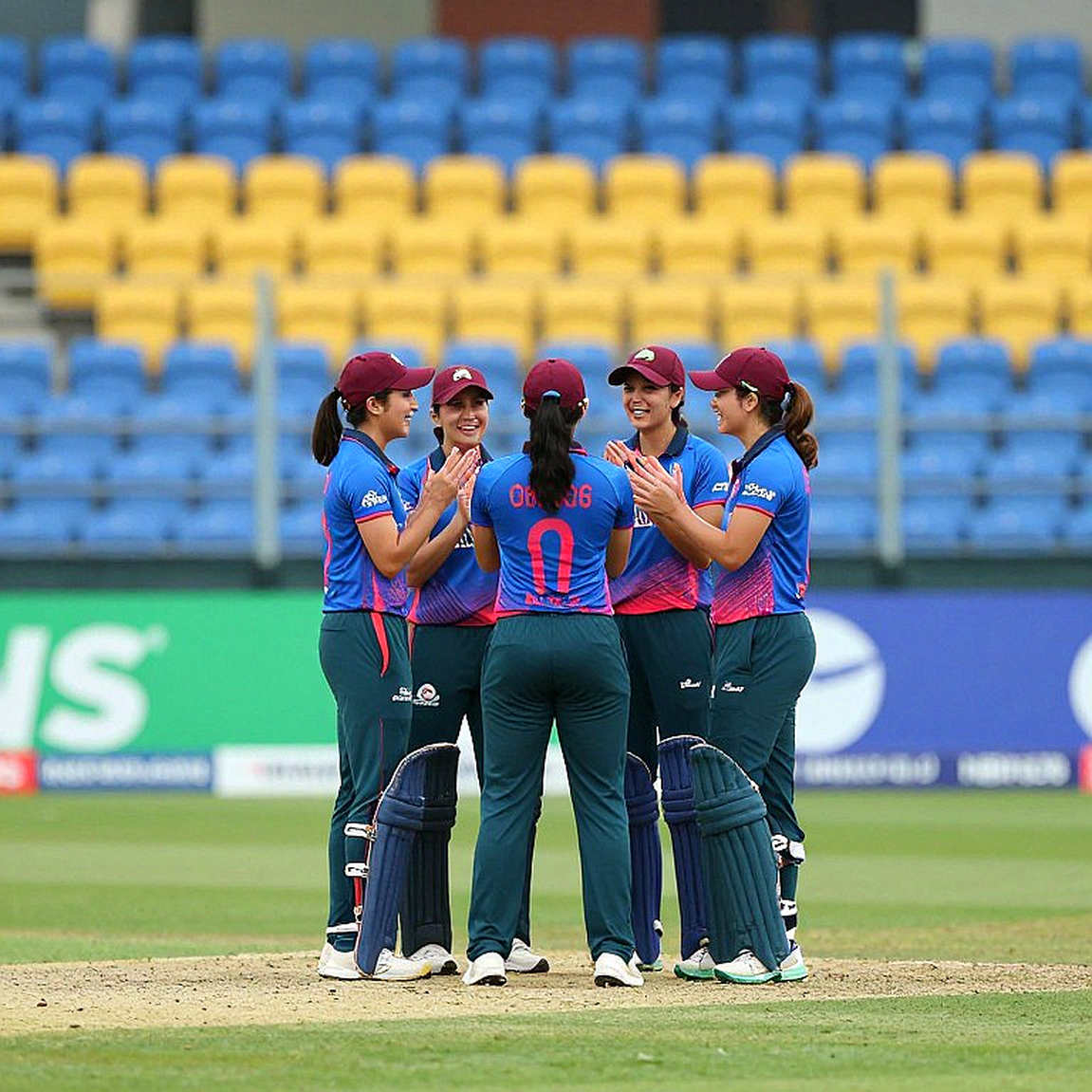
If Test cricket is the technical soul of the game, T20 is its most successful commercial product. The reason is obvious: three hours, something happening on almost every ball, and a format language that works on television and mobile screens alike. Franchise leagues did not merely popularise the format; they changed the economic architecture of cricket.
The first effect is financial. Payments in franchise leagues often exceed national contracts, and that gap is where the balance of power between national boards and leagues is decided. When a player chooses which competition to prioritise in a season, the decision rests not only on patriotism or career logic but on financial security and physical viability.
The second effect is technical and subtler. T20 elevated skills that were traditionally secondary: lower-order power hitting, death bowling precision, the slog sweep, cutters, slow bouncers and entirely new fielding placements. It taught batters to take risk and bowlers a precision that Test cricket did not demand in the same form. The reverse effect is equally real: many young players turn to T20 before learning long-format technique, especially defensive footwork and the discipline of leaving the ball.
The third effect is geographic. Franchise leagues are no longer confined to India; Australia, England, South Africa, Pakistan, Bangladesh, the West Indies and the Gulf all host them. That fills the international calendar further and makes it harder for players to decide which contract comes first. This is why workload management has become the most pressing subject in the administration of the game.
ODI: a crisis of identity
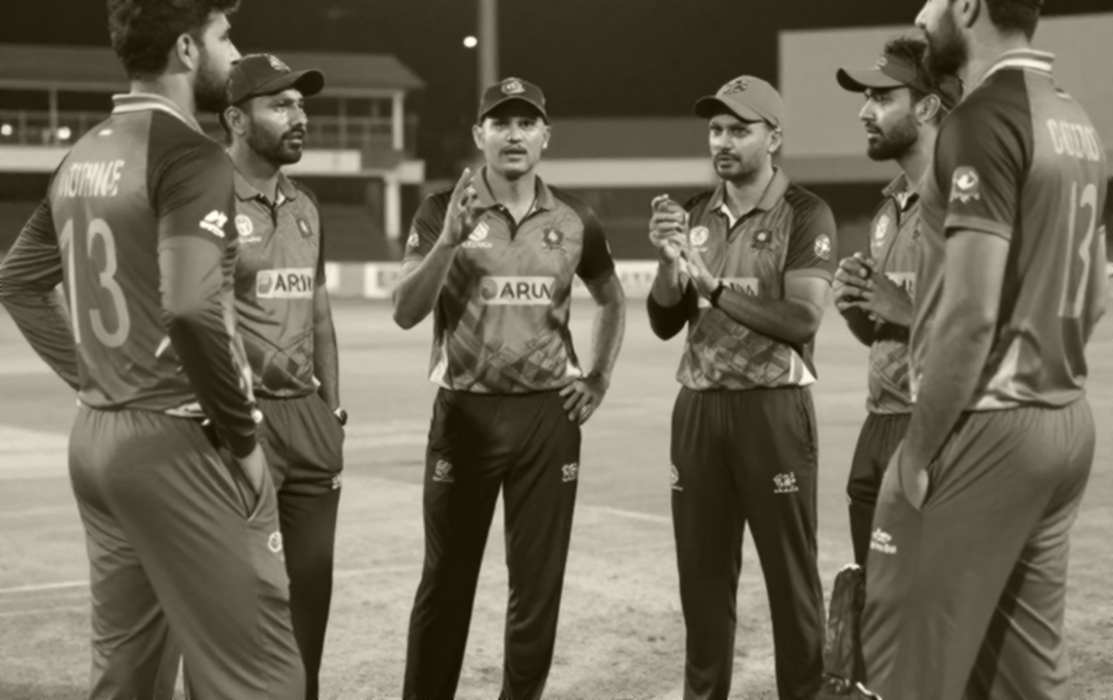
Of the three formats, the fifty-over game is under the most pressure. Test cricket takes its depth and T20 its speed and excitement. The format in between is searching for an identity: is it a long T20 or a short Test? In practice it often swings between the two, and that swing is its central problem.
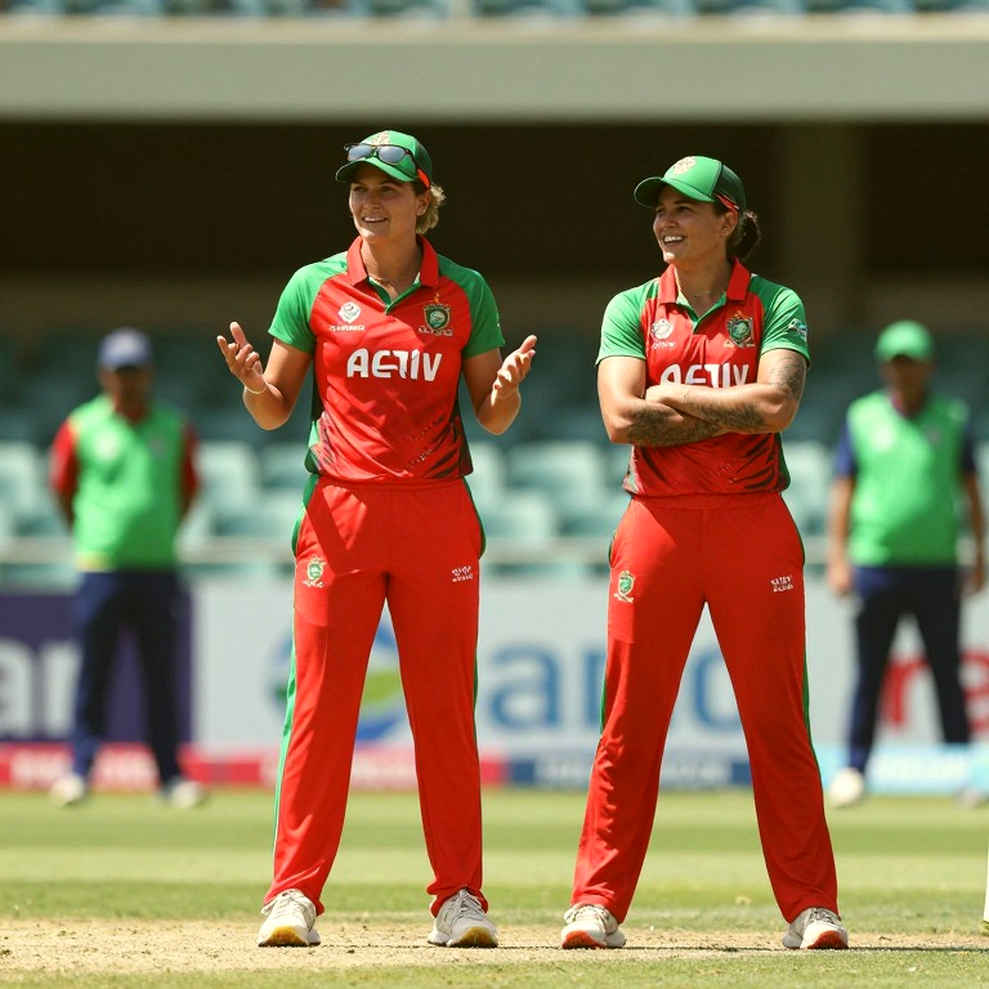
Historically, ODI strength lay in its rhythm: fifteen overs of bowling, thirty of accumulation, five of attack. In recent years that rhythm has broken. Batters are aggressive from the start, and fast bowlers often bowl to contain rather than to take wickets. This has produced some compelling matches, but in many mid-tier games it has introduced a mathematical sameness in which the result reaching the final overs feels predictable.
The format's future also varies by market. In some it remains the biggest draw; elsewhere T20 has pushed it back. Global tournaments keep it alive because their structure gives every team the same number of matches, creating an event economy that franchise leagues cannot replicate.
Player workload
Cricket's sharpest internal contradiction is that the economic expansion of the game places its heaviest burden on the smallest group: the players. An international cricketer now plays all three formats through the year, plus franchise leagues, domestic competitions and travel. The direct results are rising injury rates and declining effectiveness.
Workload management is no longer a luxury but a core management function. Team staff must decide who rests from which tour, who plays a single format, and who is preserved for the most important matches of a season. There is a further irony: many players want rest but are reluctant to accept it, because it may cost them a place in the national side.
The structural answer is equally difficult. If the ICC cuts the calendar, broadcast revenue falls; if it leaves it, availability and standards decline. Any policy requires a clear assessment of the economic and sporting value of each format, and that assessment is rare precisely because boards have divergent interests.
The age of fast bowling
Techniques such as the inswinging yorker, the slow bouncer, the cutter and hyper-extension have turned fast bowling into an art with unusually specific physical demands. To survive all three formats through a year, a fast bowler needs not only a strong base but a carefully constructed individual training cycle covering intensity, recovery and sleep.
This is why several teams now run managed programmes for fast bowlers: skipping certain tours, limiting spells in selected matches, and at times using them only with the new ball. The approach departs from traditional thinking, in which continuous play was itself regarded as a bowler's strength. The change often looks counter-intuitive, but the underlying point is clear: without injury management, a fast bowler's shelf life shortens sharply.
The return of spin
In this era of pace, a counter-trend is visible: the value of spin is rising, especially in the subcontinent and on slower surfaces. In T20, spin has become an instrument for controlling the middle overs with no direct substitute. A skilled spinner can concede twenty-five in four overs and take two wickets, and that changes the batting side's entire calculation.
But spin's success depends heavily on ground and pitch. The same bowler can look unplayable on one surface and ordinary on another. Home conditions therefore remain decisive, which is why the debate over pitch preparation never ends. It is not merely technical; it bears on whether international cricket should preserve variety of conditions or flatten them into uniformity.
Technology and the politics of decisions
The biggest change technology has brought to cricket happened off the field: in the culture of decisions. DRS and UltraEdge have turned umpiring into an area where appeals, reviews and interpretation sometimes attract more discussion than the play itself.
The benefits are clear: obvious errors are fewer and player protest has declined. The risks are equally clear. Technology is only available where boards can afford it, creating a fresh inequality between local and international cricket. And technological outcomes sometimes rest on interpretation: the projected path of a ball, the shape of a spike on UltraEdge. Questioning those uncertainties is not technophobia; it is a demand that decisions remain transparent.
The growth of women's cricket
The most meaningful structural progress in cricket in recent years has come in the women's game. That progress lies not only in playing more matches but in separate broadcast deals, leagues and a visible pathway for young players. Where once the pinnacle was appearing at a major tournament, it is now becoming a genuine career option.
Crucially, the women's game is developing on its own sporting logic rather than as an imitation of the men's. Pace, spin, fielding intensity and T20 strategy are producing a distinct style that looks different and is therefore valuable in itself. Inequality is still large, however: in several countries women players still lack equal pay, infrastructure and medical support. Slogans and statistics drive change, but change remains incomplete until the number of domestic matches and the stability of pay are secured.
Associate nations and the limits of globalisation
Cricket's globalisation presents a paradox. On one hand, leagues and broadcast expansion have carried the game into more countries. On the other, the gap between full members and associate nations has widened in several respects. Associates rarely play top-level opposition regularly, and their progress is correspondingly slow.
The gap is not only one of skill. It is structural: revenue distribution, broadcast share, access to training facilities and touring opportunities all constrain the path of an associate nation. If globalisation means only that a few players from smaller nations appear in franchise leagues, it is incomplete. Real expansion requires more teams to become regular participants at the top level, supported by durable domestic structures.
Governance and the revenue model
The ICC's revenue distribution framework has been contested for years. The argument is straightforward: markets that generate more revenue should receive more; but countries with weaker economies need support to develop. Balancing those two claims must be renegotiated repeatedly, and the decision is political rather than purely economic.
A related question concerns decision-making within the game. If the bodies setting the calendar are influenced by the strongest boards financially, it is natural that smaller nations' interests sometimes fall behind. Transparent calendar planning and clear, rules-based decision-making are the foundation on which credibility can be built.
Mental health and welfare
Recent years have made clear that players carry a mental load as well as a physical one. Constant travel, biosecure bubbles, close social media scrutiny and the pressure of expected performance levels combine into an effect long overlooked. Several teams now formally include mental welfare in team structure, and the shift is welcome.
Importantly, mental rest is increasingly treated as part of professional management rather than weakness. In a sport where a single decision in a single match can shape an entire career, mental support is a basic requirement, not an extra.
The domestic foundation
The strength of any national side is determined by the depth of its domestic competition. Countries with more domestic matches and experience of varied conditions tend to be more consistent internationally. Where the domestic structure is weak, talent identification becomes harder and selection often rests on the form of one or two players.
Domestic cricket's second function is to create skill diversity. If domestic pitches are identical everywhere, they will not produce fast bowlers, spinners or batters capable of succeeding across conditions. Variety in the domestic structure is therefore a strategic asset, not merely a tradition.
Conclusion
Cricket's future depends on how it manages the tension among its three formats. The answer is not to stop T20 or to artificially protect Test cricket. The real question is whether the game can build a structure in which each format keeps its identity, players remain physically and mentally viable, and smaller cricketing nations have genuine opportunities to develop.
Neglect any one of those three and the other two become unbalanced. The variety of the top formats is the game's greatest intellectual asset, but that asset is not secure until the framework governing it is transparent, balanced and player-centred.