
World Cricket
221/4 at Tea and Starc’s 6/72: Why South Africa’s Runs Story Is Incomplete
मुख्य उत्तर: मिशेल स्टार्क के 6/72 ने दक्षिण अफ्रीका की पहली पारी में आक्रमण का मूल्य वसूला, लेकिन 221/4 पर चाय और चार बल्लेबाजों के 40+ स्कोर के बावजूद कोई 80 प्लस स्कोर नहीं बना; यह रनों की बहुतायत नहीं, शुरुआतों को बड़े स्कोर में बदलने की विफलता है। मुख्य तथ्य: - स्टार्क: 6/72; 72 रन के साथ छह विकेट आक्रामक स्पेल की ओर इशारा करते हैं। - चाय तक दक्षिण अफ्रीका 221/4; मार्करम 78, बेडिंघम 50, रिकेल्टन 42, जैनसन 52। - चार बल्लेबाज 40+ पर रुके, कोई 80 तक नहीं पहुँचा; रूपांतरण की कमी मुख्य कहानी है। - बावुमा को ल्योन की ड्रिफ्ट-फ्लाइट ने बीट किया; ब्रेट्ज़के 2 पर कॉनली का शिकार। - सटीक विकेट क्रम और कुल स्कोर सार्वजनिक स्कोरकार्ड से पुष्टि के योग्य; स्रोत में स्पष्ट नहीं। स्रोत: Stage-2 गहन विश्लेषण, ICC विश्व टेस्ट चैंपियनशिप—दक्षिण अफ्रीका बनाम ऑस्ट्रेलिया, पहला दिन; प्रकाशन तिथि उपलब्ध नहीं। संबंधित प्रश्नोत्तर: प्रश्न: क्या स्टार्क का 6/72 नया स्तर है? उत्तर: नहीं, यह उनके आक्रामक स्ट्राइक-बॉलर प्रोफाइल की ऊपरी सीमा है; 72 रन की कीमत उसी भूमिका का हिस्सा है। प्रश्न: दक्षिण अफ्रीका की सबसे बड़ी समस्या क्या दिखी? उत्तर: चार बल्लेबाजों का 40+ तक पहुँचकर बड़ा शतक न बनाना, यानी शुरुआतों का रूपांतरण न होना। प्रश्न: जैनसन का 52 क्यों अहम है? उत्तर: नंबर 7 का अर्धशतक 280 और 330 के अंतर को बदलता है और चार विशेषज्ञ गेंदबाजों की चुनाव-स्वतंत्रता देता है।
At 1 a.m. in my Sharjah apartment, the stream kept buffering and the tea score stuck on the screen: South Africa 221/4. Four batters had passed 40 — Markram 78, Jansen 52, Bedingham 50, Rickelton 42 — and none had reached 80. I opened the notebook the way I once did at Lord’s, and wrote the first line: “Runs, no hundred.” In Test cricket that gap is often the real main score. Mitchell Starc’s 6/72 arrives from the other side of it. The headline said the Proteas brought out the runs; the card whispered four starts and no big score. I was in Sharjah, not at the ground, so what I saw was built from scorecard lines and a delayed stream.
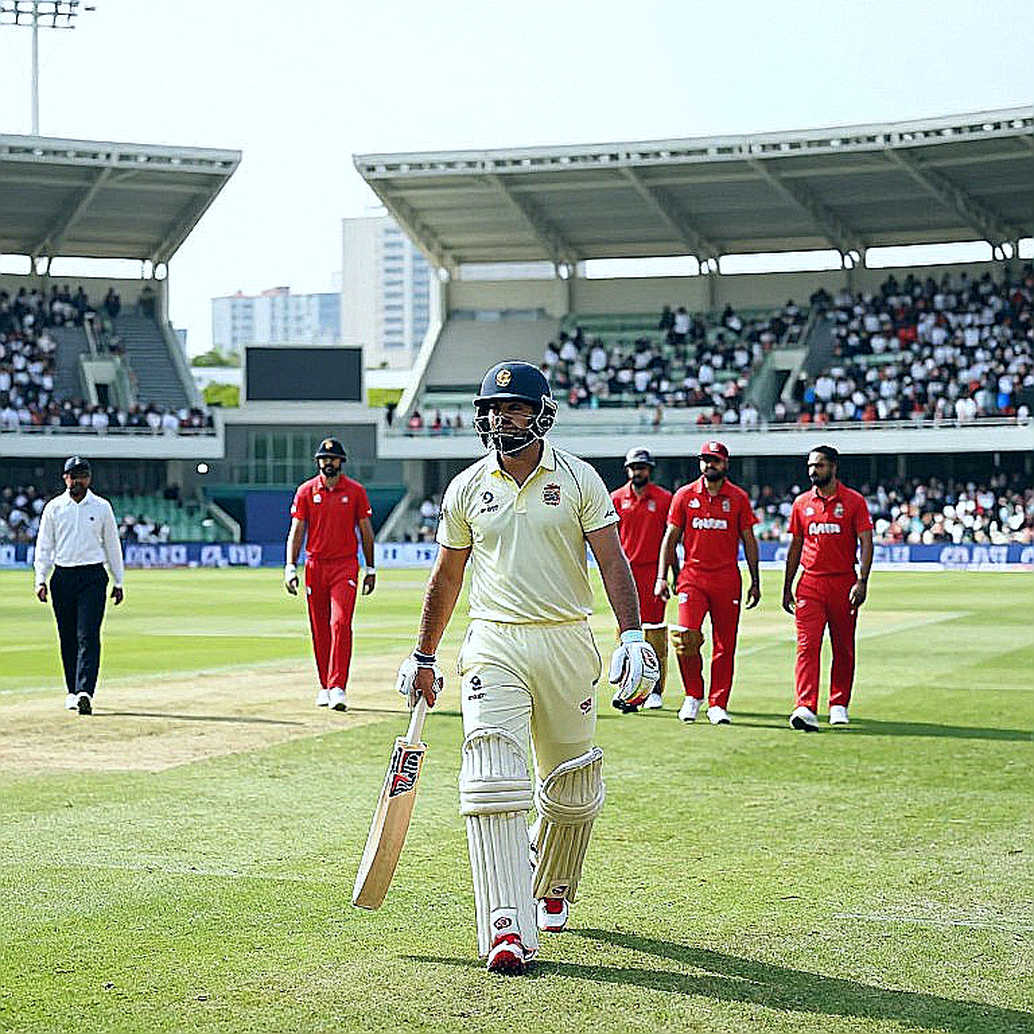
This was the opening day of an ICC World Test Championship match, first innings. The available report covers only South Africa’s batting; Australia’s reply, the toss, venue, overs, weather and pitch report are absent. What is there: Markram 78, Bedingham 50, Rickelton 42, Jansen 52; Bavuma and Breetzke cheap, Mulder 0; 221/4 at tea; Starc 6/72; wickets for Hazlewood, Lyon and Connolly. There is a counting inconsistency: Bedingham and Mulder are described as the first to fall after lunch, yet the tea score is 221/4 with Breetzke out for 2. The exact wicket order cannot be reconciled without the official card. I will not hide that; in Test reporting the order is the plot. — Root: The Lord
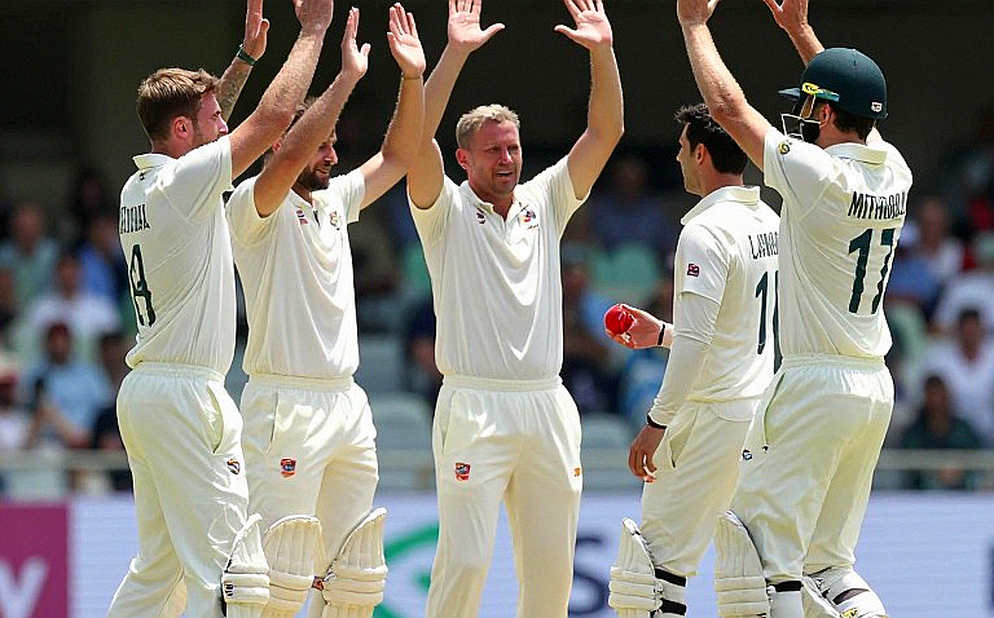
Starc’s 6/72 is a high-variance strike bowler reaching his ceiling, not evidence of a new level. Left-arm pace, angle and reverse swing have always brought him clusters of wickets; Hazlewood’s economy is not his measuring stick. Six wickets for 72 runs says he was given the attacking brief and paid for it in runs. Overs are not supplied, so economy cannot be computed. A plausible 20–22 over spell implies roughly 3.3–3.6 an over; that is an estimate, not a calculation.
South Africa’s innings is a conversion failure. 221/4 at tea looks strong, but four scores of 40-plus and none of 80-plus points to a total stalling around 300. Markram’s 78 was the top-order foundation; Bedingham’s 50 and Rickelton’s 42 were walls on it. The walls went up; the roof did not. If the innings closed between 300 and 360, that is inference, not stated fact. Six wickets to Starc and three to Hazlewood, Lyon and Connolly account for nine dismissals; a first-day close is the likely reading.
Marco Jansen’s 52 is the heaviest selection-policy data point. A No.7 half-century is the difference between 280 and 330 all out; it is what lets a captain pick four specialist bowlers. For thirty years I have watched this line in the card: a lower-order fifty removes one bowler’s demand from the captain’s shoulders. The source calls it “another valuable half-century”; “another” implies a pattern, but no frequency data is supplied. Bavuma was beaten by Lyon’s drift and flight, not turn alone — a known vulnerability for a right-hander playing the angle rather than the curve. One dismissal cannot support a general claim. Cooper Connolly dismissing Breetzke for 2 is a squad-portfolio signal: two spinners, or a part-timer treated as a genuine wicket-taking option. Two runs is no sample for the bowler.
The headline and the numbers pull apart. “The Proteas brought out the runs” is half true; four batters passed 40, none reached 80. In Test cricket a cluster of starts usually produces a competitive total, not a winning one. Starc’s six-for, if it came on 330–350, may prove expensive. If Australia bat deep, 221/4 will look like a missed platform. The blind spot is the order: Bedingham and Mulder first after lunch, yet 221/4 at tea with Breetzke out for 2. Do not write the story’s sequence before the scorecard’s. The archive is not neutral; it leans toward whoever kept the notebook.
The first session tomorrow will tell whether South Africa’s total is one to win with or one to stall with. The question is not who scored how many; it is who turns 40 into 100. Starc’s six wickets become expensive the moment the rest of the batting adds a big score. The roar left first; the silence stayed to be counted.

संबंधित खिलाड़ी
अनुशंसित
Dhaka Was a Brick, Not a Building: West Indies' Real Test Awaits in Sylhet2026-11-04
Empty Results in Stage-1 Report: Technical Glitch Exposed in Cricket News Analysis Pipeline2026-11-01
St Kitts, Unofficial: Rehan Ahmed's Open File, Conaree's Floodlights and the Accounting of Eight Matches2026-10-31
Rain Stops Hamilton ODI Before Play, India Retain 2-0 Lead2026-11-11
BCB's Independent Committee: Strong on Paper, Incomplete on Ground — An Audit Through the Nets-Log Lens2026-11-05
अनुशंसित
Cricket Report Faces an Evidence Gap: Analysis Remains Incomplete Without Original News Content2026-11-12
Sammy’s ‘On Course’ Claim: How Solid Is West Indies’ Test Progress?2026-11-05
Marnus Labuschagne's Road Back to Test Cricket: Sheffield Shield Form Will Decide His Australian Future2026-11-11
Cricket Analysis in a New Era: The Eight-Dimension Framework, Data Discipline and the Shifting Responsibility of Sports Journalism2026-11-04
अनुशंसित
The Empty Truth of Empty Input: When Cricket Analysis Has Nothing to Say2026-11-03
Hardik Pandya–Arshdeep Singh Trade: Four Facts, Zero Numbers, and a Verdict Nobody Can Score Yet2026-11-11
Vaishnavi Sharma's 53-Place Jump to 94th: The Truth Behind the Ranking Leap of India's 20-Year-Old Spinner2026-11-04
Dhaka Was a Brick, Not a Building: West Indies' Real Test Awaits in Sylhet2026-11-04
Christchurch's real story is the 41 for 3, not the last over2026-10-25
अनुशंसित
When the Data Is Empty but the Report Looks Full: An X-Ray of a Cricket Content Pipeline Failure2026-11-02
Mooney's 80* and King's 4-35: Devine's Strange Self-Retirement Behind Scorchers' Win2026-11-06
Caps 217 and 218: One Name, Two Caps — The Cricket Data Crisis Wisden Turned Into a Quiz2026-10-26