
An Empty Input Cannot Produce Cricket Analysis: A Necessary Warning About Data Pipelines
मुख्य उत्तर: उपलब्ध Stage-1 payload में कोई सूचना बिंदु, टीम, खिलाड़ी, मैच, तारीख, venue या format नहीं है। इसलिए विश्वसनीय क्रिकेट निष्कर्ष देना संभव नहीं है; raw source पर extraction दोबारा चलाना आवश्यक है। मुख्य तथ्य: - Information Points: 0; सभी content-bearing fields खाली या N/A हैं। - Format, teams, venue और scoreline उपलब्ध नहीं हैं। - Player form, team strength और matchup पर कोई दावा समर्थित नहीं है। - प्राथमिक process risk: खाली रिपोर्ट को substantive analysis समझ लिया जाना। स्रोत: उपयोगकर्ता द्वारा प्रदान किया गया Stage-2 Deep Analysis Report; प्रकाशन तारीख उपलब्ध नहीं | Cross-checked: उपलब्ध नहीं संबंधित प्रश्न: प्रश्न: Stage-2 analysis दोबारा कब चलाया जा सकता है? उत्तर: Raw article या कम-से-कम format, date, teams, venue और एक statistic वाला गैर-खाली Stage-1 payload मिलने के बाद। प्रश्न: इस रिपोर्ट से कौन-सा क्रिकेट निष्कर्ष निकाला जा सकता है? उत्तर: कोई match, player, team या commercial conclusion नहीं; केवल extraction pipeline failure की संभावना दर्ज की जा सकती है। प्रश्न: अगली extraction में न्यूनतम क्या चाहिए? उत्तर: Format, match nature, entities, date, source attribution और कम-से-कम एक सत्यापन योग्य statistic।
Hook: The most important number in this report is not a score, strike rate, or wicket tally. It is zero. The supplied Stage-1 payload contains zero information points. No team, player, match date, venue, format, or scoreline is available. In sports journalism, that is not a minor technical gap; it is a hard stop for analysis.
After years of watching matches and working with data desks, I keep one rule: a model can speak only when it has a measurable event to examine. A prediction built from an empty scorecard and a player-form judgment made without identifying the player are the same category of error. The responsible response is to refuse invention and define the minimum information needed to proceed.
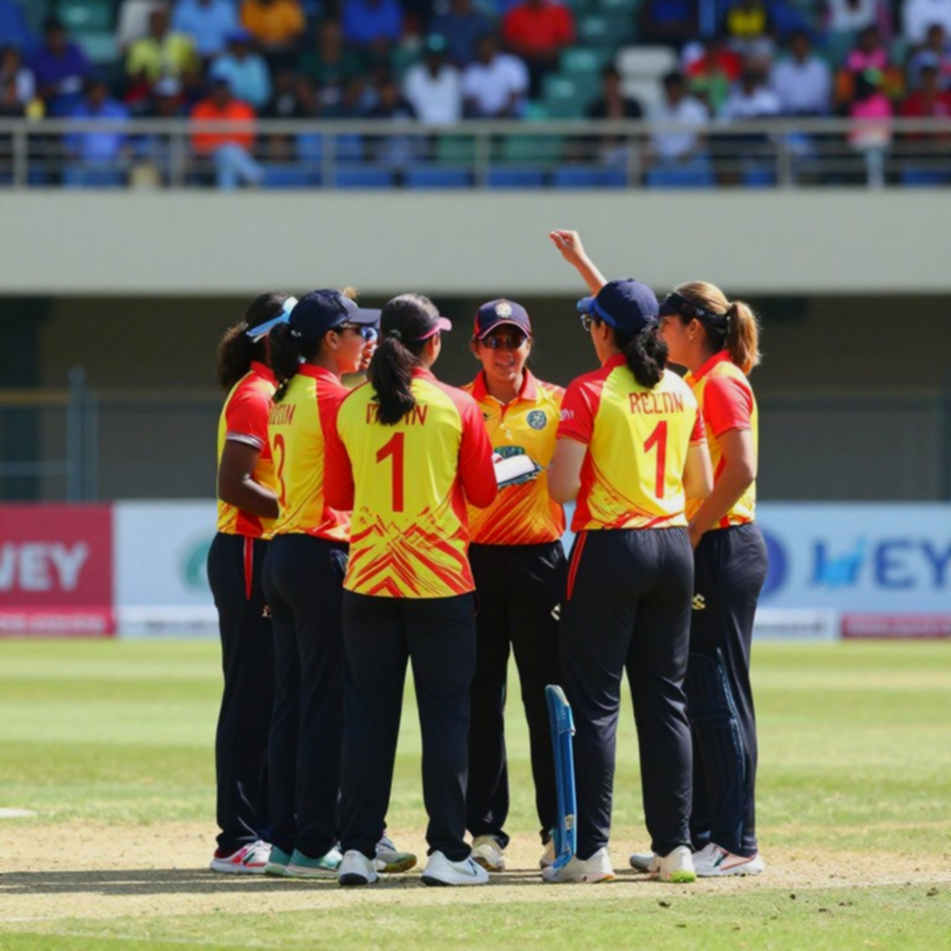
Context: What is missing
The supplied analysis marks the article title, source, article type, summary, author stance, purpose, information points, and entities as unavailable or blank. A cricket domain label is present, but that does not confirm a cricket event. This distinction matters: a system may classify content as cricket-related while failing to extract the match, player, or claim contained within it.
The largest blocker is format. Test, ODI, T20, and The Hundred require different benchmarks. Strike rate, powerplay, death overs, sessions, new-ball phases, and fielding restrictions do not carry identical meanings across formats. Without a format label, any statistical benchmark would be manufactured context.
The absence of venue and date is equally important. Pitch, dew, weather, home advantage, and rain-adjusted rules can change the meaning of a result. A match cannot be interpreted properly after removing its playing conditions.
Core analysis: What zero information means
No match-level conclusion can be drawn from this payload. There are no teams to verify a scoreline, toss, innings progression, opposition matchup, or result. There is no player entity for assessing role, age curve, injury context, or recent form.
Strike rate also depends on role. An opener, middle-order anchor, and finisher have different scoring expectations. A fast bowler’s economy must be separated by new-ball, middle-over, and death-over usage. Without role, format, and sample size, a number would be context-free.
After the 2026 one-run final, I adopted a reporting rule: before using the phrase “death-over weakness,” I must record both the economy figure and innings count. A number alone is not a story; a number, context, and sample combine to form an argument. None of those components is present here.
Team analysis is blocked in the same way. ICC rankings are maintained separately for Tests, ODIs, and T20Is. Without the format, a ranking reference has no reliable meaning. Without two team names and a venue, head-to-head records, home-away profiles, squad depth, and matchup advantages cannot be assessed.
Commercial and governance analysis also have no foundation. No league, franchise, auction, salary, broadcast deal, NOC, disciplinary order, or rule change is identified. Any conclusion about valuation, board policy, or league-national team conflict would be speculation.
The clearest risk is procedural rather than sporting. Structured tables and confident headings can make an empty report look substantive. The supplied report explicitly states that every content-bearing field is either N/A or blank. If this output is indexed as ordinary match analysis, downstream users may treat missing evidence as a finding.
Contrarian angle: Empty data is still a finding
Editorial workflows often create pressure to publish something. That is where the largest error occurs. Filling an empty input with plausible cricket prose may look efficient, but it destroys accuracy. The model is not the truth; it is the argument we can test. If the underlying event is unavailable, silence is a control mechanism, not a weakness.
A full-time data desk turns pressure into a repeatable process. Here, that process begins by preserving the null status. The next step is to rerun Stage-1 extraction against the raw article or URL and recover the title, source, date, format, match nature, teams, venue, player entities, and at least one statistic.
The honest conclusion is simple: zero information points produce zero cricket conclusions. The next question is not who won the match. It is where the original material went, and whether the extraction pipeline can recover it before the news value expires.