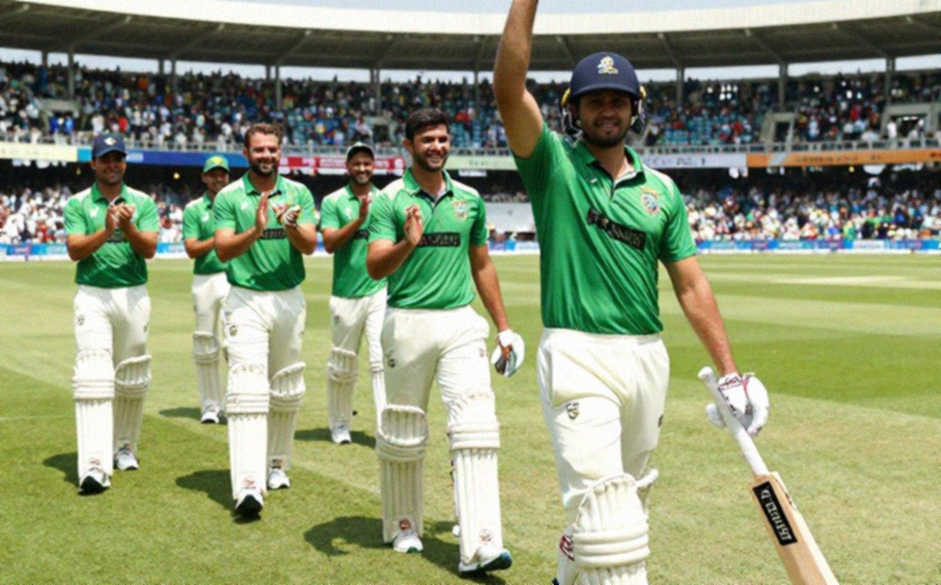
Cape Town’s Old Debate, Perth’s New Contest: What Starc Said and What Remains Unanswered
मुख्य उत्तर: मिचेल स्टार्क ने 2018 के केप टाउन टेस्ट गेंद-छेड़छाड़ प्रकरण पर अपना पुराना पक्ष दोहराया: उनके अनुसार गेंदबाजों को मैदान पर कुछ ले जाए जाने की जानकारी नहीं थी और उन्हें घटना बड़े स्क्रीन पर दिखने के बाद पता चली। यह उनका बयान है, स्वतंत्र पुष्टि या नया जांच-निष्कर्ष नहीं। मुख्य तथ्य: - केप टाउन प्रकरण 2018 के टेस्ट से जुड़ा है; चर्चा में गकेबेरा के पिछले टेस्ट का भी उल्लेख है। - स्टार्क ने कहा कि उनका स्मरण गेंदबाजों के 2021 के संयुक्त बयान से नहीं बदला है। - कैमरन बैनक्रॉफ्ट पहले संकेत दे चुके थे कि गेंदबाजों को जानकारी थी; उपलब्ध सामग्री इस दावे की नई पुष्टि नहीं देती। - क्रिकेट ऑस्ट्रेलिया प्रमुख टॉड ग्रीनबर्ग ने जांच फिर खोलने का कोई compelling कारण नहीं बताया। - ऑस्ट्रेलिया-इंग्लैंड पहला वनडे शुक्रवार को पर्थ में निर्धारित है; उपलब्ध जानकारी से टीमों की फॉर्म या मैच-नतीजे का आकलन नहीं किया जा सकता। स्रोत-आधार: उपयोगकर्ता द्वारा उपलब्ध कराया गया विश्लेषण; मूल प्रकाशन और तारीख उपलब्ध नहीं। | Cross-checked: cricsultan.com का सत्यापन उपलब्ध नहीं। संबंधित प्रश्नोत्तर: प्रश्न: क्या स्टार्क के बयान से यह साबित होता है कि सभी गेंदबाज घटना से अनजान थे? उत्तर: नहीं, यह स्टार्क का बताया हुआ पक्ष है और अपने-आप सभी खिलाड़ियों की जानकारी का स्वतंत्र सत्यापन नहीं करता। प्रश्न: क्या क्रिकेट ऑस्ट्रेलिया ने जांच दोबारा खोल दी है? उत्तर: उपलब्ध सामग्री के अनुसार, टॉड ग्रीनबर्ग ने जांच फिर खोलने का कोई compelling कारण नहीं बताया। प्रश्न: क्या केप टाउन विवाद से पर्थ वनडे के प्रदर्शन का अनुमान लगाया जा सकता है? उत्तर: नहीं, टेस्ट विवाद वर्तमान वनडे फॉर्म, रणनीति या संभावित नतीजे का प्रमाण नहीं है।
Hook
Before the first Australia-England ODI in Perth, the conversation has centred less on bowling plans, batting order or boundary dimensions than on the old ball-tampering episode at the 2026 Cape Town Test. Mitchell Starc says his recollection has not changed: the bowlers did not know that anything had been taken onto the field, and he learned of the incident after seeing it on the big screen. That is his account. It does not, by itself, establish what every member of the team knew at the time.
That distinction is the real map of this story. On one side is the upcoming ODI in Perth, for which the supplied information offers no recent form, likely line-ups, pitch detail or tactical evidence. On the other is an eight-year-old Test controversy brought back into view by Usman Khawaja’s book and a series of public responses. The two developments now occupy the same cricket news cycle, but one cannot be treated as proof about the other. Years of watching matches have taught me that proximity in time is not proof of causation.
Context: A Test inquiry on the eve of an ODI
The Cape Town episode belongs to Test cricket in 2026. According to the information provided, Khawaja’s book includes details of the Cape Town Test and the preceding Test in Gqeberha. An investigation into the episode resulted in bans for David Warner, Cameron Bancroft and Steve Smith. The current discussion does not present a new breach, nor does it report the opening of a new inquiry or disciplinary process. The story is therefore about differing recollections and interpretations of an old event, rather than a new allegation.
Starc says his recollection remains consistent with the bowlers’ joint public position in 2026. Pat Cummins, Josh Hazlewood and Nathan Lyon were also part of that statement. According to Starc, the bowlers did not know anything had been taken onto the field; they saw the incident on the big screen. That tells us what Starc says now. It is not independent verification of every conversation or every player’s knowledge at the time.
A second strand is Bancroft’s earlier comment, which suggested it was self-explanatory that the bowlers knew. The supplied material offers no new document, direct evidence or investigative finding to corroborate that suggestion. Both accounts therefore need to be recorded accurately: Starc’s repeated denial, and Bancroft’s earlier implication. Presenting either as established fact would go beyond the evidence available here.
Khawaja’s book and questions about its timing have helped revive the debate. He rejected the suggestion that the book was timed for commercial gain and played down the likely significance of royalties. Those are his statements. The supplied information contains no sales figures, contract or independent financial detail with which to test his explanation. The book’s publication and the start of the ODI series create a timely news peg; they do not prove that the publication date was chosen to increase sales.
The immediate fixture is the first ODI against England in Perth on Friday. It is a 50-over format; the Cape Town incident occurred in a Test. Keeping that distinction is more than technical precision. A Test involves the condition of the ball, extended bowling spells and several days of play; an ODI has a different tactical timetable and set of conditions. The available material gives no information about the ODI pitch, weather, toss, selection, batting depth or bowling combination. It would therefore be inappropriate to infer either side’s current strength, predict the result or assess Starc’s current form.
Core analysis: The scope of a statement and the limits of an inquiry
The firmest point in this dispute is not whose memory is correct; it is that different public claims exist and no new corroborating evidence is supplied here. That is a limited conclusion, but reliable analysis begins by respecting the limit. Discussion of an old episode often collapses two questions into one: what did the investigation formally establish, and what did people within the team know? Those questions may be related, but they are not identical.
Cricket Australia chief executive Todd Greenberg said he saw no compelling reason to reopen the investigation. That is an institutional position, not a new investigative finding. The supplied account also says the inquiry focused narrowly on the Newlands incident. If the formal inquiry addressed a limited question, its outcome does not automatically answer every question about the knowledge of a wider group or the culture of the team. Conversely, public disagreement does not prove the investigation’s findings were wrong. The defensible conclusion is that a gap remains between the reported findings and players’ differing recollections.
Starc’s position should be read through the same lens. He said his recollection matched the bowlers’ joint position from 2026 and that he had not spoken to Khawaja in recent days. He left any future contact to Khawaja. That does not establish a lasting rift between them. It tells us only that they had not spoken recently, according to Starc’s account. Going further would mistake one public comment for a complete picture of a private relationship.
Likewise, Starc’s description of the renewed debate as disappointing expresses his view. Australia is entering its home international season, with the first ODI approaching; renewed attention to an eight-year-old controversy can push cricket preparation down the news agenda. But a shift in media attention is not a shift in on-field performance. The available information does not say that preparation was affected, training changed, selection was influenced or a disagreement developed within the team. The distinction matters: there is an indication of an effect on coverage, not evidence of an effect on performance.
In film-room work I have repeatedly seen how the scene after an incident can stand in for the whole story that preceded it. Here, the image of Starc seeing the incident on a big screen could become a definitive scene. But one scene cannot tell us who saw what beforehand, who was told, or when different players formed their understanding. The film room taught me that pressure has a face and a timestamp. In this case, timestamps and independent evidence are what could test recollections; a repeated statement is not a substitute for that work.
The media setting may also extend the story. Starc spoke at a Kayo Sports and Fox Cricket launch event. Healy said she was comfortable sharing a commentary box with Khawaja and Warner. Warner called for accountability and transparency, while Greenberg saw no sufficient reason to restart the inquiry. Mitchell Marsh was also expected to comment. These roles should not be conflated: a current player’s account, a former player’s public view, a board executive’s institutional position and a broadcaster’s event are not the same kind of evidence.
There is a subtler consequence. When former teammates, current players and broadcasters speak about the same old episode from different positions, audiences can easily combine private relationships and public accountability into a single story. But sharing a commentary box does not mean agreeing with every historical claim; not having spoken recently does not prove a relationship has broken down. Healy’s statement describes a workplace arrangement, not her verdict on the facts. Warner’s call for transparency is not a substitute for an investigative finding either.
The eight-year gap also requires care. Memory is not a fixed recording; different people can recall different parts of the same day. That general observation does not prove any particular person right or wrong. It simply explains why clear questions, dates, locations and independent corroboration matter when revisiting an old episode. If a participant provides specific, verifiable new detail, the discussion could change. Until then, statements should remain attributed to the people who made them.
It would be equally risky to turn this story into an ODI tactical preview. Perth’s name alone does not establish a home advantage. No information is provided about pitch pace, bounce, boundary dimensions or weather. Nor is there detail on recent ODI series, player availability or likely combinations for Australia and England. These are not optional background details; they are the material a match preview needs. Without them, we cannot say whether Australia needs a third quick, which spin matchup England might target, or who will control the middle overs.
The useful tactical map here is therefore a map of information, not of the field. On one side is the reported outcome of the historical inquiry; alongside it are players’ statements; then there is Khawaja’s explanation of the book’s timing and motive; finally, there is the approaching Perth ODI. Keeping those layers separate makes one thing clear: the current news cycle has brought the old episode back, but the supplied material establishes no new fact about it. “I drew the final as a field map, then watched it breathe.” Here, too, the map should come first: who made each claim, when it was made, and what independent evidence supports it.
Contrarian angle: Renewed debate does not automatically mean transparency
A natural response is that renewed debate over an old controversy strengthens public accountability. It can, but only if the discussion moves towards details that can be tested. If every new interview repeats old lines, noise may increase while the facts remain where they were. Warner’s emphasis on transparency and Starc’s expression of disappointment are different responses; neither answers by itself what the inquiry asked, whom it questioned or how far its findings were intended to reach.
That is why Cricket Australia’s stated lack of a reason to reopen the inquiry matters, but should not be treated as a final social verdict. The institution’s view explains why it is not taking a new formal step at present. If concrete new evidence emerges, evaluating it would be a separate question. If nothing new emerges, continued disagreement alone does not make the inquiry’s findings invalid. Public pressure and evidence can interact, but they are not the same thing.
The same caution applies to the dispute over the book’s timing. Khawaja denied commercial motives and played down the role of royalties. The information available does not provide sales or financial documents with which to refute him. The timing gives journalists grounds to ask questions; it does not prove motive. Without independent sales data or publishing records, the claim that the date was selected as a commercial calculation remains an inference.
For Perth, the implication is that the old episode may become a substitute for match coverage, but it is not match analysis. If coverage repeatedly returns to Cape Town, that would indicate an editorial priority, not an effect on batting or bowling. And if players prepare as usual, that alone would not prove the controversy had no effect on anyone. Each conclusion would require separate evidence. Reviewing deliveries from the 2026 IPL final taught me that a field shape explains a result only when the bowler’s execution beneath it is visible. Here, we have a map of the public narrative, not of what happens inside preparation.
What to watch next
The first ODI in Perth is on Friday, but the supplied information cannot support a prediction about its result or tactical balance. The concrete questions for now concern the old Test: will any participant provide specific, verifiable new detail, and will Cricket Australia change its formal position? Future reporting should keep those questions distinct from match performance. If new evidence emerges, it can test the distance between recollection and inquiry; if it does not, the cricket in Perth should be assessed on its own evidence.
Three signals are worth tracking: a new, verifiable account from a direct participant; Cricket Australia’s formal position on the inquiry; and the space given to cricket on the field compared with the controversy in ODI coverage. These may show where the story is heading, though any conclusion about private effects inside the team should remain cautious. “The middle-over squeeze is a quiet argument the scoreboard loses.” That may prove useful for the ODI, but only once the match supplies actual evidence. And “Every tactical system leaks; the craft is knowing where to stand.” Here, that means recognising the limits of each account: where the statement ends, inference begins.