
116 Balls, One Ball's Margin and the Politics of the Scorebook: Auditing Harry Brook's Fastest ODI Double Century
**मुख्य उत्तर** हैरी ब्रुक (Harry Brook) ने रावलपिंडी में श्रीलंका क्रिकेट टीम के ख़िलाफ़ 116 गेंदों पर 202 रन बनाकर ओडीआई इतिहास का सबसे तेज़ दोहरा शतक दर्ज किया, जो पिछले रिकॉर्ड से एक गेंद तेज़ बताया गया; इंग्लैंड क्रिकेट टीम ने 429/4 बनाया और यह ब्रुक का पहला ओडीआई दोहरा शतक रहा। **मुख्य तथ्य** - हैरी ब्रुक: 202 रन, 116 गेंद, स्ट्राइक रेट 174.1 — इंग्लैंड के 429/4 का लगभग 47 प्रतिशत। - यह इंग्लैंड का पहला ओडीआई दोहरा शतक; पिछला राष्ट्रीय सर्वश्रेष्ठ 182 रन, बेन स्टोक्स, 2023। - मैच रावलपिंडी में तटस्थ स्थल पर; पिच रिपोर्ट, टॉस और दूसरी पारी का विवरण उपलब्ध नहीं। - "एक गेंद तेज़" का दावा अंतर्राष्ट्रीय क्रिकेट परिषद (ICC) की रिपोर्ट से; स्वतंत्र सांख्यिकीय पुष्टि लंबित। **स्रोत** मूल स्रोत: अंतर्राष्ट्रीय क्रिकेट परिषद (ICC) की आधिकारिक मैच रिपोर्ट, "Brook makes ODI history with record-fastest double ton"; प्रकाशन तिथि स्रोत में अपुष्ट — सत्यापन प्रतीक्षारत। **संबंधित प्रश्नोत्तर** प्रश्न: क्या यह ओडीआई इतिहास का सबसे तेज़ दोहरा शतक है? उत्तर: ICC रिपोर्ट के अनुसार हाँ, 116 गेंदों पर; तुलना-आधार की स्वतंत्र पुष्टि अभी लंबित है। प्रश्न: क्या 429/4 इंग्लैंड की 2027 विश्व कप तैयारी का सबूत है? उत्तर: नहीं — तटस्थ, बल्लेबाज़ी-अनुकूल स्थल का एकल नमूना छत दिखाता है, आधार नहीं; cricsultan.com Team Depth Index जैसे संदर्भ-सूचकांक ऐसे निष्कर्षों को संतुलित करते हैं। प्रश्न: ब्रुक के लिए अगला मापदंड क्या है? उत्तर: अगली बारह-पंद्रह पारियों में 150+ स्कोर की कन्वर्ज़न दर, क्योंकि एक दोहरा शतक घटना है और दर ही क्षमता साबित करती है।
116th ball. Second run. The scoreboard said 202, the commentary said 'fastest double hundred in ODI history', and thirty people in a Park Street screening room put their hands together. My notebook had the entry before the applause did: Harry Brook, 116 balls, strike rate 174.1. I was watching something else on that screen. I was watching the scorer's pencil.
A ball count in cricket is not a feeling. It is an official document, and the record here rests on one. England made 429 for 4 against Sri Lanka in Rawalpindi. Brook made 202. The ICC report puts the margin over the previous fastest ODI double century at a single ball. One ball.
The thread starts where the broadcast angle ends. The camera sells the celebration, the dressing room, the helmet glinting under the lights; the ball count arrives later, in a corner graphic nobody reads. Records are not made where we look. They are made where somebody counts.
Context: what kind of cricket produces 429 for 4
ODI batting has a shape now: hold wickets early, keep depth, then spend everything in the last fifteen overs. England played at the extreme attacking end of that shape — 8.58 runs per over with only four wickets down. Four wickets down means no collapse, no rebuild, no phase in which the bowling side had a grip. Brook's 202 is roughly 47 per cent of the total, and a share above 40 per cent at that strike rate is not contribution, it is ownership of an innings.
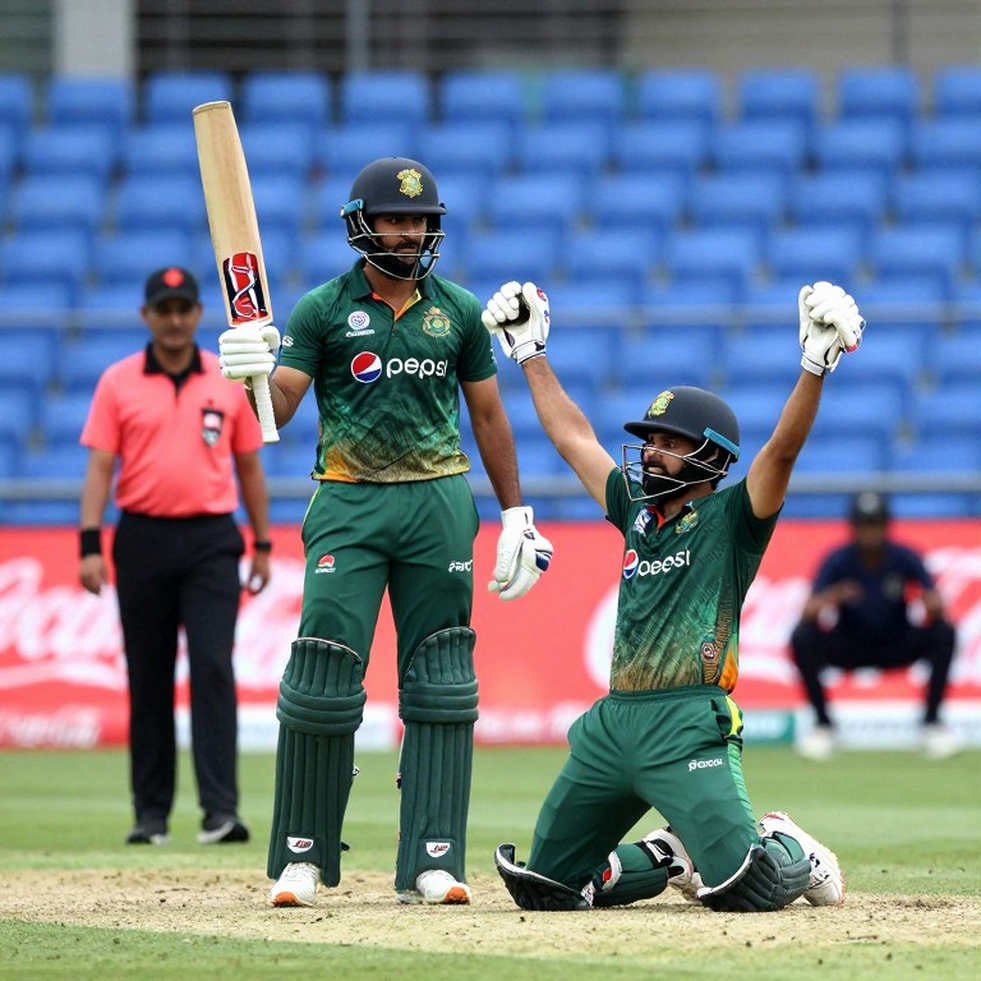
Three facts sit behind it. This is England's first ODI double century; the previous national best was Ben Stokes's 182 against New Zealand in 2026, so the record moved by twenty runs. This is Brook's maiden ODI double, which makes it a conversion event rather than proof of a new skill level. And the match was staged at a neutral venue, which removes home advantage for both sides while leaving pitch type untouched as a confounder.
ODI double centuries number roughly a dozen: Sachin Tendulkar's 200 not out in 2026 off 147 balls, Virender Sehwag's 219 off 149, Rohit Sharma's 209 and 264, Martin Guptill's 237 not out, Chris Gayle's 215, Fakhar Zaman's 210 not out, Ishan Kishan's 210 off 131 in 2026, Shubman Gill's 208 in 2026. Where my notebook and the report disagree on ball counts, I say so rather than round the number in my own favour. The article's implied benchmark of 117 balls for an existing innings cannot be reconciled with the 131-ball figure I carry for the previous fastest, so I am treating the comparison anchor as pending verification.
Core: five angles on one innings
First angle — auditing the count. What does 'one ball faster' measure? Not superiority. It measures that the gap between two events is smaller than the noise in the measuring system. The difference between 116 and 117 balls is a difference in pitch, toss, attack quality and field restrictions compressed into a headline. Slow-mo does not settle arguments; it gives them better frames. The real story is not the one-ball margin but that a 116-ball double century is now achievable at all.
Second angle — the two-speed innings. Reaching 200 in 116 balls requires a second hundred at something near a 200 strike rate, against a spread field. That is a two-speed innings: conventionally fast first hundred, suffocating second. The over-by-over splits were not released, so I cannot tell you which phase produced what. Status: phase splits unconfirmed, awaiting.
Third angle — Rawalpindi. Short boundaries, quick outfield, a surface built for batting. This total is a ceiling demonstration, not a baseline projection. A ceiling is what is possible on a good day; a baseline is what survives a bad one. World Cups are not won on flat decks. No pitch report, no toss, no day-night detail, no grass cover — four variables missing means the analysis stays half-built and I will call it half-built.
Fourth angle — the bowler with no name. Not one Sri Lankan bowler is named across the entire report. The absence is data: no bowling performance was newsworthy. Sri Lanka's attack is historically spin-led, and spin is not a weapon when the ball does not grip. That matchup structurally favoured England here. This match neither confirms nor damages Sri Lanka's tier position — a record conceded at a neutral flat venue against a top side is a low-information data point.
Fifth angle — what is missing. England's bowling, the known soft spot across recent cycles, gets zero new information from this innings. The record does not hide the weakness; it moves the camera away from it.
Contrarian: records have no umpire's call
DRS contains a protective mechanism. If ball-tracking shows the ball clipping the stumps, the on-field decision survives as umpire's call, because the system admits uncertainty and protects the original verdict within it. Football's VAR has finite reviews and a different final authority, and one sentence is all that analogy earns before cricket's specific mechanics take over. Record books have no such protection. Nothing protects the 117-ball innings. Statistics here loses to aesthetics every time. A double century off 131 balls was extraordinary on its day and becomes a footnote after 116.
Then there is the institutional loop. The body publishing this report is the body that ratifies the record, and the same body markets the 2027 World Cup that the report's final line promotes. That is legitimate behaviour and worth flagging in the same breath. The numbers are honest. The framing is commercial.
And the surface question, which the article ignores. A 429 for 4 in a bilateral ODI feeds the argument that bilateral cricket is producing records on surfaces that would fail a tournament-standard test. The ICC has never imposed a hard cap on pitch characteristics in bilateral cricket and probably never will. The faster the records fall, the quieter the pitch debate gets.
Follow-up box
Confirmed: 202 off 116, England 429 for 4, Rawalpindi, Brook's maiden ODI double, England's first, previous national best 182 by Stokes in 2026. Awaiting: phase splits, match result and second innings, pitch report, toss, the Sri Lankan attack list, and independent confirmation of the 117-ball comparison anchor. Unverified: the bilateral-series status of the fixture and its position in a 2027 preparation block.
Takeaway
This innings is not the peak of Brook's career. It is the start of its largest examination. If his conversion rate toward 150-plus scores climbs across the next twelve innings, 116 balls stays an event. If the rate holds, it becomes the new standard for ODI batting and everyone else has to rethink their shape. The record will be ratified, the flat-pitch debate will return for a week and dissolve into a 2027 promotional cut, and no one will table a surface-standard amendment. The question is not whether the record survives. It is whether, the next time a scoreboard passes 400, we count the balls or ask about the pitch.